
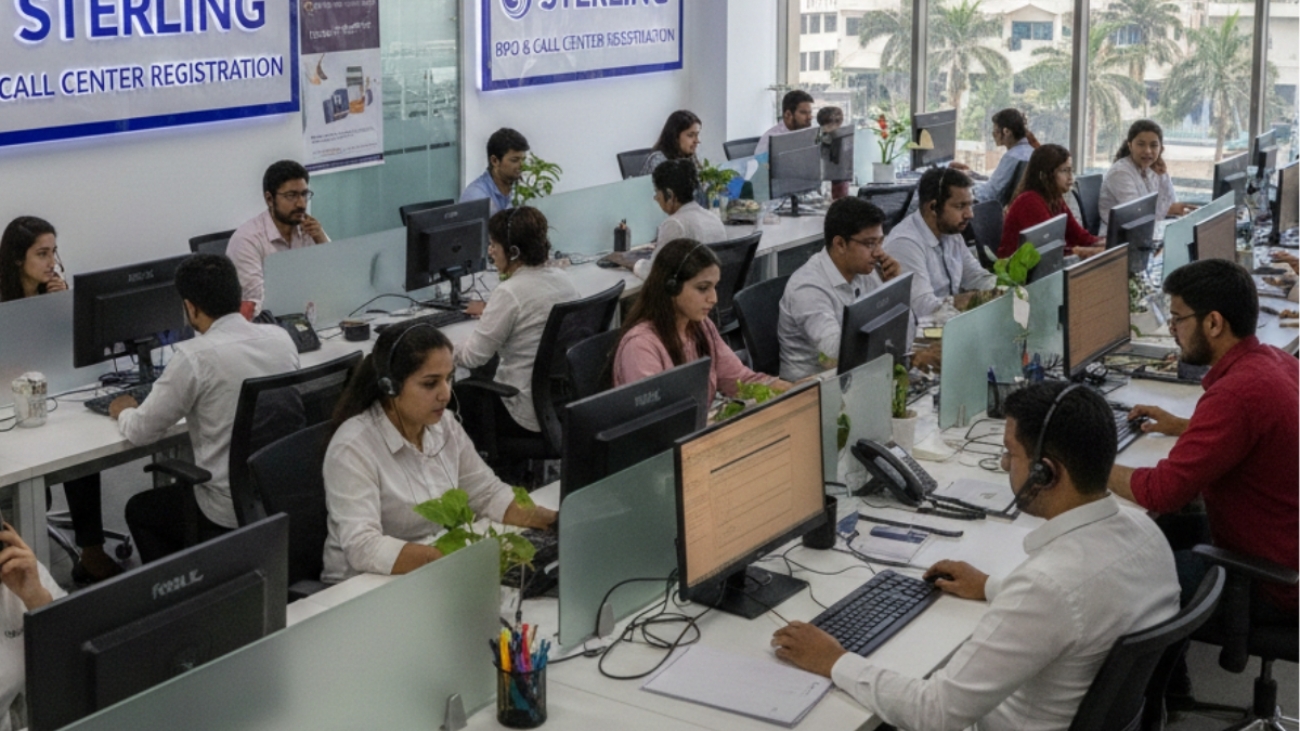
BPO & Call Center Registration in Pakistan
Complete Guide to PSEB Registration, PTA NOC, Data Protection & Tax Benefits for Call Centers
📋 Table of Contents
Pakistan's Business Process Outsourcing (BPO) and call center industry has emerged as a significant contributor to the country's IT exports, generating over $1 billion annually. With a large English-speaking workforce, competitive labor costs, and government support through tax incentives, Pakistan presents an attractive destination for establishing BPO operations.
However, registering and operating a call center in Pakistan involves navigating multiple regulatory frameworks. From company registration with SECP to PSEB certification, PTA NOC requirements, and data protection compliance, each step requires careful attention to legal and operational requirements.
This comprehensive guide walks you through every aspect of BPO and call center registration in Pakistan, ensuring you understand the complete process, costs, timelines, and compliance requirements. Whether you're establishing an inbound customer support center, outbound sales operation, technical helpdesk, or multi-channel contact center, this guide provides the roadmap you need.
🚀 Ready to Register Your BPO or Call Center?
Get expert assistance with SECP, PSEB, and PTA registrations. We've successfully registered 100+ call centers across Pakistan.
1. BPO & Call Center Industry in Pakistan
The BPO sector in Pakistan has experienced remarkable growth over the past decade, transitioning from small-scale operations to sophisticated multi-national contact centers. The industry now employs over 300,000 professionals and serves clients across North America, Europe, Middle East, and Asia-Pacific regions.
Industry Statistics & Market Size
Types of BPO Operations in Pakistan
| BPO Type | Services Offered | Typical Clients | Market Share |
|---|---|---|---|
| Inbound Call Centers | Customer support, technical helpdesk, order processing | E-commerce, SaaS, Healthcare | 45% |
| Outbound Call Centers | Telemarketing, lead generation, surveys | Real estate, Insurance, Finance | 30% |
| Back Office Services | Data entry, processing, accounting | Healthcare, Finance, Legal | 15% |
| Technical Support | IT helpdesk, software support, troubleshooting | Tech companies, MSPs | 10% |
Why Establish a BPO in Pakistan?
💡 Industry Insight
Pakistan's BPO sector offers labor cost savings of 60-70% compared to Western countries while maintaining high service quality. The country's strategic location (GMT+5) allows coverage of both American and European business hours with appropriate shift scheduling.
2. Registration Requirements Overview
Establishing a legal BPO or call center in Pakistan requires multiple registrations and licenses. Understanding the complete requirements upfront helps ensure smooth operations and compliance with all regulatory bodies.
Complete Registration Checklist
| Registration Type | Authority | Timeline | Cost (PKR) | Mandatory? |
|---|---|---|---|---|
| Company Registration | SECP | 7-14 days | 25,000 - 50,000 | ✅ Yes |
| NTN Registration | FBR | 3-5 days | Free | ✅ Yes |
| PSEB Registration | PSEB | 2-4 weeks | 10,000 - 25,000 | ✅ Highly Recommended |
| PTA NOC | PTA | 4-8 weeks | 50,000 - 200,000 | ⚠️ If Required |
| EOBI Registration | EOBI | 1-2 weeks | Free | ✅ 10+ employees |
| Social Security | Provincial SSI | 1-2 weeks | Variable | ✅ 10+ employees |
Legal Structures for BPO Operations
Similar to software house registration, BPO companies in Pakistan typically operate under one of these structures:
Private Limited Company (Recommended)
- Best for: Medium to large BPO operations, seeking investment
- Benefits: Limited liability, professional credibility, easy equity distribution
- Requirements: 2-50 members, minimum PKR 100,000 paid-up capital
- Tax Benefits: Access to PSEB exemptions and corporate tax rates
Public Limited Company
- Best for: Large-scale BPO operations planning IPO
- Benefits: Can raise capital from public, highest credibility
- Requirements: 7+ members, extensive compliance requirements
- Consideration: Higher regulatory burden and costs
Sole Proprietorship / Partnership
- Best for: Small-scale operations, home-based call centers
- Benefits: Lower registration costs, simpler compliance
- Limitations: Unlimited liability, difficult to scale, less credibility with international clients
For most serious BPO ventures, a Private Limited Company structure is recommended. To understand the differences between company types, read our detailed guide on the difference between Pvt Ltd and Public Ltd companies.
✅ Recommended Approach
Register your company as a Private Limited entity with SECP first, then proceed with PSEB registration to unlock tax benefits. Only pursue PTA NOC if your operations involve telecommunications services like VoIP. This phased approach minimizes upfront costs while ensuring compliance.
3. PSEB Registration for Call Centers
The Pakistan Software Export Board (PSEB) plays a crucial role in regulating and supporting the BPO industry. PSEB registration is essential for call centers seeking tax exemptions on export earnings and international credibility.
Benefits of PSEB Registration for BPOs
| Benefit | Description | Value to BPO |
|---|---|---|
| 100% Tax Exemption | Complete income tax exemption on IT/ITES exports until June 2025 | Massive cost savings, improved margins |
| International Credibility | PSEB certification validates your operations to global clients | Essential for winning international contracts |
| Government Support | Access to PSEB training programs and skill development | Improved team quality at subsidized costs |
| Trade Delegations | Participation in international exhibitions and trade shows | Business development and networking |
| Financing Support | Priority access to soft loans and government grants | Capital for expansion and infrastructure |
PSEB Registration Process for Call Centers
Eligibility Verification
Ensure your call center meets PSEB requirements:
- Registered company with SECP (Private or Public Limited)
- Valid NTN certificate from FBR
- Functional office space with proper infrastructure
- Minimum 5-10 employees (varies by PSEB policy)
- Proper IT infrastructure (computers, telephony system, internet)
- Clear business model focused on IT-enabled services (ITES) or BPO
Document Preparation
Compile the following documents for your PSEB application:
- SECP Certificate of Incorporation
- Memorandum and Articles of Association
- NTN and Sales Tax Registration certificates
- Company profile detailing services offered
- List of directors and shareholders with CNICs
- Office lease agreement or ownership documents
- Employee list with designations and CVs
- Business plan and financial projections
- Client contracts or letters of intent (if available)
- Bank account details and statements
Application Submission
Submit your PSEB application through one of these channels:
- Online Portal: PSEB's eServices platform (preferred method)
- Regional Offices: Islamabad, Karachi, Lahore, Peshawar offices
- Application Fee: PKR 10,000 - 25,000 (varies by company size)
Physical Verification
PSEB conducts mandatory on-site verification of your facilities:
- Infrastructure Check: Computers, telephony equipment, workstations
- Team Assessment: Verification of employees and their qualifications
- Operational Readiness: Active operations or clear capability to start
- Compliance Review: Health & safety, fire safety, ergonomics
Important: Schedule verification when your office is fully operational with staff present.
Certificate Issuance & Annual Compliance
After successful verification:
- PSEB issues registration certificate (valid for 1 year)
- Annual renewal required with updated company information
- Submit annual export reports and employee data
- Maintain compliance with PSEB regulations
- Renewal fee: PKR 5,000 - 15,000 annually
For comprehensive details on PSEB registration process and eligibility criteria, visit our dedicated guide on PSEB registration requirements and eligibility.
⏱️ Processing Timeline
Expect 2-4 weeks for complete PSEB registration from application submission to certificate issuance. Delays typically occur due to incomplete documentation or scheduling conflicts for physical verification. Using professional consultancy services can expedite the process to 2-3 weeks.
💼 Expert PSEB Registration Services
We handle your entire PSEB registration with guaranteed approval. Complete documentation, verification coordination, and compliance management.
4. PTA NOC Requirements
The Pakistan Telecommunication Authority (PTA) regulates telecommunications services in Pakistan. PTA NOC (No Objection Certificate) is required for call centers that provide certain telecommunications-related services, particularly VoIP and international calling operations.
When Do You Need PTA NOC?
| Service Type | PTA NOC Required? | License Category |
|---|---|---|
| Inbound Customer Support (regular telephony) | ❌ No | N/A |
| Outbound Sales Calls (PSTN) | ❌ No | N/A |
| VoIP-Based Call Center | ✅ Yes | VoIP Service License |
| International Call Termination | ✅ Yes | LDI License |
| SMS/Messaging Services | ✅ Yes (bulk) | Value Added Service |
| Chat/Email Support Only | ❌ No | N/A |
| Back Office/Data Processing | ❌ No | N/A |
⚠️ Important Compliance Note
Operating VoIP services without PTA license is illegal in Pakistan and can result in heavy fines, equipment seizure, and criminal prosecution. If your call center uses VoIP technology for international calls, PTA NOC is mandatory. Many call centers mistakenly believe they don't need PTA approval if they use international VoIP services – this is incorrect and legally risky.
PTA NOC Application Process
Determine License Type
Identify the specific PTA license your operations require:
- VoIP Service License: For call centers using VoIP technology (most common)
- LDI License: For international call termination services
- Value Added Service (VAS): For SMS/bulk messaging services
Meet Financial Requirements
PTA licenses require significant capital investment:
- VoIP License: PKR 50 million paid-up capital + PKR 10 million bank guarantee
- LDI License: PKR 500 million paid-up capital + substantial bank guarantee
- VAS License: PKR 5-10 million paid-up capital (varies)
Note: These requirements make PTA licensing feasible only for larger, well-funded BPO operations.
Technical Documentation
Submit comprehensive technical documentation:
- Network architecture and topology diagrams
- Security infrastructure and protocols
- Data center specifications and certifications
- Disaster recovery and business continuity plans
- Quality of Service (QoS) mechanisms
- Interconnection arrangements (if applicable)
Legal & Compliance Documents
- SECP registration certificate
- Detailed business plan and financial projections
- Directors' CNICs and background clearances
- Office ownership/lease documents
- Compliance with PTA regulations and codes
- Data protection and privacy policies
Application Submission & Processing
Submit application to PTA with all documents and fees:
- Processing Fee: PKR 100,000 - 500,000 (varies by license type)
- Annual License Fee: PKR 5 million - 50 million (varies by license and revenue)
- Timeline: 4-8 weeks for initial review, longer for complex applications
Alternative: Operate Without VoIP
Many call centers avoid PTA requirements by:
- Using traditional PSTN lines for voice calls
- Focusing on chat, email, and web-based support
- Partnering with licensed telecom operators who handle voice infrastructure
- Operating purely as back-office BPO without telecommunication services
💡 Strategic Recommendation
For startups and small BPOs, avoid VoIP operations initially to bypass PTA licensing requirements. Focus on building your business with traditional telephony or non-voice channels. Once you achieve scale and profitability, consider obtaining PTA license or partnering with licensed operators for VoIP services.
5. Data Protection & Compliance
Data protection is a critical concern for BPO and call center operations, especially when handling international client data. Pakistan has specific laws governing data privacy, and international clients often require compliance with GDPR, CCPA, or other regional data protection regulations.
Pakistani Data Protection Laws
| Legislation | Scope | Key Requirements |
|---|---|---|
| Prevention of Electronic Crimes Act (PECA) 2016 | Cybersecurity and data breaches | Protection against unauthorized data access, mandatory breach reporting |
| Personal Data Protection Bill (Proposed) | Comprehensive data privacy | Consent requirements, data subject rights, accountability measures |
| PTA Regulations | Telecom data | Call records, customer data protection for licensed operators |
| SBP Regulations | Financial data | Banking and financial information security (for fintech BPOs) |
International Compliance Requirements
GDPR Compliance (European Clients)
- Data Processing Agreements (DPA): Mandatory contracts defining roles and responsibilities
- Data Transfer Mechanisms: Standard Contractual Clauses (SCCs) for international transfers
- Security Measures: Encryption, access controls, regular audits
- Data Subject Rights: Processes for access, rectification, erasure requests
- Breach Notification: 72-hour reporting requirement for data breaches
CCPA/CPRA Compliance (California/US Clients)
- Consumer Rights: Right to know, delete, opt-out of data sale
- Privacy Notice: Clear disclosure of data collection and usage
- Service Provider Contracts: Specific contractual requirements
- Security Safeguards: Reasonable security measures for personal information
HIPAA Compliance (Healthcare BPOs)
- Business Associate Agreement (BAA): Mandatory for handling PHI
- Technical Safeguards: Encryption, access controls, audit logs
- Physical Safeguards: Secure facilities, workstation security
- Training: Regular HIPAA training for all staff
- Breach Protocol: Specific notification requirements
Essential Data Protection Measures
✅ Recommended Security Stack
- Network Security: Firewall, IDS/IPS, VPN for remote access
- Endpoint Protection: Antivirus, EDR, disk encryption
- Access Management: Multi-factor authentication, role-based access control
- Data Protection: Encryption at rest and in transit, DLP solutions
- Monitoring: SIEM, audit logs, security information management
- Backup & Recovery: Regular backups, disaster recovery plan
- Compliance: Regular audits, penetration testing, certifications
Certifications & Standards
International clients often require specific certifications:
- ISO 27001: Information Security Management System
- ISO 9001: Quality Management System
- PCI DSS: For handling payment card information
- SOC 2 Type II: Security, availability, and confidentiality controls
- HIPAA Certification: For healthcare BPOs (via third-party assessors)
6. Client Contracts & Legal Framework
Well-structured client contracts are essential for protecting your BPO business, managing expectations, and ensuring smooth operations. BPO contracts typically involve more complex terms than standard service agreements due to data handling, service levels, and long-term commitments.
Essential BPO Contract Elements
| Contract Element | Purpose | Key Considerations |
|---|---|---|
| Scope of Services | Define exact services to be provided | Hours of operation, channels supported, service types, exclusions |
| Service Level Agreement (SLA) | Set performance expectations | Response times, resolution rates, quality scores, availability |
| Pricing Structure | Define financial terms | Per-seat, per-hour, per-transaction, minimum commitments |
| Data Protection | Govern data handling | DPA, security measures, breach protocols, compliance obligations |
| Intellectual Property | Clarify IP ownership | Scripts, processes, documentation, training materials |
| Confidentiality | Protect sensitive information | NDA provisions, employee obligations, duration |
| Term & Termination | Define contract lifecycle | Initial term, renewal, termination notice, exit procedures |
| Liability & Indemnity | Allocate risks | Liability caps, insurance requirements, indemnification |
Service Level Agreements (SLAs)
SLAs are critical in BPO contracts. Typical metrics include:
Common SLA Metrics
- Average Speed of Answer (ASA): Target: 20-30 seconds
- Abandoned Call Rate: Target: < 5%
- First Call Resolution (FCR): Target: > 80%
- Customer Satisfaction (CSAT): Target: > 85%
- Quality Assurance Score: Target: > 90%
- Occupancy Rate: Target: 80-85%
- Service Level: 80% of calls answered within 20 seconds
International Payment Mechanisms
For international BPO clients, establish clear payment terms:
- Payment Methods: Wire transfer, PayPal, Payoneer, Wise
- Currency: Usually USD or client's local currency
- Payment Terms: Net 15, Net 30, or advance payment
- Export Documentation: Invoices clearly stating "IT Enabled Services Export"
- Tax Exemption: Reference PSEB certificate for tax exemption claims
For comprehensive guidance on IT service exports, read our detailed article on IT services export from Pakistan.
💼 Contract Negotiation Tips
- Start with pilot projects before committing to long-term contracts
- Build in volume-based pricing tiers to incentivize growth
- Include clear escalation procedures for disputes
- Define realistic SLAs based on your capabilities
- Always include provisions for force majeure and business continuity
- Consider consulting with legal experts for international contracts
7. Tax Benefits & Incentives
Pakistan offers substantial tax benefits for IT-enabled services including BPO and call centers. Understanding and properly utilizing these incentives can significantly improve your profitability and competitiveness.
PSEB Tax Exemption
💰 100% Income Tax Exemption
PSEB-registered BPO companies enjoy complete exemption from income tax on export earnings until June 30, 2025. This exemption applies to both direct exports (invoicing international clients) and deemed exports (working through Pakistani intermediaries serving international clients).
Eligibility & Claiming Process
Obtain PSEB Registration
Tax exemption is only available to PSEB-registered companies. Complete your PSEB registration before starting export operations.
Maintain Proper Documentation
- Export invoices clearly showing BPO/ITES services
- Foreign remittance certificates from banks
- Client contracts and service agreements
- Monthly/quarterly export reports
- Employee records showing service delivery team
File Annual Returns
- Submit income tax return with PSEB exemption claim
- Attach PSEB certificate and export documentation
- File annual compliance report with PSEB
- Maintain records for 6 years for potential audit
Additional Tax Benefits
| Benefit Type | Description | Eligibility |
|---|---|---|
| Reduced Withholding Tax | Lower WHT rates on certain payments | IT exporters with valid PSEB certificate |
| Import Duty Exemption | Zero-duty import of IT equipment | PSEB-registered companies (specific items) |
| Sales Tax Exemption | ST exemption on certain IT services | Specified IT and ITES services |
| Provincial Incentives | Additional provincial benefits | Varies by province (check local TEVTA/ITB) |
Financial Impact Analysis
Annual Tax Saving: PKR 2.9 Million (29% of revenue)
⚠️ Compliance is Critical
Tax exemption is contingent on maintaining PSEB registration in good standing and proper documentation. FBR can audit your claims, so ensure all export documentation is accurate and complete. Misrepresenting domestic sales as exports or failing to maintain proper records can result in back taxes, penalties, and loss of exemption status.
🎯 Start Your BPO Journey Today
From SECP registration to PSEB certification and tax optimization, we provide end-to-end BPO setup services with 100% compliance guarantee.
8. Operational Licenses & Permits
Beyond primary registrations, BPO operations may require additional licenses and permits depending on location, size, and specific services offered.
Provincial & Municipal Requirements
| License/Permit | Authority | When Required | Typical Cost |
|---|---|---|---|
| Trade License | Local Municipal Corporation | All businesses operating from commercial premises | PKR 5,000 - 20,000 annually |
| Fire Safety NOC | Fire Department | Offices with 50+ occupants or specific building types | PKR 10,000 - 50,000 |
| Environmental Clearance | EPA | Large facilities (usually not required for BPOs) | PKR 25,000 - 100,000 |
| Building Use Certificate | Development Authority | Commercial use of residential properties | Variable |
| Generator License | NEPA/Local Authority | If using backup generators | PKR 5,000 - 15,000 |
Employment Compliance
EOBI Registration (10+ Employees)
Employees' Old-Age Benefits Institution provides social security benefits:
- Mandatory for companies with 10 or more employees
- Monthly contributions: 5% of minimum wage per employee
- Register online through EOBI portal within 30 days of crossing threshold
- Provides old-age pension, invalidity pension, and survivor benefits
Provincial Social Security (10+ Employees)
Provincial Social Security Institution provides health and worker benefits:
- Mandatory for establishments with 10+ employees
- Contributions: 6% of gross wages (employer pays)
- Provides medical benefits, worker's compensation, maternity benefits
- Register with provincial SSI office (varies by province)
Office Space Considerations
Many entrepreneurs wonder about physical office requirements for BPO operations. Unlike purely digital businesses, call centers typically need proper office infrastructure due to:
- PSEB Verification: Requires physical office with operational setup
- Client Requirements: Many international clients conduct facility audits
- Team Management: Call centers require supervised environment for quality control
- Security: Data protection compliance often mandates secure physical premises
For detailed guidance on office requirements, read our article about whether you need a physical office for company registration.
🏢 Recommended Office Setup
- Minimum Space: 80-100 sq ft per agent (including aisles and common areas)
- Infrastructure: Dedicated internet (minimum 1 Mbps per agent), backup power
- Acoustics: Sound-proofing or adequate spacing to minimize cross-talk
- Security: CCTV, access control, secure document storage
- Amenities: Break rooms, washrooms, prayer areas, parking
Annual Compliance Calendar
BPO operations must maintain ongoing compliance with multiple authorities:
| Compliance Requirement | Frequency | Authority | Deadline |
|---|---|---|---|
| PSEB Annual Return | Annual | PSEB | Within 60 days of financial year end |
| Income Tax Return | Annual | FBR | September 30 |
| Sales Tax Returns | Monthly | FBR | 15th of following month |
| EOBI Contributions | Monthly | EOBI | 15th of following month |
| Social Security | Monthly | Provincial SSI | 10th of following month |
| Annual SECP Filing | Annual | SECP | Within 30 days of AGM |
Frequently Asked Questions
The total cost depends on your registration requirements:
- Basic Setup (SECP + PSEB): PKR 40,000 - 80,000
- With PTA License: PKR 50 million+ (due to paid-up capital requirements)
Breakdown for basic setup:
- SECP Company Registration: PKR 25,000 - 50,000
- PSEB Registration: PKR 10,000 - 25,000
- Legal Documentation: PKR 5,000 - 10,000
For comprehensive guidance on required documents, visit our guide on documents for company registration in Pakistan.
No, PTA license is NOT required for all call centers. You only need PTA NOC if you:
- Use VoIP technology for voice calls (international or domestic)
- Provide international call termination services
- Offer bulk SMS or telecommunication services
You DON'T need PTA license if you:
- Use traditional PSTN telephone lines
- Provide only email, chat, or web-based support
- Operate back-office/data processing services
- Handle customer support through regular phone lines
Most small and medium BPOs avoid PTA licensing by using traditional telephony or non-voice channels.
PSEB and PTA serve different regulatory purposes:
| Aspect | PSEB | PTA |
|---|---|---|
| Purpose | IT/ITES industry promotion | Telecommunications regulation |
| Focus | Software & BPO exports | VoIP and telecom services |
| Main Benefit | 100% tax exemption on exports | Legal authorization for VoIP |
| Cost | PKR 10,000 - 25,000 | PKR 50 million+ (capital requirement) |
| Timeline | 2-4 weeks | 4-8 weeks |
Key takeaway: Get PSEB registration for tax benefits and industry support. Only get PTA license if your operations specifically require VoIP or telecom services.
While technically possible for very small operations, operating a call center from home has significant limitations:
Challenges:
- PSEB Verification: PSEB conducts physical verification and expects proper office setup
- Client Confidence: International clients often conduct facility audits
- Zoning Laws: Commercial activity in residential areas may violate local regulations
- Professional Environment: Difficult to maintain quality control and data security
- Scalability: Limited room for growth and expansion
Better Alternatives:
- Start with co-working space (PKR 8,000-15,000/month per seat)
- Rent small office space (PKR 30,000-80,000/month for 10-person setup)
- Use virtual office for registration, then scale to physical space
Once you're established and want to verify your registration status, learn how to check company registration in Pakistan.
To claim 100% income tax exemption on your BPO exports:
Step 1: Get PSEB Registration
- Complete PSEB registration process (see Section 3 above)
- Obtain PSEB certificate valid for current tax year
Step 2: Maintain Proper Documentation
- Export invoices clearly showing ITES/BPO services
- Foreign Remittance Certificates (FRCs) from your bank
- Client contracts and service agreements
- Monthly/quarterly export reports submitted to PSEB
Step 3: File Income Tax Return
- File annual return by September 30
- Declare export income separately
- Attach PSEB certificate and export documentation
- Claim exemption under relevant section of Income Tax Ordinance
Step 4: Annual PSEB Compliance
- Submit annual compliance report to PSEB
- Renew PSEB registration before expiry
- Maintain all records for 6 years for potential FBR audit
For additional support with non-profit initiatives in the tech sector, you might also explore NGO registration under Section 42.
Conclusion: Building Your BPO Success Story
Establishing a BPO or call center in Pakistan presents tremendous opportunities given the country's competitive advantages in cost, talent, and government support. However, success requires careful navigation of regulatory requirements from SECP company registration to PSEB certification and, where applicable, PTA licensing.
The key to sustainable BPO operations in Pakistan lies in proper registration, strict compliance with data protection regulations, and leveraging available tax benefits. By following this comprehensive guide, you're well-positioned to establish a legally compliant, competitive call center operation that can serve both domestic and international clients effectively.
Remember that Pakistan's BPO industry is growing rapidly, and early movers who establish proper compliance frameworks will be best positioned to capture market opportunities as the sector matures. Whether you're starting with a small team or planning a large-scale operation, investing time in proper registration and compliance pays significant dividends in credibility, tax savings, and operational stability.
📚 Additional Resources
- Sterling Consultancy Services - Professional BPO registration assistance
- Software House Registration Guide - Related IT business setup
- Complete PSEB Registration Guide
- IT Services Export from Pakistan
✨ Launch Your BPO with Expert Support
Sterling Consultancy has registered 100+ BPO and call center operations across Pakistan. We handle SECP, PSEB, compliance, and tax optimization end-to-end.
Available Monday-Saturday, 9 AM - 6 PM PKT | Free Initial Consultation