
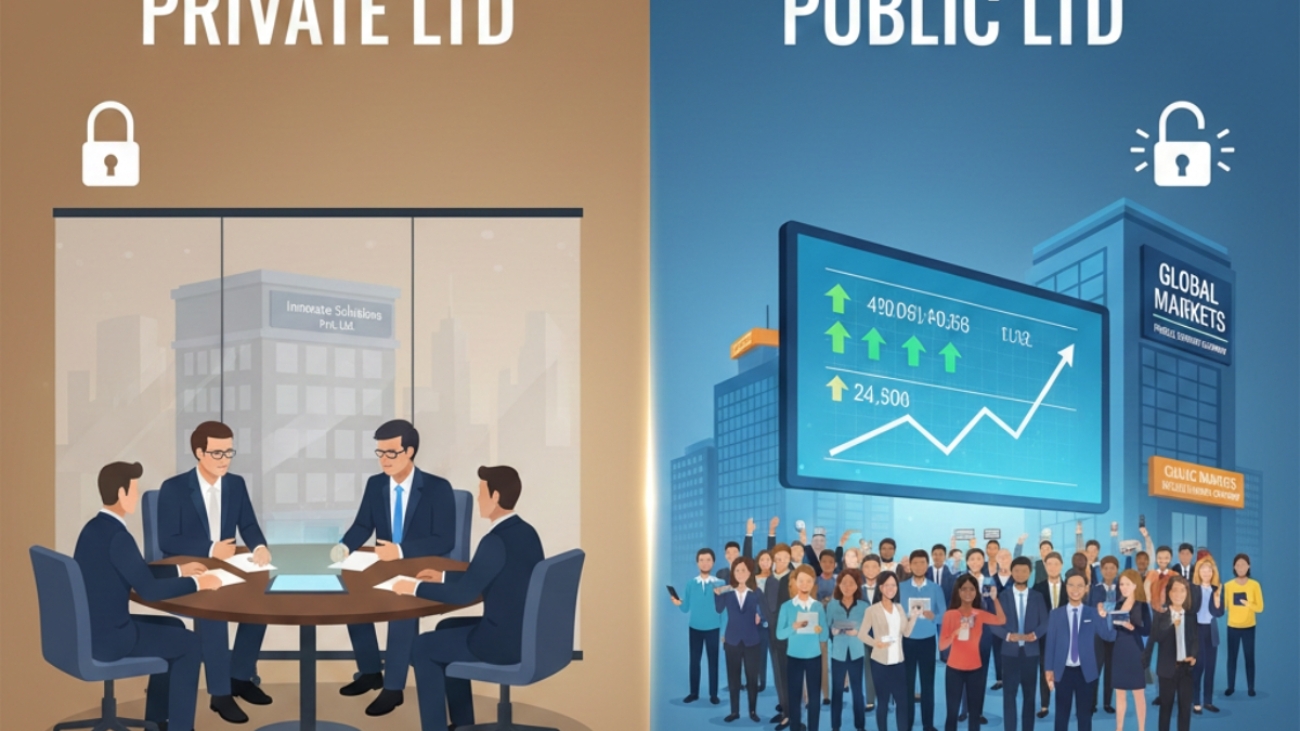
What is the Difference Between Pvt Ltd and Public Ltd?
A comprehensive guide to help you choose the right business structure for your company in Pakistan
Choosing the right business structure is one of the most critical decisions entrepreneurs face when starting a company in Pakistan. Among the most popular corporate structures are Private Limited (Pvt Ltd) companies and Public Limited (Ltd) companies. While both offer limited liability protection and are governed by the Companies Act, 2017, they differ significantly in terms of ownership structure, regulatory requirements, fundraising capabilities, and operational flexibility.
Understanding these differences is essential for making an informed decision that aligns with your business goals and growth trajectory.
Key Takeaway: Private Limited companies are ideal for startups and SMEs, while Public Limited companies are better suited for large enterprises planning to raise capital from the public.
Need Help Choosing the Right Business Structure?
Our experts at Sterling can guide you through the process and handle all registration requirements.
Chat on WhatsApp Call NowUnderstanding Limited Liability Companies in Pakistan
Before diving into the specific differences, it's important to understand what limited liability means and why both Pvt Ltd and Public Ltd companies are attractive business structures in Pakistan.
Limited liability is a legal concept that protects business owners from being personally responsible for company debts and liabilities. In a limited company, shareholders' liability is limited to the amount they invested in the company through share purchases. This means that if the company faces financial difficulties or legal action, personal assets of the shareholders remain protected.
Both Private Limited and Public Limited companies are registered with the Securities and Exchange Commission of Pakistan (SECP) and must comply with the Companies Act, 2017. They both require:
- A registered office address in Pakistan
- At least two directors (one director for Single Member Companies)
- Memorandum and Articles of Association
- Share capital divided into shares
- Regular filing of annual returns and financial statements
However, the similarities largely end there. The differences between these two structures impact everything from how you raise capital to the level of regulatory scrutiny your business faces.
Private Limited Company (Pvt Ltd): An Overview
A Private Limited Company is the most popular business structure among startups, small to medium enterprises, and family-owned businesses in Pakistan. It offers a balanced combination of limited liability protection, operational flexibility, and relatively straightforward compliance requirements.
Key Characteristics of Pvt Ltd Companies
A Pvt Ltd company can have a minimum of one shareholder (in case of Single Member Company) and a maximum of 50 shareholders. This restriction makes it suitable for businesses with a defined group of owners who want to maintain close control over the company.
Shares in a Pvt Ltd company cannot be freely transferred. The Articles of Association typically include provisions that restrict share transfers, often requiring approval from existing shareholders or giving them first right of refusal. This ensures that ownership remains within a trusted circle.
Private Limited companies cannot invite the general public to subscribe to their shares or debentures. They cannot list on the Pakistan Stock Exchange, which means fundraising is limited to private sources such as personal investment, bank loans, private equity, or venture capital.
A Pvt Ltd company must have at least two directors (except for Single Member Companies which need only one). Directors can also be shareholders, and there's considerable flexibility in management structure.
While Pvt Ltd companies must file annual returns with SECP, they enjoy greater privacy than public companies. Financial statements don't need to be made publicly available in the same way as public companies, offering more confidentiality in business operations.
Public Limited Company (Ltd): An Overview
A Public Limited Company is designed for larger enterprises that need to raise substantial capital from the public. These companies operate with greater transparency and face stricter regulatory oversight.
Key Characteristics of Public Ltd Companies
A Public Ltd company must have a minimum of three shareholders, but there is no maximum limit. This allows for broad ownership distribution and the ability to raise capital from thousands or even millions of shareholders.
Shares in a Public Ltd company are freely transferable, subject to any restrictions in the Articles of Association. If listed on the Pakistan Stock Exchange, shares can be bought and sold through the stock market, providing liquidity to investors.
Public Limited companies can raise capital by offering shares and debentures to the general public through Initial Public Offerings (IPOs) or subsequent public offerings. This access to public capital markets is the primary advantage of this structure.
A Public Ltd company must have at least three directors. Listed companies face additional requirements regarding independent directors, board composition, and director qualifications under the Listed Companies (Code of Corporate Governance) Regulations.
Public companies face extensive disclosure obligations. They must publish detailed financial statements, make them publicly available, and disclose material information that could affect share prices. Listed companies have even more rigorous reporting requirements to the Pakistan Stock Exchange and SECP.
Ready to Register Your Company?
Let Sterling handle the entire registration process while you focus on your business.
Chat on WhatsApp Call NowComprehensive Comparison: Pvt Ltd vs Public Ltd
| Feature | Private Limited (Pvt Ltd) | Public Limited (Ltd) |
|---|---|---|
| Minimum Shareholders | 1 (Single Member) or 2 | 3 |
| Maximum Shareholders | 50 | Unlimited |
| Minimum Directors | 1 (Single Member) or 2 | 3 |
| Share Transfer | Restricted, requires consent | Freely transferable |
| Public Offering | Not allowed | Allowed |
| Stock Exchange Listing | Cannot list | Can list on PSX |
| Minimum Paid-up Capital | No minimum (practical: PKR 100,000+) | PKR 3 million for listing |
| Name Suffix | (Private) Limited or (Pvt) Ltd | Limited or Ltd |
| Financial Disclosure | Limited disclosure | Extensive public disclosure |
| Compliance Requirements | Moderate | Stringent |
| Annual General Meeting | Required, simpler procedures | Required, formal procedures |
| Audit Requirements | Annual audit required | Annual audit + quarterly reviews |
| Regulatory Scrutiny | Moderate SECP oversight | High SECP + PSX oversight (if listed) |
| Cost of Compliance | Lower | Higher |
| Privacy | Greater privacy for owners | Public information available |
Cost Comparison: Pvt Ltd vs Public Ltd
Initial Registration Costs
Annual Compliance Costs
Audit Fees
| Cost Category | Private Limited (Pvt Ltd) | Public Limited (Ltd) |
|---|---|---|
| Initial Registration | PKR 25,000 - 50,000 | PKR 50,000 - 100,000+ |
| Annual Compliance | PKR 50,000 - 200,000 | PKR 200,000 - 1,000,000+ |
| Audit Fees | PKR 100,000 - 500,000 | PKR 500,000 - 5,000,000+ |
| Legal & Professional | PKR 100,000 - 500,000 annually | PKR 1,000,000+ annually |
| IPO/Listing Costs | Not applicable | PKR 10,000,000+ (one-time) |
| Investor Relations | Minimal | PKR 2,000,000+ annually |
| Board & Governance | Lower | Significantly higher |
When to Choose Private Limited vs Public Limited
When to Choose Private Limited (Pvt Ltd)
A Private Limited company structure is ideal for:
- Startups and Early-Stage Businesses: When you're just starting out, a Pvt Ltd structure provides legal protection without overwhelming compliance requirements.
- Family-Owned Businesses: If you want to keep your business within the family while enjoying limited liability protection.
- Small to Medium Enterprises: Businesses with stable revenue streams and manageable growth trajectories.
- Businesses Valuing Privacy: If maintaining confidentiality about your business operations is important.
- Ventures Attracting Private Investment: For businesses raising capital from angel investors, venture capitalists, or private equity firms.
When to Choose Public Limited (Ltd)
A Public Limited company structure makes sense for:
- Large-Scale Capital Requirements: If your business needs substantial capital for expansion that exceeds what private sources can provide.
- Businesses Planning to List on Stock Exchange: Companies with strong fundamentals that plan to list on the Pakistan Stock Exchange.
- Established Enterprises Seeking Growth: Mature businesses with proven track records and ambitious expansion plans.
- Businesses Requiring Brand Prestige: Being a publicly listed company carries prestige and can enhance brand reputation.
Converting from Pvt Ltd to Public Ltd
Many businesses start as Private Limited companies and later convert to Public Limited when they're ready to access public capital markets. The conversion process involves:
- Board and Shareholder Approval: Hold board and shareholder meetings to approve the conversion.
- Name Change: Apply to SECP for name change, replacing "(Private) Limited" with "Limited".
- Alter Constitutional Documents: Amend the Memorandum and Articles of Association.
- File Conversion Documents: Submit required forms and documents to SECP.
- Obtain Conversion Certificate: Once SECP approves, they issue a Certificate of Conversion.
- Post-Conversion Compliance: Update all business registrations and implement enhanced governance structures.
How Sterling Can Streamline Your Company Registration
Whether you're deciding between Pvt Ltd and Public Ltd or ready to register your company, navigating the legal requirements, compliance obligations, and documentation can be overwhelming. This is where expert guidance becomes invaluable.
Sterling is Pakistan's leading company registration and business setup service provider, specializing in helping entrepreneurs and business owners establish legally compliant corporate structures tailored to their specific needs.
Sterling's Comprehensive Company Registration Services
- Expert Consultation: Personalized recommendations on whether a Private Limited or Public Limited structure best serves your objectives.
- Complete Registration Services: Handles the entire company registration process from start to finish.
- Business Structure Optimization: Helps you structure your business optimally for tax efficiency and long-term growth.
Sterling's Ongoing Business Support Services
- Bookkeeping and Accounting Services: Comprehensive financial management to keep your books accurate and compliant.
- Tax Compliance Management: Handles all aspects of tax compliance including income tax and sales tax filing.
- Annual Compliance Services: Manages ongoing compliance requirements for both Private and Public Limited companies.
Why Choose Sterling for Your Business Registration?
- Extensive experience in Pakistani corporate law and SECP procedures
- Time and cost efficiency with streamlined processes
- Personalized service with direct access to knowledgeable consultants
- Comprehensive end-to-end business support services
- Transparent pricing with no hidden fees
- Up-to-date regulatory expertise
Related Articles
Frequently Asked Questions
The main differences relate to ownership, share transferability, and capital raising capabilities. Private Limited companies have restrictions on share transfers (max 50 shareholders) and cannot offer shares to the public. Public Limited companies can have unlimited shareholders, freely transferable shares, and can raise capital from the public through stock exchanges.
Yes, a Private Limited company can convert to a Public Limited company by following the conversion process under the Companies Act, 2017. This involves shareholder approval, amending constitutional documents, and filing the necessary forms with SECP. Many successful businesses start as Private Limited and convert when they need to access public capital markets.
For most startups, a Private Limited company is the better choice. It offers limited liability protection with simpler compliance requirements, lower costs, and greater operational flexibility. The restrictions on share transfers also help founders maintain control in the early stages. Startups can always convert to Public Limited later if they need to access public capital markets.
Private Limited companies have no minimum capital requirement by law, though practically PKR 100,000+ is recommended. Public Limited companies require a minimum paid-up capital of PKR 3 million if they plan to list on the Pakistan Stock Exchange. For non-listed Public Limited companies, there's no statutory minimum, but higher capital is typically maintained for credibility.
Public Limited companies face significantly higher regulatory scrutiny. They must comply with extensive disclosure requirements, corporate governance regulations, and ongoing reporting obligations to SECP. If listed on PSX, they face additional oversight from the exchange. Private Limited companies have moderate SECP oversight with simpler compliance requirements and greater privacy.
Conclusion
Understanding the differences between Private Limited and Public Limited companies is essential for making informed decisions about your business structure. Private Limited companies offer flexibility, privacy, and manageable compliance requirements, making them ideal for startups, SMEs, and family businesses. Public Limited companies provide access to public capital markets and greater fundraising capabilities but come with significantly higher regulatory requirements and costs.
Most businesses in Pakistan start as Private Limited companies, allowing them to establish operations, prove their business model, and grow at a manageable pace. The option to convert to Public Limited status remains available when the business is ready for that transition.
Regardless of which structure you choose, professional guidance is invaluable for navigating registration requirements, understanding compliance obligations, and setting up proper systems from the beginning. Sterling offers expert company registration, business setup, and accounting services that help entrepreneurs establish legally compliant businesses efficiently and cost-effectively.
Whether you're a first-time entrepreneur starting your dream venture or an established business owner considering corporate restructuring, Sterling's experienced team can guide you through the process and provide ongoing support to help your business thrive. The right business structure, combined with professional financial management and compliance support, creates a solid foundation for sustainable business growth and success in Pakistan's dynamic business environment.
Start Your Business Journey Today
Contact Sterling for expert guidance on company registration and business setup in Pakistan.
Chat on WhatsApp Call +92 319 7508007Or visit our Services Page to learn more about how we can help your business succeed.