
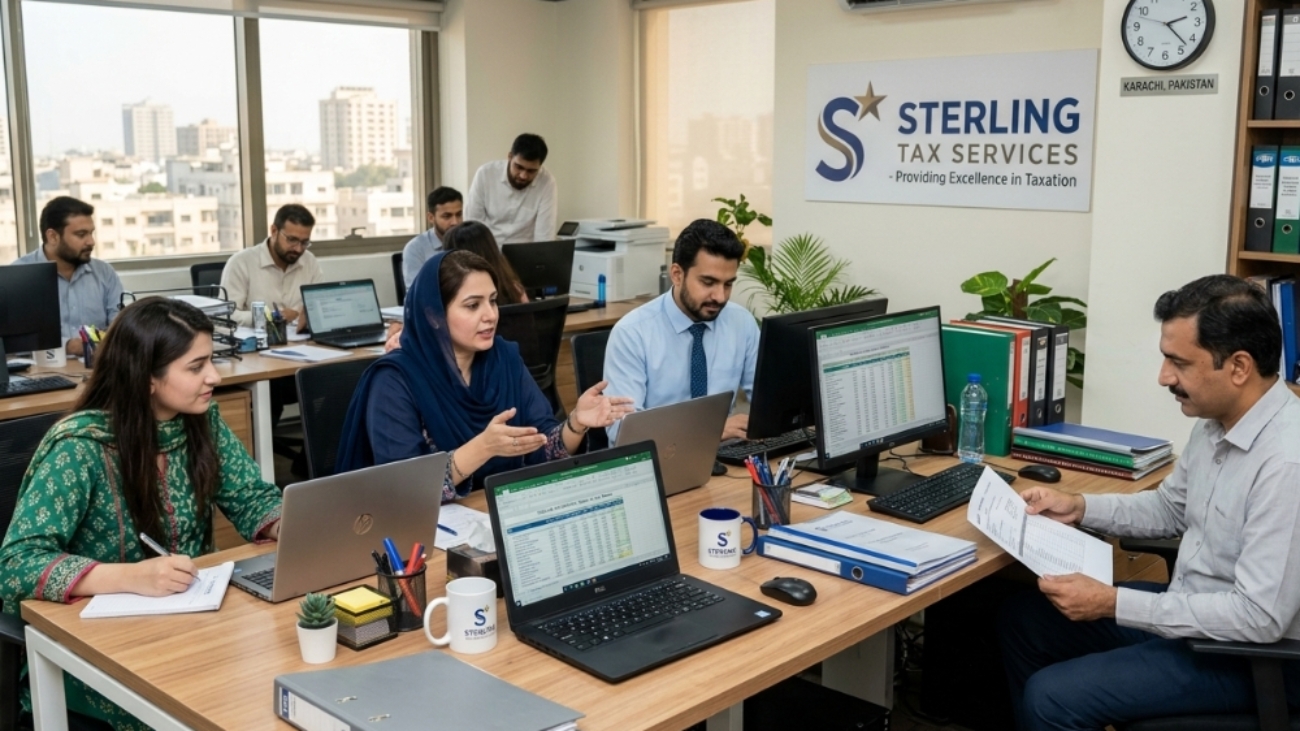
Directors & Shareholders
Requirements for
Pvt Ltd Company in Pakistan
Updated April 2026 · 13 min read · Sterling Consultancy & Advisory
📌 Quick Summary
Under Pakistan's Companies Act, 2017, a Private Limited Company must have a minimum of 2 directors and 2 shareholders, with a maximum of 50 shareholders. Directors and shareholders can be the same persons. Directors must be natural individuals (not corporations), at least 18 years old, with valid CNICs or NICOP, and must not be disqualified under any provision of the Act. Shareholders may be individuals or legal entities. This comprehensive guide explains every legal requirement, role distinction, eligibility rule, shareholder rights, director obligations, and common structuring scenario — giving you everything you need to correctly set up and manage your company's human foundation before registering with SECP.
- Core Numbers — Minimum & Maximum Requirements
- Directors — Who Can and Cannot Serve
- Director Roles, Duties & Legal Obligations
- Shareholders — Eligibility & Rights
- Director vs Shareholder — Key Differences
- Shareholding Structure & Share Types
- Overseas Pakistani & Foreign Directors/Shareholders
- Director Disqualification — Grounds & Consequences
- Changes in Directors & Shareholders Post-Registration
- Common Structuring Scenarios
- How Sterling Consultancy Helps
- Frequently Asked Questions
1. Core Numbers — Minimum & Maximum Requirements
The Companies Act, 2017 establishes clear numerical rules for the human composition of a Private Limited Company in Pakistan. These are not advisory guidelines — they are mandatory legal requirements that SECP enforces at the point of registration and throughout the life of the company. Failure to meet them can result in rejection of your registration application or legal penalties post-incorporation.
Understanding these numbers before you begin your registration is essential, because SECP's LEAP eZfile portal will not accept an application that doesn't comply with the minimum requirements. These rules apply whether you are a local entrepreneur, an overseas Pakistani, or a foreign national — the same framework governs all Pvt Ltd companies in Pakistan. For a comprehensive overview of the registration process, see our complete guide to Pvt Ltd company registration and our company registration services.
The rules are straightforward: directors and shareholders can be the same persons (in most small companies, the two founders are both directors and shareholders simultaneously), or they can be entirely different people. The key is that both minimums must be satisfied independently — you cannot have 2 people who are only shareholders but no directors, or only directors but no shareholders. Sterling Consultancy's online registration experts in Pakistan structure hundreds of companies every year — and incorrect director/shareholder setup is among the most common causes of application rejection.
Structure Your Company Correctly from Day One
Sterling Consultancy & Advisory helps founders correctly structure their director and shareholder arrangements before registration — preventing costly errors and legal complications. Contact us for a free consultation.
2. Directors — Who Can and Cannot Serve
Pakistan's Companies Act 2017 defines precise eligibility criteria for who may serve as a director of a Private Limited Company. These criteria are verified by SECP during the registration process and through the CNIC database cross-check. Understanding who qualifies — and who is legally barred — is critical before designating your director appointments.
Who CAN be a Director
- Pakistani Citizens: Any adult Pakistani citizen with a valid, unexpired CNIC is eligible to be a director. There is no educational, professional, or experience prerequisite.
- Overseas Pakistanis: Overseas Pakistanis with a valid NICOP (National Identity Card for Overseas Pakistanis) are fully eligible. NICOP is legally equivalent to CNIC for all company law purposes.
- Foreign Nationals: Non-Pakistani individuals are permitted as directors, subject to providing a valid passport with proper apostille or embassy attestation. At least one director must be a natural person, but all directors can be foreign nationals under the Companies Act 2017.
- Individuals Who Are Also Shareholders: A person can simultaneously hold both director and shareholder roles — which is the standard arrangement in most two-person Pakistani startups.
- Individuals Serving on Multiple Boards: A person can serve as a director in multiple companies simultaneously — there is no restriction on the number of directorships an individual can hold.
- Professionals: Accountants, lawyers, engineers, consultants, and other professionals can serve as directors, either in their own companies or as independent directors in others.
Who CANNOT be a Director
- Corporations or Legal Entities: Only natural persons (human beings) can serve as directors of a Pvt Ltd company. A company, trust, or other corporate body cannot be appointed as a director.
- Persons Under 18 Years of Age: A director must be at least 18 years old, verified by their CNIC date of birth. SECP's portal automatically rejects applications listing underage directors.
- Undischarged Bankrupts (Insolvents): Anyone who has been adjudicated bankrupt and not yet discharged by a court is disqualified from directorship.
- Persons of Unsound Mind: Anyone declared by a competent court to be of unsound mind is legally disqualified from serving as a director.
- Convicted Persons (Fraud/Breach of Trust): Any person convicted of an offence involving moral turpitude, fraud, or breach of trust within the past 5 years is disqualified.
- Persons Removed by SECP/Court Order: Anyone previously removed from directorship by SECP or court order may not serve as a director during the restriction period.
- NTN Non-Filers (for ATL benefits): While technically eligible for directorship, directors who are not on FBR's Active Taxpayer List (ATL) can create complications for PSEB registration and banking — effectively limiting their usefulness as directors in practice.
3. Director Roles, Duties & Legal Obligations
Being a director of a Pvt Ltd company is a position of significant legal responsibility under the Companies Act 2017. Directors are not merely names on a certificate — they are legally responsible for the management, compliance, and governance of the company. Understanding these obligations before accepting a directorship is essential.
- Fiduciary Duty to the Company: Directors must act in the best interests of the company — not in their personal interest or the interest of any single shareholder. Decisions that benefit the director personally at the company's expense constitute a breach of fiduciary duty.
- Duty of Care and Diligence: Directors must exercise reasonable care, skill, and diligence in managing the company's affairs. This includes attending board meetings, reviewing financial statements, and making informed decisions.
- SECP Annual Return Filing: Directors are responsible for ensuring the company's annual return (Form A) is filed with SECP on time. Late filing results in penalties levied on each director personally.
- FBR Tax Compliance: Directors are jointly responsible for ensuring the company files annual income tax returns with FBR and complies with all withholding tax, sales tax, and other obligations.
- Register of Directors Maintenance: The company must maintain an up-to-date register of directors at its registered office — a statutory requirement under the Companies Act 2017.
- Disclosure of Conflicts of Interest: Directors must disclose any personal interest in transactions that the company enters into, and abstain from voting on such matters at board meetings.
- Statutory Books and Records: Directors are responsible for ensuring the company maintains proper books of accounts, minute books, and statutory registers as required by law.
4. Shareholders — Eligibility & Rights
Shareholders are the owners of a Pvt Ltd company — they hold equity in the business and have defined rights under the Companies Act 2017 and the company's Articles of Association (AOA). Unlike directors, shareholders have much broader eligibility — they do not need to be individuals, have no age restriction in most cases, and can include corporate entities.
Who Can Be a Shareholder
- Individual Pakistani Citizens: Any person — regardless of age (guardians can hold shares on behalf of minors), profession, or FBR status — can be a shareholder of a Pvt Ltd company.
- Overseas Pakistanis: Overseas Pakistanis can hold shares in Pakistani Pvt Ltd companies. No regulatory approval is needed for Pakistani nationals abroad to hold equity.
- Foreign Nationals: Foreign individuals can be shareholders in Pakistani Pvt Ltd companies — generally without any equity cap, unless the company operates in a sector with foreign ownership restrictions (such as media or defense).
- Other Companies (Corporate Shareholders): A registered Pakistani or foreign company can be a shareholder in a Pvt Ltd company. This is commonly used for holding companies and subsidiary structures.
- Trusts and Foundations: Registered trusts and charitable foundations can hold shares, subject to trust deed permissions and regulatory approvals.
Shareholder Rights Under the Companies Act 2017
- Voting Rights: Shareholders have the right to vote on major company decisions at General Meetings — including appointment/removal of directors, approval of annual accounts, declaration of dividends, and major transactions.
- Dividend Rights: Shareholders are entitled to receive dividends when declared by the board, proportional to their shareholding percentage.
- Right to Inspect Company Records: Shareholders have the right to inspect the company's statutory registers, minutes of general meetings, and annual accounts.
- Pre-Emptive Rights on New Share Issuance: Existing shareholders typically have the right of first refusal when the company issues new shares — protecting their proportional ownership from dilution.
- Right to Transfer Shares: Shareholders may transfer their shares, subject to any restrictions in the AOA (Pvt Ltd companies typically have transfer restrictions to maintain the private character).
- Winding-Up Distribution Rights: In case of company liquidation, shareholders are entitled to receive their proportional share of any assets remaining after all debts are paid.
Need Help Structuring Your Directors & Shareholders?
Sterling Consultancy & Advisory structures director and shareholder arrangements for hundreds of companies every year — ensuring legal compliance, tax efficiency, and governance clarity. Get expert guidance today.
5. Director vs Shareholder — Key Differences
The most common confusion among first-time company founders is the distinction between directors and shareholders. In most small Pakistani companies, the same two people hold both roles simultaneously — but the roles are legally distinct with different rights, obligations, and liability profiles.
Director
- Manages the company's day-to-day operations
- Owes fiduciary duties to the company
- Personally liable for SECP/FBR compliance
- Must be a natural person (individual)
- Appointed and removable by shareholders
- Signs legal documents on company's behalf
- Responsible for board meeting decisions
- Must disclose personal conflicts of interest
- Can be fired without compensation in some cases
Shareholder
- Owns a percentage of the company via shares
- Liability limited to amount invested (shares)
- No direct management role (unless also director)
- Can be a company, trust, or individual
- Cannot be removed — only shares can be transferred
- Votes at General Meetings on major decisions
- Entitled to dividends and capital on winding up
- No duty to disclose personal interests (generally)
- Investment return via dividends and share value
| Aspect | Director | Shareholder |
|---|---|---|
| Minimum Number (Pvt Ltd) | 2 (natural persons) | 2 (any eligible person/entity) |
| Maximum Number | Not specified (practical limit) | 50 (Pvt Ltd cap) |
| Can be a Company? | No — individuals only | Yes — corporate shareholders allowed |
| Age Requirement | Minimum 18 years | No minimum (guardian for minors) |
| CNIC Required? | Yes (or NICOP/Passport) | Yes for individuals; CoI for companies |
| Personal Tax Liability? | Yes — for SECP/FBR compliance failures | Limited to investment amount |
| Role in Management | Active management role | Passive (unless also director) |
| Can Be Same Person as Other Role? | Yes — director can also be shareholder | Yes — shareholder can also be director |
6. Shareholding Structure & Share Types
How you distribute shares among your company's shareholders determines ownership percentages, voting power, dividend entitlements, and ultimately who controls the company's future decisions. This is one of the most consequential decisions in company formation — and it deserves careful thought before registration.
- Authorized Capital vs Paid-Up Capital: Authorized capital is the maximum shares your company can issue (declared at registration). Paid-up capital is the amount shareholders have actually paid. You don't need to pay up all authorized capital at registration — start with PKR 100,000 authorized and pay up a smaller amount initially.
- Ordinary Shares: The standard share class — carries equal voting rights and dividend entitlements proportional to holding percentage. Most Pakistani Pvt Ltd companies issue only ordinary shares.
- Face Value: Pakistani companies typically set share face values at PKR 10 or PKR 100 per share. This is a legal accounting concept, not the market value of the shares.
- Minimum 2 Shareholders: Shares must be held by at least 2 different persons (or entities) — a single-person shareholding converts a Pvt Ltd into an SMC (Single Member Company), which is a different legal entity type.
- Controlling Stake (51%+): The shareholder holding more than 50% of shares (or specifically more than 50% of voting rights) effectively controls the company — they can pass ordinary resolutions, appoint directors, and make most business decisions.
- Special Resolutions Require 75%: Major decisions — changing the company name, altering the AOA, reducing capital — require a special resolution which needs 75% of voting shareholders to approve. This is why minority shareholders (below 25%) have limited veto power.
* Based on Sterling Consultancy client data and SECP registration trends. For illustrative purposes.
7. Overseas Pakistani & Foreign Directors/Shareholders
Pakistan's Companies Act 2017 is explicitly accommodating of overseas Pakistanis and foreign nationals in company governance — reflecting Pakistan's strategic interest in attracting diaspora investment and foreign direct investment.
| Category | Can be Director? | Can be Shareholder? | Identity Document | Special Requirements |
|---|---|---|---|---|
| Overseas Pakistani | Yes | Yes | NICOP (preferred) or Pakistan Passport | Need Pakistani mobile no. for SECP portal PIN |
| Foreign National | Yes | Yes | Valid Passport (notarized + apostille) | May need local representative; Board of Investment NOC for certain sectors |
| Dual National | Yes | Yes | Either NICOP or Foreign Passport | NICOP recommended for simpler process |
| Foreign Company (Corporate) | No (not for directorship) | Yes (corporate shareholder) | Company registration documents + apostille | Board resolution authorizing Pakistan investment required |
8. Director Disqualification — Grounds & Consequences
The Companies Act 2017 specifies grounds on which a person is automatically disqualified from holding a directorship — or can be disqualified by SECP or a court. Understanding these protects both the company and the individual from inadvertent legal violations.
- Adjudicated as Insolvent: Any person declared bankrupt by a court of law is automatically disqualified until formally discharged. Continuing to act as a director while insolvent is a criminal offence.
- Convicted of Offences: Conviction for offences involving fraud, misappropriation, breach of trust, or dishonesty within the preceding 5 years disqualifies a person from directorship.
- Found to be of Unsound Mind: A court declaration of unsound mind results in automatic disqualification from all directorships.
- Non-Filing of Personal Tax Returns (FBR): While not a direct disqualification under the Companies Act, non-filer status on FBR's ATL creates significant practical complications — PSEB registration is blocked, banking relationships are affected, and regulatory credibility is undermined.
- SECP Removal Order: SECP may remove a director from office under specific regulatory provisions — for example, if the director is found to be engaged in insider trading, market manipulation, or repeated non-compliance with SECP directives.
- Court Order: Courts can disqualify individuals from company directorship as part of civil or criminal proceedings — particularly in cases involving corporate fraud or minority shareholder oppression.
9. Changes in Directors & Shareholders After Registration
Company ownership and governance structures change over time — founders exit, investors join, partnerships dissolve. The Companies Act 2017 provides mechanisms for all such changes, but they must be formally documented and reported to SECP through the appropriate statutory filings.
| Change Type | Process | SECP Filing Required | Timeline |
|---|---|---|---|
| Appointing a New Director | Board resolution + director consent letter | Form 29 (Change in Directors) | Within 14 days of change |
| Removing a Director | Ordinary resolution at General Meeting | Form 29 (Change in Directors) | Within 14 days of change |
| Director Resignation | Written resignation letter to company | Form 29 (Change in Directors) | Within 14 days of receipt |
| Share Transfer (Shareholder Change) | Share transfer deed + board approval | Form A (Annual Return) reflects change | Update register; report at next annual return |
| Issuing New Shares | Board/shareholder resolution + allotment | Form A & capital increase filing | Within 30 days of allotment |
| Change of Director's Address | Director notification to company | Form 29 update | Within 14 days of change |
10. Common Structuring Scenarios
Sterling Consultancy's registration experts encounter several recurring director/shareholder structuring patterns. Here are the most common scenarios and the recommended approach for each:
| Scenario | Challenge | Recommended Solution |
|---|---|---|
| Solo Founder wants Pvt Ltd | Needs 2 directors and 2 shareholders — only 1 person | Use SMC (Single Member Company) structure; or add a trusted family member as a 10% nominal shareholder/director |
| Two Equal Co-Founders | 50/50 deadlocks on major decisions | Draft AOA with dispute resolution mechanisms; designate one as CEO/MD with operational authority |
| Overseas Pakistani + Local Partner | NICOP/passport required; OTP for overseas director | Use Sterling Consultancy managed registration; NICOP + local Pakistani SIM for portal OTP |
| Foreign Investor + Pakistani Founder | Passport apostille; possible sector restrictions | Apostille foreign documents; check BOI sector restrictions; draft Investment Agreement alongside AOA |
| Family Business Registration | All family members as shareholders creates complexity | Limit initial shareholders to 2–3 operating family members; hold shares via family trust for larger families |
| Corporate Shareholder (Holding Company) | Company as shareholder — needs individual directors | Appoint the corporate shareholder's authorised representative as director; maintain individual directors separate from corporate shareholders |
11. How Sterling Consultancy Helps with Your Company Structure
Sterling Consultancy & Advisory is Pakistan's trusted corporate registration and compliance firm. We don't just file forms — we help founders correctly structure their director and shareholder arrangements from the outset, draft appropriate MOA/AOA provisions that reflect the governance intent of the founding team, and ensure all SECP, FBR, and legal requirements are met.
| Service | What We Deliver |
|---|---|
| SECP Company Registration | Complete Pvt Ltd registration including director structuring advice, custom MOA/AOA, shareholding design, and portal management |
| Director/Shareholder Structure Consultation | Free pre-registration consultation on optimal director/shareholder structure based on your business goals and ownership intentions |
| MOA/AOA Custom Drafting | Future-proof Objects Clause, appropriate share transfer restrictions, dividend policy, and governance provisions |
| Overseas Client Registration | Full remote registration for overseas Pakistani and foreign national directors/shareholders |
| PSEB Registration | IT company PSEB certification — requires properly structured company with FBR-compliant directors |
| Trademark Registration | Brand protection in the company's name — alongside SECP registration for maximum protection |
| Post-Registration Changes | Form 29 filings for director changes, share transfers, and governance amendments — ensuring continuous SECP compliance |
🔗 Related Services & Guides — Sterling Consultancy
12. Frequently Asked Questions (FAQs)
These are the most-searched questions on Google about directors and shareholders requirements for Pvt Ltd companies in Pakistan — answered in full detail.
Under Section 153 of the Companies Act, 2017, a Private Limited Company in Pakistan must have a minimum of 2 directors at all times. There is no statutory maximum for directors in a Pvt Ltd company (unlike the 50-shareholder cap), but practically most small companies have 2–5 directors. Every director must be a natural person — meaning an individual human being, not a corporation or trust. Both directors must have valid CNICs (Pakistani citizens), NICOP (overseas Pakistanis), or notarized and apostille-attested passports (foreign nationals). Each director must be at least 18 years old and not disqualified under any provision of the Companies Act. All directors must create individual accounts on SECP's LEAP eZfile portal and sign the company's Memorandum and Articles of Association using their 4-digit digital PIN before the incorporation application can be submitted. If at any point during the company's life the number of directors falls below 2 (due to death, resignation, or disqualification), the surviving director must immediately arrange for a new appointment to restore the minimum requirement. Failure to do so puts the company in breach of the Companies Act.
Yes — absolutely. In Pakistani Pvt Ltd companies, it is extremely common — in fact, it is the default for most startups — for the same people to hold both director and shareholder roles simultaneously. There is no legal requirement for the directors and shareholders to be different people. This means in a standard two-founder company, Person A and Person B are typically: (1) both directors — managing the company and signing documents; and (2) both shareholders — owning 50% each of the company's shares. They wear two different legal hats simultaneously: as directors, they have management and fiduciary duties to the company; as shareholders, they have ownership rights including voting at General Meetings and receiving dividends. The two roles are legally distinct — a person can be removed as a director (by shareholder vote) while remaining a shareholder, or can transfer their shares while remaining a director. It is important to understand these distinctions clearly when structuring your company. Sterling Consultancy advises all founders on the appropriate structuring of their director/shareholder roles before registration. Contact us at [email protected] for a free pre-registration consultation.
Yes — foreign nationals can serve as directors of Pakistani Private Limited Companies under the Companies Act, 2017. There is no citizenship or residency requirement for directors — all directors can be non-Pakistani nationals. A foreign director must provide: (1) a valid passport — which must be notarized and apostille-attested in their country of residence (for Hague Convention countries) or attested by the Pakistani Embassy/Consulate (for non-Hague countries); (2) proof of foreign residential address (apostille attested for foreign nationals); and (3) a Pakistani mobile number for receiving SECP portal OTP verifications — a family member or local representative's number can be used for this purpose. Practically speaking, foreign directors also need to consider how they will handle ongoing SECP and FBR compliance obligations — which is why many foreign-owned Pakistani companies also appoint at least one resident Pakistani director who can manage day-to-day regulatory interactions. Sterling Consultancy specializes in company registration for foreign nationals and overseas Pakistani clients — contact us at 0312-5022103 or [email protected] for a complete guide to your specific situation.
Shareholders in a Pakistani Private Limited Company have a comprehensive set of rights under the Companies Act, 2017 and the company's Articles of Association. The primary shareholder rights are: (1) Voting Rights — shareholders vote at General Meetings on major decisions including appointment/removal of directors, approval of annual financial statements, declaration of dividends, and approval of major transactions. Each ordinary share typically carries one vote. (2) Dividend Rights — when the board declares dividends, shareholders receive payments proportional to their shareholding percentage. (3) Pre-emptive Rights — when the company issues new shares, existing shareholders generally have the right of first refusal to subscribe for their proportional share, protecting them from dilution. (4) Inspection Rights — shareholders can inspect the company's statutory registers, annual accounts, and minutes of General Meetings. (5) Share Transfer Rights — shareholders can sell or transfer their shares, subject to AOA transfer restrictions (Pvt Ltd companies typically require board approval for share transfers). (6) Liquidation Rights — on winding up, shareholders receive their proportional share of remaining assets after all debts are paid. (7) Special Resolution Rights — major changes (altering the AOA, changing the company name, reducing capital) require approval by 75% of shareholders — meaning a 26%+ shareholder effectively has a veto on these changes.
When a director of a Pakistani Pvt Ltd company dies, resigns, or is removed from office, the following must happen: (1) Immediate review of director count — if the company now has fewer than 2 directors, this is an urgent legal violation. The remaining director(s) must immediately arrange to appoint a new director to restore the minimum of 2. (2) SECP Form 29 filing — within 14 days of the date of resignation/death/removal, the company must file Form 29 (Return of Change in Directors) with SECP through the LEAP eZfile portal, notifying SECP of the change in director composition. (3) Board resolution — a board resolution (and in some cases a shareholder resolution) must formally record the change, appoint any replacement director, and update the company's statutory register of directors. (4) Banking notifications — the company's bank must be notified of the directorship change to update authorized signatories and banking mandates. (5) FBR and other authority updates — where applicable, FBR and other regulatory registrations reflecting the director's information must be updated. Failure to file the Form 29 notification within 14 days results in penalties for each remaining director. Sterling Consultancy provides ongoing company secretarial services to handle these changes correctly and on time. Contact us at [email protected].
👥 Structure Your Company Correctly — Expert Help Available
Sterling Consultancy & Advisory provides expert guidance on director and shareholder structuring, complete SECP company registration, FBR NTN, PSEB certification, and trademark protection — all under one roof. Contact us now for a free consultation and get your company structured right from day one.