Gtt8MdRWoAI6kkT

FBR’s New Certificate of Eligibility

FBR’s New Certificate of Eligibility

The Federal Board of Revenue (FBR) has introduced a new legal requirement under the Finance Bill 2025–26 that significantly changes how individuals purchase property and vehicles in Pakistan. As per the latest update, a Certificate of Eligibility is now mandatory before executing any high-value transaction involving immovable property or motor vehicles. This move is part of a broader strategy to improve tax compliance, discourage the use of undeclared income in large purchases, and strengthen digital monitoring of asset acquisition.

The new rule applies to both individual taxpayers and business entities planning to buy real estate or a vehicle exceeding a certain threshold, which will be formally notified by the federal government. Before such a transaction can proceed, the buyer must obtain a Certificate of Eligibility from the FBR via its IRIS online system. The registration authorities—such as the provincial excise department or land registrar offices—will be instructed not to register any property or vehicle unless this certificate is provided at the time of transaction.

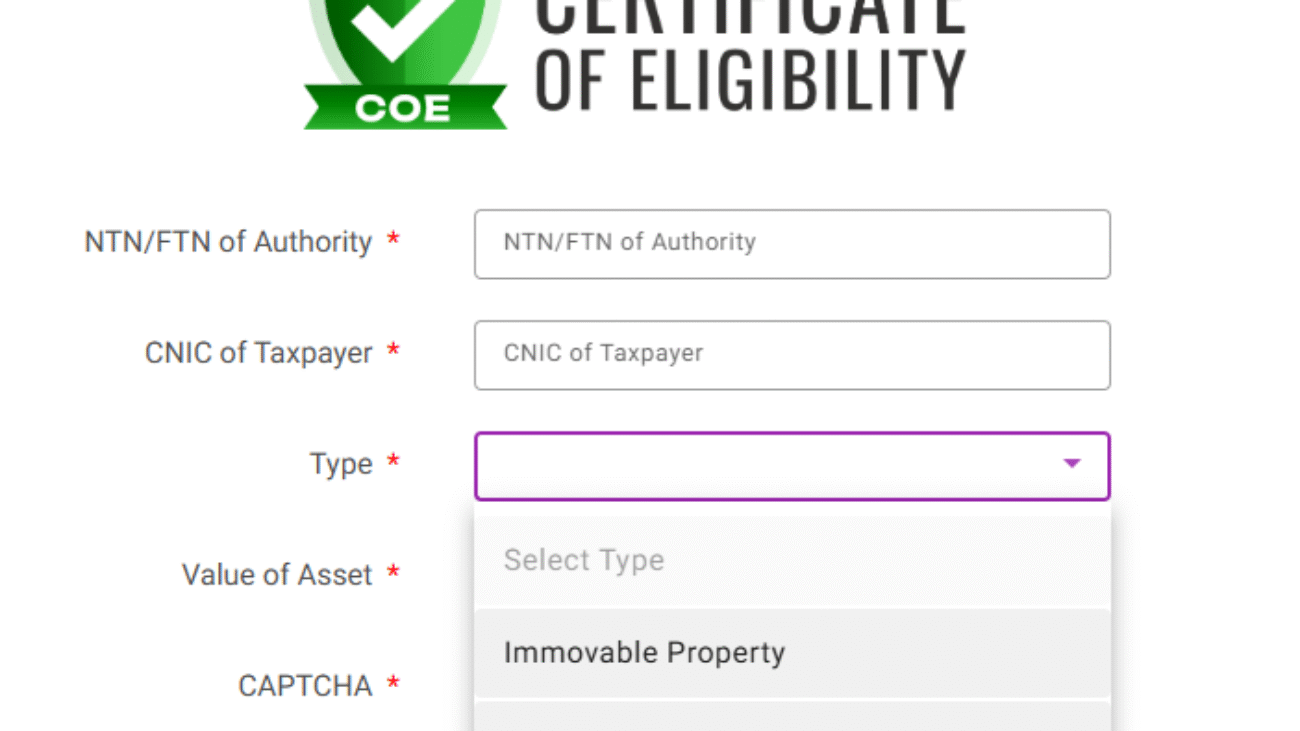
This certificate acts as an official confirmation that the buyer is a registered taxpayer, has filed their return for the previous tax year, and has disclosed adequate income or assets in their tax profile to justify the intended purchase. The eligibility criteria will be auto-assessed by the IRIS portal. Upon logging into the FBR’s IRIS platform, users will find a new application feature for the Certificate of Eligibility. Once they apply, the system cross-checks their filing status, reported income, and declared assets. If all checks are cleared, the portal generates a digital certificate that must be presented to the relevant authority to complete the purchase process.

Failure to obtain the certificate means that the buyer cannot proceed with the transaction. This digital barrier ensures that no large property or vehicle acquisition can be made using undeclared or black money. This provision is expected to close a major loophole that previously allowed non-filers and individuals with under-reported income to make big-ticket purchases without scrutiny. The certificate must be acquired before registration, not after, and non-compliance will result in outright rejection of registration applications.

FBR’s move also aligns with Pakistan’s broader commitments to financial transparency and tax reform, including conditions set forth by global financial bodies such as the IMF. The government aims to gradually expand the tax base by linking high-value lifestyle indicators with compliance behavior. Individuals making such purchases will now face an automated digital check that assesses whether their tax history supports such spending. In other words, the system will now ask: “Are you financially eligible to buy this asset as per your declared income?”

This also means that a person must ensure their tax return for the preceding year has been filed. Moreover, the declared income or assets must logically support the purchase value. For example, if a person earning Rs. 1.2 million annually applies to purchase property worth Rs. 25 million, the system will likely flag the transaction unless the person has declared substantial prior assets, inheritance, or capital gains. This step is not just about checking box compliance, but matching reported financial activity with actual transactions.

Real estate agents, car dealers, and registration authorities will need to update their internal processes to comply with this new requirement. Buyers must now be advised early in the process to ensure they are compliant and eligible before making any financial commitment. For this reason, many tax consultants and registration service providers have started offering IRIS login support, return filing, and eligibility application services to avoid rejection and delays.

This reform is part of FBR’s wider digitization and enforcement strategy. Over the past few years, FBR has linked various databases, such as NADRA, vehicle registration, land records, utility payments, and travel history, to create a more complete picture of a citizen’s financial profile. The Certificate of Eligibility is one more tool in this data-driven enforcement system. It shifts the compliance burden onto the buyer before they complete a large transaction, instead of relying solely on post-purchase investigations.

Although the move is largely praised for improving accountability, it has also raised concerns among stakeholders about ease of doing business. Critics argue that it may slow down the pace of genuine property and vehicle transactions, especially in urgent cases. However, FBR officials maintain that the certificate process is fully digital and can be completed within minutes if the taxpayer is compliant. They urge buyers to maintain up-to-date tax filings and use licensed professionals for assistance.

For ordinary citizens, the message is simple: if you plan to buy a car or property of significant value in Pakistan, ensure you are a filer, have declared sufficient assets, and get your Certificate of Eligibility approved from FBR beforehand. Ignoring this requirement can lead to legal complications, financial loss, or rejection of registration altogether.

Taxpayers are advised to consult their tax consultants or log into the IRIS system directly to check their eligibility and understand what documents or declarations might be needed. Those who have not yet filed their tax return for the previous year should prioritize doing so immediately, as this is now a prerequisite for obtaining eligibility.

Section 7E Explained

Section 7E Explained: Applicability, Benefits, and Drawbacks of the Capital Value Tax in Pakistan

With the evolving tax regime in Pakistan, Section 7E of the Income Tax Ordinance, 2001 has emerged as a crucial provision impacting property owners across the country. Introduced through the Finance Act 2022, Section 7E imposes a “deemed income tax” on the ownership of immovable properties, primarily aiming to bring unproductive real estate assets into the tax net.

In this guide, we’ll break down:

  • What is Section 7E?

  • Who does it apply to?

  • What are the key exemptions?

  • What are the benefits and drawbacks?

  • What should property owners and investors keep in mind?

What is Section 7E?

Section 7E imposes tax on deemed income from capital assets located in Pakistan, owned by a resident person. The FBR assumes that the property earns a notional income — regardless of whether it is actually rented out — and levies a 20% tax on 5% of the fair market value of the property.

In simpler terms:

Deemed income = 5% of fair market value
Tax payable = 20% of that deemed income
Effective tax = 1% of property’s fair market value per year

Applicability of Section 7E

Section 7E applies to:

  • Resident individuals, AOPs (Association of Persons), and companies

  • Owners of capital assets (immovable properties) that are not part of active business use or excluded categories

  • Properties located anywhere in Pakistan

💡 Key Note: The market value is determined via FBR-notified valuation tables or DC rates, whichever is higher.

Exemptions under Section 7E

Not all properties are taxed under this section. The following are exempt:

  1. One capital asset owned by the resident person for personal residential use

  2. Property used exclusively for the owner’s business

  3. Properties owned by:

    • Local governments

    • Provincial or federal governments

    • Development authorities

  4. Properties held for low-cost housing schemes

  5. Agricultural land used for cultivation

  6. Properties acquired within the current tax year

These exemptions are claimed by filing a declaration with the FBR during return submission.

Benefits of Section 7E

Discourages Real Estate Hoarding
The primary goal of 7E is to reduce speculative hoarding and underutilized real estate investments, which contribute to artificial inflation in the property market.

Broadens the Tax Net
Section 7E brings high-value asset holders into the tax system even if they don’t disclose rental income — curbing tax evasion.

Encourages Productive Use of Property
Since tax is levied on unused or non-income-generating properties, it nudges owners to either rent out, sell, or put the property into productive use.

Enhances FBR’s Data Collection
FBR valuation tables and declared property data improve transparency and help strengthen Pakistan’s fiscal infrastructure.

Drawbacks and Criticisms of Section 7E

Double Taxation Risk
Some experts argue that this tax leads to double taxation — once on the property value under 7E and again on actual rental income (if declared under Section 15).

Unfair to Non-Renting Owners
Owners who hold properties for future use (such as retirement) or have inherited assets without intent to rent may find this tax unjust.

Market Confusion & Legal Challenges
There has been considerable litigation on the implementation of Section 7E in various High Courts, especially regarding the legality and retrospective application.

Burden on Genuine Investors
Small investors who have invested in real estate to safeguard savings (without income generation) face an additional annual tax liability.

Recent Legal and Implementation Updates

  • In 2023 and 2024, various High Courts, including Lahore and Islamabad, have given interim relief to some petitioners challenging the section’s applicability.

  • However, FBR continues to implement 7E in most jurisdictions unless a specific court order applies.

  • Filing property tax returns without the correct 7E declaration can result in automatic system-based tax liability at the time of return submission.

Compliance Tip for Property Owners

If you own real estate in Pakistan and believe you’re exempt under Section 7E:

  • Mention exemption at the time of filing the return

  • Attach required declarations/documents

  • Consult a tax advisor to avoid auto-calculated tax penalties

Final Thoughts

Section 7E represents a major shift in how immovable property is taxed in Pakistan. While it offers a mechanism to reduce speculative property investments and widen the tax base, it also places a new burden on honest, non-commercial property owners.

As the courts continue to interpret and refine the provision, staying updated on its latest applicability and properly filing your tax return is crucial to avoid penalties and legal complications.

If you’re unsure whether Section 7E applies to your property or how to declare it, consult with our experts at Sterling.pk — Pakistan’s trusted tax and legal compliance firm for individuals and businesses.

trade mark

Complete Guide to Trademark Registration in Pakistan (2025)

[ez-toc]

Trademark registration in Pakistan plays a critical role in securing your brand’s identity and protecting your intellectual property. Whether you’re a startup, an established business, or planning to expand internationally, registering your trademark ensures exclusive rights to your brand name, logo, or symbol under the Trademarks Ordinance, 2001.

Why Trademark Registration is Important in Pakistan

Trademark registration grants legal ownership and protects your brand from misuse or infringement. Once registered, your brand name, logo, or slogan becomes a legally protected asset. This is essential for safeguarding your business identity in a competitive market.

Who Can Register a Trademark?

Any individual, business, or company can apply for a trademark in Pakistan. There is no restriction based on the type or size of the business entity.

Symbols of Trademarks

™ — Can be used for unregistered trademarks to signal ownership claim.
® — Only used after the trademark has been officially registered.
℠ — Used by service providers, though ™ is generally preferred for simplicity.

Benefits of Trademark Registration in Pakistan

– Legal protection from infringement
– Exclusive rights to use the mark
– Builds trust with consumers
– Increases brand value and recognition
– Eligibility for legal action in case of misuse

Trademark Registration Process in Pakistan

1. Trademark Search (TM-55)

Search the trademark database to ensure the brand is unique. Submit TM-55 form with description of the mark to begin search.

2. Filing the Application (TM-1 or TM-2)

Submit application with details including brand name, applicant info, and class of goods/services.

3. Formalities Examination

IPO examines documents and asks for corrections (if needed) within 30 days.

4. Substantive Examination

Application is analyzed under the Trademark Act to confirm distinctiveness and legal eligibility.

5. Publication in Trademark Journal

If accepted, trademark is published in the journal. Oppositions can be raised within 4 months.

6. Handling Opposition (TM-6 or TM-9)

Applicant responds to opposition through defense forms TM-6 or TM-9.

7. Registration Fee & Certificate

Once cleared, fee is submitted. Registration certificate is issued and ® symbol can now be used.

8. Trademark Renewal

Trademark must be renewed every 10 years to maintain legal rights.

Understanding Trademark Classes

Pakistan follows 45 international classes for trademarks. Choosing the correct class is crucial. If unsure, consult an expert.

Cost of Trademark Registration in Pakistan

Fees vary depending on the form and filing type. For individuals: PKR 4,500–5,000. For partnerships or companies: PKR 9,000–10,000. Additional government fees apply per class.

How Long Does It Take to Register a Trademark?

The complete registration process typically takes 12–18 months, including application, examination, publication, and issuance of certificate.

Trademark Infringement and Legal Action

Sections 39 and 40 of the Trademarks Ordinance 2001 define infringement. Legal remedies include injunctions, damages, and court proceedings. All cases must be filed in a District Court under Section 117.

Documents Required for Trademark Registration

– Application form
– CNIC or Passport
– Business proof (Incorporation)
– Trademark image/logo
– Power of Attorney (if using an agent)
– List of goods/services
– Proof of use (if applicable)

Common Trademark Misconceptions

– Forming a business does not automatically grant trademark rights.
– A registered business name is not the same as a registered trademark.
– Not all names are eligible for trademark (e.g. generic terms).

Frequently Asked Questions (FAQs)

– Can I register without complete documents? No.
– Can multiple people own a trademark? Yes, with Power of Attorney.
– What is the validity period? 10 years from filing.
– What happens if my trademark isn’t renewed? It can be opposed or lost.
– Can I trademark a similar name? Depends on class, use, and distinctiveness.
– What’s the difference between © and ®? Copyright is for original content, ® is for registered trademarks.
– Can I use ™ before registration? Yes, from the day of filing.
– Can I register in more than one class? Yes, but fees apply per class.

Shabz Sharif

Government Sets Criteria for Arrests in Tax Fraud: PM Outlines Six Key Points

Government Sets Criteria for Arrests in Tax Fraud: PM Outlines Six Key Points


ISLAMABAD – June 17, 2025:
Prime Minister Shehbaz Sharif has directed the Federal Board of Revenue (FBR) to implement a strict set of conditions before arresting individuals in tax fraud cases. Amid growing concerns from parliamentarians and the business community, the Prime Minister called for amendments to the Finance Act to prevent the misuse of authority by tax officials.

Chairing a high-level review meeting on Monday, Shehbaz Sharif emphasized the need for checks and balances within the FBR’s enforcement mechanism. He instructed that no taxpayer or businessperson should face harassment under any circumstances, and ordered the creation of a special oversight committee. The meeting was attended by several federal ministers, economic experts, the Chairman of FBR, and other senior officials.

Officials briefed the Prime Minister that the power to arrest sales tax defaulters has existed since the 1990s. However, recent court decisions prompted a review of these provisions. As a result, changes are being incorporated to ensure legal clarity and avoid undue harassment of taxpayers.

“The respect and dignity of taxpayers, especially the business community and investors, are of utmost importance,” Shehbaz stated. He added that arrest powers should only apply in extraordinary cases involving large-scale tax fraud, and must be backed by clear procedural safeguards.

The Prime Minister laid down six conditions that must be met before any arrest is made under tax laws. These include: the accused attempts to escape or flee jurisdiction; evidence tampering is suspected or observed; the person fails to appear despite being served three separate notices; the tax fraud exceeds a certain monetary threshold; for arrest of senior executives such as CEOs, CFOs, or board members, the fraud must exceed PKR 50 million; and approval must be obtained from a special board that includes FBR officials and a private sector representative.

Shehbaz Sharif further ordered the establishment of an external review mechanism and instructed that these safeguards be included in the Finance Act. He also directed that coalition partners in the Parliament be consulted before finalizing the provisions.

The FBR, under pressure to meet its Rs389 billion revenue enforcement target agreed with the IMF, had proposed increasing the arrest threshold and penalties. This included eliminating the PKR 1 billion fraud threshold and raising imprisonment from five to ten years. However, the PM’s directions aim to balance enforcement with fairness.

The Senate Standing Committee on Finance, chaired by Senator Saleem Mandviwalla, also raised serious concerns over tax enforcement. Senator Farooq H. Naek proposed reducing penalties and sentencing terms to make them more proportionate. He also recommended a phased legal process: separate stages for inquiry, investigation, and trial.

Senator Anusha Rehman exposed how surplus funds of various authorities, including Rs45 billion from an abandoned body, were being parked outside the government’s consolidated account. She also criticized NADRA’s excessive verification charges, including those applied to the ECP during elections.

The committee also discussed FBR’s regulation of online marketplaces. Senator Anusha Rehman emphasized protecting youth and women entrepreneurs by avoiding blanket taxes on all e-commerce activity. She proposed setting a reasonable threshold for mandatory registration.

On e-billing, Senator Mohsin Aziz urged the government to assess readiness, citing Malaysia’s three-year phased rollout. Mandviwalla supported bringing structured proposals forward.

The Senate panel reviewed multiple clauses of the Finance Bill 2025-26, including the gradual phasing out of tax exemptions for FATA/PATA. Starting with a 10% GST, it will rise to 18% in the coming years. The committee also approved abolition of the Federal Excise Duty (FED) on immovable property. Concerns were raised by provincial representatives regarding FBR’s expanding role in areas constitutionally reserved for provinces, particularly on service taxes.

The meeting concluded with the Prime Minister’s firm direction to maintain balance between enforcement and protection of taxpayer rights. All legal and constitutional safeguards must be integrated into the Finance Act before implementation begins.

600457f136514

Steel Mills Association Rejects 10% Manufacturing Tax

PESHAWAR – June 2025: Steel Mills Association Rejects 10% Manufacturing Tax
Leaders of the FATA Steel Mills Owners’ Association have strongly condemned the federal government’s recent decision to impose a 10% tax on manufacturing units operating in the merged tribal districts. Speaking at a news conference at the Peshawar Press Club, Association Chairman Wajid Afridi called the tax ‘a betrayal of the promises made at the time of the merger.’

Government Commitments Ignored

During the merger of the Federally Administered Tribal Areas (FATA) with Khyber Pakhtunkhwa, the government had pledged to exempt industries in the region from federal taxes until at least 2028. This commitment was also recorded in the proceedings of the National Assembly. However, association members stated that the new tax measure contradicts those assurances.

Industries Already in Crisis

The association’s representatives expressed deep concern that the new tax would exacerbate the fragile industrial environment of the region. Many businesses are already struggling due to insufficient infrastructure, security challenges, and a lack of investment incentives. They emphasized that such a fiscal burden could force several units to shut down.

Unmet Development Promises

In addition to the tax grievance, the steel mill owners also criticized the federal and provincial governments for not delivering on development commitments made at the time of the merger. These included the creation of industrial zones, road infrastructure upgrades, and utility provisions—all of which remain largely unfulfilled.

Warning of Protest Movement

The association warned that if the federal government fails to withdraw the tax, they would be compelled to launch a protest campaign. They called on relevant authorities to reconsider the policy and prioritize economic support for struggling industries in the merged districts.

The steel mills association reiterated that their demand is not only based on economic viability but also on constitutional commitments made during a sensitive transitional period. ‘It’s time the government stands by its word and supports industrial growth rather than suffocating it,’ said Afridi.

How to Check Your Filer Status in Pakistan

How to Check Your Filer Status in Pakistan (Updated 2025 Guide)

If you live or do business in Pakistan, staying updated on your filer status with the FBR (Federal Board of Revenue) is essential. Being an active taxpayer (filer) not only keeps you compliant with the law but also unlocks financial perks like lower taxes and faster refunds.

This step-by-step guide will walk you through all the easy ways to check your filer status — online, by SMS, through mobile apps, or by downloading the official ATL list.

🔍 4 Ways to Check Your Filer Status with FBR

✅ 1. Check Online via FBR IRIS Portal


Steps:

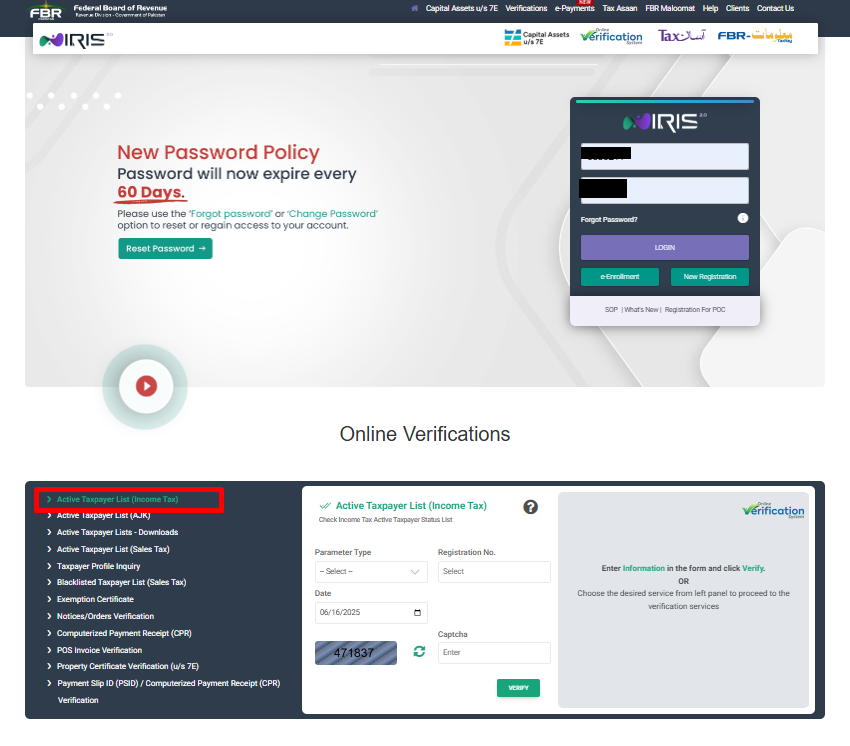
  1. Visit the official FBR verification page: https://iris.fbr.gov.pk/#verifications

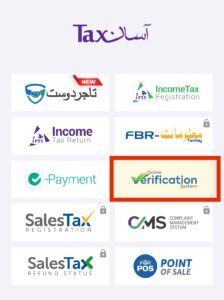
  2. Scroll down to “Online Verification Services.”

  3. Select “ATL (Active Taxpayer List)” from the list.

  4. Enter your CNIC, NTN, or Passport number.

  5. Choose the appropriate parameter (CNIC, NTN, or Passport).

  6. Enter today’s date and the Captcha.

  7. Click “Verify”.

The system will show whether you’re a filer or non-filer.

✅ 2. Check via SMS (No Internet Needed)

Quick & Easy:

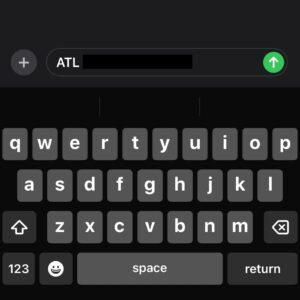
  • Send an SMS to 9966

  • Format: ATL<space>CNIC number (without dashes)

  • Example: ATL 3520112345678

You’ll get an instant reply with your tax status.

✅ 3. Use the FBR Tax Asaan Mobile App

Steps:


  1. Download “Tax Asaan” from Google Play or Apple App Store.

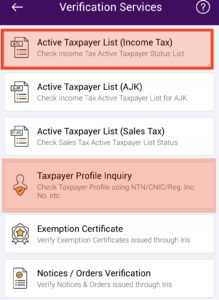
  2. Open the app and go to Active Taxpayer List.

  3. Enter your CNIC, NTN, or Passport number.

  4. View your filer status on-screen.

The app also allows you to file returns, view tax history, and generate payment challans.

✅ 4. Download the Active Taxpayer List (ATL)

  • Go to FBR’s website and download the ATL in Excel format.

  • The list is updated after every 24-48 Hours.

🎯 Why You Should Be a Filer in Pakistan

Being listed as an Active Taxpayer gives you significant financial benefits:

Benefit Description
💸 Lower Tax Rates On property transactions, banking, vehicles, etc.
💼 Business Credibility Required for tenders, licenses, and contracts
🔄 Tax Refunds Claim eligible refunds faster
⛔ Avoid Extra Charges Non-filers pay up to 100% more in withholding tax

If you check your status and find that you’re not on the ATL, it usually means:

  • You haven’t filed your tax return, or

  • You didn’t pay the annual ATL surcharge.

Surcharge Fees to be Included:

  • 🏢 Companies: PKR 20,000

  • 🏘️ AOPs (Partnerships): PKR 10,000

  • 👤 Individuals: PKR 1,000

After paying the surcharge and/or filing your return, your name is added to the ATL.

📞 Need Help Filing or Getting on the ATL?

ABH Tax Consultants (Islamabad) can help you:

  • File your tax return correctly

  • Pay your ATL surcharge

  • Maintain your active filer status

  • Avoid higher taxes and penalties

🔚 Final Thoughts

Staying active on the FBR’s ATL is more than just compliance — it’s smart money management. Whether you’re a freelancer, salaried person, or business owner, knowing your tax status and taking action can save you thousands annually.

Stay informed. Stay compliant. Stay ahead.

Need help? Sterling.pk are just a call away.

Cyber_Wing_Minstry_of_IB_and_NH_62573

Punjab Unveils Rs5.3 Trillion Tax-Free Budget for FY2025-26

Punjab Government Unveils Rs5.3 Trillion Tax-Free Budget for FY2025-26 with Record Development Outlay

Lahore – June 16, 2025:
Punjab Finance Minister Mujtaba Shuja-ur-Rehman on Monday presented a Rs5.335 trillion tax-free budget for the fiscal year 2025-26, marking a significant step towards development-focused governance. The budget was presented in the Punjab Assembly, just a week after the federal government’s budget announcement.

Key Budget Highlights:

  • Total Budget Outlay: Rs5.335 trillion
  • Non-Development Expenditure: Rs2.706 trillion (+6%)
  • Current Capital Expenditure: Rs590 billion
  • Development Budget: Rs1.24 trillion — a record-high, up 47% from FY25
  • Federal Transfers (FDP): Rs4,062.2 billion
  • Provincial Revenue Target: Rs828.1 billion
  • Punjab Revenue Authority (PRA) Target: Rs340 billion

Focus on Social Services

The budget allocates Rs494 billion to the social sector, accounting for 40% of the development budget. The provincial government announced a 10% salary increase for government employees and a 5% pension raise.

Education Sector Boost

  • Development Expenditure: Rs148 billion
  • Non-Development Expenditure: Rs661 billion
  • Laptop Scheme: Rs15.1 billion for 112,000 students
  • School Uplift: Rs40 billion
  • Merit Scholarship Programme: Rs15 billion
  • Higher Education: Rs25 billion
  • Special Education: Rs5 billion

Health Sector: Major Investment

  • Total Health Budget: Rs630.5 billion
  • Development Expenditure: Rs181 billion (+131%)
  • Non-Development Expenditure: Rs450 billion
  • Free Medicines: Rs79.5 billion
  • Nawaz Sharif Medical District (Lahore): Rs109 billion
  • Nawaz Sharif Institute of Cancer Treatment and Research: Rs72 billion

Support for Local Bodies & Infrastructure

  • Local Government Bodies: Rs411.1 billion
  • Waste Management & Municipal Grants: Rs150 billion + Rs20 billion
  • Construction Sector: Rs335.5 billion

Agriculture and Social Protection

  • Agriculture, Livestock & Irrigation Development: Rs123 billion
  • Non-Development (Agri Sector): Rs56.2 billion
  • Social Security Package: Rs70 billion

The finance minister lauded both political and military leadership for maintaining national interests and mentioned that 6,104 development projects were completed during the current fiscal year.

Opposition Reaction

The budget session saw protests from opposition lawmakers of Pakistan Tehreek-e-Insaf (PTI), highlighting political tensions amid the provincial government’s presentation.

No New Taxes Introduced

Staying true to its “tax-free” label, the provincial government introduced no new taxes in the budget. Instead, the focus remains on efficient revenue collection, increased development expenditure, and expanding public welfare programs.

Strategic Focus

Calling it a “strategic shift in Punjab’s history,” the finance minister emphasized infrastructure, health, education, and sanitation as core priorities. The budget outlines over 850 development schemes, including public-private partnerships for new hospitals under the expansion of Nawaz Sharif Medical City.

With an estimated Rs740 billion in provincial surplus aligned with IMF commitments, Punjab’s FY2025-26 budget aims to drive inclusive growth, improve public service delivery, and boost socio-economic development across the province.

Sialkot Chamber of Commerce & Industry (SCCI)

FBR Likely to Raise Daily Tax-Free Cash Withdrawal Limit for Non-Filers

Finance Bill 2025-26 Proposes Major Tax Reforms for Non-Filers and E-Commerce Sector

Islamabad – June 16, 2025: The Federal Board of Revenue (FBR) has proposed key changes in the Finance Bill 2025-26 aimed at broadening the tax base and regulating the growing digital economy, ARY News reported.

One of the major proposals includes increasing the daily tax-free cash withdrawal limit for non-filers from Rs. 50,000 to Rs. 75,000. However, withdrawals beyond this limit will now be subject to a higher withholding tax of 0.8%, up from the previous 0.6%. This move is designed to encourage tax compliance and promote financial documentation among non-filers.

During a recent briefing to the National Assembly Standing Committee on Finance, FBR officials outlined several new tax measures targeting the e-commerce sector. Under the proposed bill, online clothing sales will be taxed at 2%, while electronics will face a 0.5% income tax. All other online businesses will be subject to a 1% tax rate.

Registered e-commerce businesses will be required to provide detailed customer billing information as part of their tax returns. Additionally, online platforms will be barred from passing on the tax burden to customers through extra charges.

The Finance Bill also introduces a significant increase in advance tax on digital services. Companies like Google, YouTube, and Facebook will see their tax rate rise from 10% to 15%. However, the government is offering an incentive for digital giants to establish a local presence — companies that set up offices in Pakistan will benefit from a reduced 5% tax rate.

To streamline tax collection, banks and courier companies will be designated as authorized agents, playing a critical role in enforcing the new regulations.

These comprehensive measures reflect the government’s broader strategy to improve transparency in financial transactions, ensure fair taxation, and regulate the fast-evolving digital and informal economies.

Cyber_Wing_Minstry_of_IB_and_NH_62573

Finance Committee Warns FBR Over Tax Enforcement Measures in Budget 2025–26

ISLAMABAD, June 14, 2025 – A tense moment unfolded during the meeting of the National Assembly Standing Committee on Finance as Chairman Syed Naveed Qamar publicly cautioned Federal Board of Revenue (FBR) Chairman Rashid Mahmood Langrial over proposed enforcement measures included in the Federal Budget 2025–26.

The warning came after Chairman FBR informed the committee that the government is targeting Rs312 billion in new taxation and Rs389 billion in enforcement-driven revenue collection, bringing the total to Rs701 billion in new revenue initiatives.

“You are talking about ‘draconian enforcement measures’—and we will deal with these when the appropriate time comes,” said Qamar, addressing the FBR chief. His remarks reflected growing unease among lawmakers over what they see as overly aggressive strategies to expand revenue collection.

FBR’s Aggressive Revenue Strategy Under Scrutiny

Chairman Langrial’s briefing included a breakdown of initiatives focused on digital enforcement, faceless assessments, and strict compliance monitoring. These are part of a broader FBR transformation plan aimed at closing the Rs7.2 trillion tax gap and raising the tax-to-GDP ratio, which currently lags behind regional benchmarks at around 10.5%.

The enforcement strategy, however, did not sit well with the committee. Lawmakers expressed concern that such measures could hurt small businesses, create bottlenecks at ports, and burden the general public — especially in the absence of proper checks and balances.

Digital Reforms Also Under Fire

The FBR’s broader reform agenda includes:

  • Digital Production Tracking

  • Digital Invoicing System

  • Cargo Monitoring

  • Faceless Assessment Systems

While intended to reduce corruption and improve transparency, these digital tools have faced criticism. Committee members highlighted technical glitches, delays in assessments, and cases of misclassification of goods under the new systems, especially in Karachi and other key economic zones.

Call for Balanced Approach

Chairman Qamar and other committee members reiterated that tax enforcement should not come at the cost of economic activity. They emphasized the need for the FBR to adopt a balanced approach—strengthening compliance while providing relief to honest taxpayers and small businesses.

As debate continues over the Finance Bill 2025–26, this exchange suggests that parliamentary resistance could shape the final form of enforcement policies. The Finance Committee is expected to continue reviewing the proposals in the coming weeks.

FBR-tax

FBR Unveils Transformation Plan to Reduce Tax Gap and Smuggling Losses

ISLAMABAD, June 14, 2025 – The Minister of State for Finance and Revenue and the Chairman of the Federal Board of Revenue (FBR) presented an overview of the proposed Finance Bill and a comprehensive summary of the FBR’s Transformation Plan during a high-level meeting of the National Assembly’s Finance Committee on Friday.

Massive Losses from Smuggling and Weak Enforcement

FBR Chairman revealed that Pakistan has incurred tax losses amounting to Rs500 billion due to rampant smuggling from border areas, particularly of petroleum products via the Chagai district in Balochistan. Despite persistent efforts, weak enforcement continues to cause significant revenue leakage.

He further disclosed that Pakistan’s tax-to-GDP ratio remains among the lowest in the region, standing between 10.4% to 10.5%. The FBR’s real tax growth—adjusted for inflation and GDP—was only 1% between 2016–18, and declined to -0.3% from 2018 to 2024.

Tax Gap Reaches Rs7.2 Trillion in FY 2024–25

Presenting the tax gap analysis, the FBR chairman explained that Pakistan faces an estimated tax gap of Rs7.2 trillion in FY 2024–25. This includes:

  • Rs3.4 trillion in Sales Tax gap

  • Rs2 trillion in Income Tax gap

  • Rs0.5 trillion in Customs Duty gap

  • Rs1.3 trillion in enforcement, autonomous growth, and systemic factors

Digitalization and Revenue Gains

Despite limited reforms, the FBR achieved notable success in digital enforcement. A key win was the recovery of Rs50 billion in additional revenue from the sugar industry, achieved without any change in tax rates, purely through enforcement measures.

Digital integration initiatives have led to the registration of 1,812 businesses with a combined turnover of Rs11.8 trillion. Currently, 489 companies are in the testing phase and 42 companies are already live under the digital system.

Transformation Plan and Reform Roadmap

The FBR is set to launch its Transformation Plan from December 2025, focused on automation, transparency, and improved compliance. Key components include:

  • Digital Production Tracking

  • Digital Invoicing

  • Digital Enforcement Stations

  • Cargo Tracking System

  • Faceless Assessment System

A dedicated Delivery Unit has been created to coordinate these reforms and ensure timely implementation.

Concerns from the Finance Committee

Committee members voiced concerns over multiple issues:

  • Increased tax on profits of small depositors – directed to be reviewed and reduced

  • Gradual withdrawal of tax exemptions for FATA/PATA regions – deemed harmful for small businesses in these areas

  • Faceless Assessment System – faced criticism for delays, inefficiencies, and high demurrage costs, especially in Karachi

  • Digital Production Tracking errors – issues raised regarding misclassification of used/scrap vs usable materials

Chairman Syed Naveed Qamar warned that the cargo tracking and digital enforcement plans could create bottlenecks at ports. He also highlighted the underdeveloped mortgage culture in Pakistan and called for simplification of housing loan tax credits, urging the FBR to submit a threshold-based option table for consideration.

Upcoming Budget Measures Briefed

The FBR and the Minister of State briefed the committee on:

  • Budgetary position and FY 2025–26 revenue targets

  • Income and Sales Tax reforms

  • Relief measures for salaried individuals

  • Adjustments to Super Tax

  • Advance tax rationalisation for services rendered to non-residents

  • Reintroduction of tax credits on small housing loans

  • Allowance for Sindh-based coal miners to sell beyond IPPs

  • Dividend taxation on mutual funds

  • Tax on e-commerce transactions

  • Increased advance tax on cash withdrawals by non-filers

Parliamentarians Demand Action and Reforms

The committee strongly opposed new tax burdens on ordinary depositors and insisted on relief for small businesses, particularly in underprivileged regions. Chairman Qamar emphasized the importance of provincial cooperation in raising the national tax-to-GDP ratio.