images (1)

Pakistan Hits Rs298 Billion in Tobacco Tax Revenue for FY2025, But WHO Flags Weak Regulation

Pakistan Hits Rs298 Billion in Tobacco Tax Revenue for FY2025, But WHO Flags Weak Regulation


ISLAMABAD, June 24, 2025 — Pakistan collected a record Rs298 billion (approximately $1.1 billion) in tobacco taxes during 2024, according to the newly released Global Tobacco Epidemic Report 2025 by the World Health Organization (WHO). This achievement is being hailed as a key milestone in Pakistan’s ongoing efforts to curb tobacco use through aggressive fiscal policy.

The rise in revenue comes on the back of landmark tax reforms, including the tripling of excise duty on cigarettes, a doubling of the minimum price per pack, and an overall 28% drop in legal cigarette production. These changes, implemented in close technical cooperation with the Federal Board of Revenue (FBR) and the WHO, not only curbed cigarette availability but also delivered a significant boost to public coffers.

WHO Acknowledges Fiscal Success but Calls for Broader Action

While praising Pakistan’s fiscal measures, the WHO warned that the country still lags in implementing comprehensive tobacco control policies. Pakistan remains among 40 countries globally that have yet to fully adopt a single MPOWER measure — the WHO’s six-pronged framework for controlling tobacco use. These measures include:

  • Monitoring tobacco use and prevention policies

  • Protecting people from tobacco smoke

  • Offering help to quit tobacco use

  • Warning about the dangers of tobacco

  • Enforcing bans on tobacco advertising, promotion, and sponsorship

  • Raising taxes on tobacco

“Raising tobacco taxes is one of the most effective tools we have to save lives and generate revenue,” said Dr. Tedros Adhanom Ghebreyesus, WHO Director-General. “But without comprehensive policies in place, the gains made through taxation alone may be undermined.”

Regional Comparisons: Pakistan Still Behind Peers

Compared to regional neighbors like India, Bangladesh, and Sri Lanka, Pakistan’s broader tobacco control efforts appear underdeveloped. India, for example, mandates graphic health warnings on 85% of cigarette packaging, has banned most forms of tobacco advertising, and runs large-scale public awareness campaigns — measures that Pakistan has yet to implement in full.

E-Cigarettes and Emerging Products: A Growing Blind Spot

The WHO report also drew attention to emerging nicotine products such as e-cigarettes and nicotine pouches, which are growing in popularity among youth in many countries. In Pakistan, however, these products remain largely unregulated, raising concerns about a potential new front in the tobacco epidemic.

Health experts have urged the government to move swiftly to regulate new tobacco and nicotine delivery systems, citing global trends that show their increasing appeal to younger demographics.

The Road Ahead

Pakistan’s success in raising tobacco taxes represents a major step forward in both public health and revenue generation. But health advocates warn that this momentum must be used to implement broader anti-tobacco measures, especially as the industry diversifies its offerings and tactics.

“Fiscal reforms are a powerful start,” said a WHO policy advisor. “But without robust advertising bans, quit support, and public education, Pakistan risks falling short of truly protecting its citizens — especially the youth.”


company-registrations-1-1038x576

Limited Company Registration in Pakistan (2025)

Complete Guide to Limited Company Registration in Pakistan (2025)

Forming a Limited Company in Pakistan is one of the most effective ways to build a credible and scalable business. Whether you’re a startup founder, small business owner, or investor, registering a company gives you a structured legal identity, financial security, and access to institutional growth opportunities. This article walks you through everything you need to know — from types and benefits to the step-by-step process and post-registration formalities.

What is a Limited Company?

A Limited Company is a type of business entity that exists as a separate legal person from its owners (also known as shareholders or members). This means the company can own property, enter into contracts, sue or be sued — independently of its owners.

The key feature is limited liability: shareholders are only liable up to the amount they invested. Their personal assets are protected in case the company runs into legal or financial trouble.

This structure is governed by the Companies Act, 2017 and regulated by the Securities and Exchange Commission of Pakistan (SECP).

Types of Limited Companies in Pakistan

1. Private Limited Company (Pvt Ltd)

The most common choice for startups and growing businesses. It offers flexibility and fewer regulatory obligations.

  • Requires minimum 2 shareholders and 2 directors

  • Maximum limit of 50 shareholders

  • Cannot raise public capital or offer shares to the general public

  • Suitable for partnerships, startups, family businesses

2. Single Member Company (SMC)

Ideal for individuals who want to run a business independently but enjoy the benefits of a separate legal identity.

  • Can be formed by a single person

  • Limited liability and legal protections still apply

  • Often chosen by freelancers, consultants, or solo founders

3. Public Limited Company

Best for large-scale businesses or those planning to raise funds from the public or get listed on the stock exchange.

  • Requires minimum 3 directors

  • No limit on the number of shareholders

  • Must follow stricter reporting, auditing, and compliance standards

Benefits of Registering a Limited Company

✔️ Limited Liability Protection

Owners are only responsible for the company’s debts to the extent of their shareholding. This shields personal wealth and encourages risk-taking.

✔️ Separate Legal Entity

The company can operate independently from its owners, enter into contracts, own assets, and be held legally accountable in its own name.

✔️ Investor and Bank Confidence

Banks, angel investors, and venture capitalists prefer investing in registered companies over unregistered businesses or sole proprietorships.

✔️ Brand Image and Market Presence

A registered entity with a “(Pvt) Ltd” tag automatically enhances your brand’s trust and reputation in the market.

✔️ Access to Government Incentives

Registered companies may access tax benefits, government grants, and IT park facilities in Pakistan.

Step-by-Step Process for Limited Company Registration in Pakistan

✅ Step 1: Name Reservation with SECP

  • Choose a unique business name compliant with SECP’s Name Availability Guidelines

  • Avoid words like “Federal,” “Authority,” or “Corporation” unless specifically allowed

  • Submit your application online via SECP eServices portal

  • Fee: PKR 200; approval within 24–48 hours

✅ Step 2: Drafting MoA and AoA

  • Memorandum of Association (MoA): Declares your business scope and activities

  • Articles of Association (AoA): Outlines internal rules, director responsibilities, and shareholder rights

  • These must be tailored for your company type and signed digitally

✅ Step 3: Fill Online Incorporation Forms

Log into the SECP portal and fill out:

  • Form 1: Declaration of compliance

  • Form 21: Company’s address

  • Form 29: Details of directors, CEO, and secretary

  • Upload CNICs, utility bills, and other supporting documents

✅ Step 4: Payment of Fee and Submission

  • Pay incorporation charges via debit card or bank challan

  • Submit all required documents through the SECP eServices platform

  • After approval, you will receive:

    • Certificate of Incorporation

    • Digital Signature Certificate (DSC)

    • Company’s Unique Incorporation Number (UIN)

Capital Requirements and SECP Fee Structure

  • There is no minimum capital requirement to start

  • You can begin with PKR 100,000 to PKR 1,000,000 as authorized capital

  • SECP charges vary based on capital:

    • Up to PKR 100,000: ~PKR 1,500

    • PKR 100,001 – 500,000: ~PKR 2,500

    • PKR 500,001 and above: ~PKR 5,000 or more

Post-Incorporation Formalities

Once your company is incorporated, you must complete the following to be fully operational:

📌 National Tax Number (NTN) Registration

  • Mandatory for filing returns and making business transactions

  • Register online at FBR’s IRIS portal

📌 Sales Tax Registration (if applicable)

  • Required if offering taxable services or goods

  • Apply via FBR or respective Provincial Revenue Authority (e.g., PRA for Punjab)

📌 Opening a Business Bank Account

  • Must use your official company name

  • Required documents:

    • Certificate of Incorporation

    • NTN

    • Board Resolution (signed by directors)

📌 Annual Compliance

  • File Form A (Annual Return) and audited financial statements

  • Submit regular updates for any changes in directors, address, or capital

Taxation of Limited Companies in Pakistan

  • Corporate Income Tax Rate: ~29%

  • Withholding tax applies on payments to employees, vendors, etc.

  • Income Tax and Sales Tax returns must be filed on time to avoid penalties

  • SMCs may benefit from reduced tax audit risks if fully compliant

Common Mistakes to Avoid

  • Choosing a company name that gets rejected by SECP

  • Ignoring annual filing obligations

  • Failing to open a business account or get an NTN on time

  • Not maintaining records of board meetings and shareholder changes

  • Confusing SMC and Pvt Ltd when adding new shareholders

Choosing Between SMC and Pvt Ltd

Criteria SMC Private Limited Company
No. of Shareholders 1 Minimum 2, up to 50
Flexibility High Moderate
Suitable For Solo founders, freelancers Startups, partnerships
Ownership Change Needs conversion to Pvt Ltd Flexible

Final Thoughts

Registering a Limited Company in Pakistan offers structure, scalability, and legal protection. With SECP’s digitized process, registration has become faster and more efficient than ever. However, professional guidance is still essential to ensure error-free filings, correct tax registrations, and long-term compliance.

If you’re ready to launch your business formally and want expert help, firms like Sterling.pk can streamline the process from name reservation to post-incorporation compliance — giving you peace of mind as you focus on growth.

Hybrid Cras

High Taxes Not the Main Roadblock as Hybrid Car Sales Stall in Pakistan

KARACHI — Despite offering lower tax rates on hybrid vehicles, the government’s push for eco-friendly transport is hitting a roadblock as Pakistan’s auto consumers remain hesitant to shift from petrol to hybrid cars. Industry experts blame the sharp price difference and long payback period as the real deterrents.

According to auto sector analysts, the general sales tax (GST) on hybrid electric vehicles (HEVs) is fixed at just 8.5%, compared to 12.5% to 25% on locally assembled petrol vehicles, depending on engine size. However, this tax benefit isn’t translating into sales, as a typical hybrid SUV is priced at around Rs12 million, compared to Rs8 million for a similar petrol variant — a gap of roughly Rs4 million.

Syed Asif Ahmed, General Manager of MG Pakistan, noted that such a significant price differential places hybrids well beyond the global affordability benchmark. “Internationally, hybrids are only viable when priced no more than 10% above petrol cars. In Pakistan, the gap is over 40%,” he said.

Although HEVs offer better fuel economy — saving around Rs35 per kilometer due to higher mileage — the cost recovery timeline is proving to be unfeasible for most buyers. To offset the Rs4 million price difference, a consumer would need to drive the hybrid for 115,000 kilometers, which takes more than 7.5 years at an average of 15,000 kilometers per year.

Ahmed explained that most consumers don’t keep their vehicles long enough to benefit from these savings. Moreover, the advantages of hybrids are mostly limited to city driving at lower speeds (40–60 km/h). On highways, the fuel economy drops to match that of petrol-powered cars.

The issue is compounded by high maintenance costs. Despite a perception of lower upkeep, hybrid vehicles in Pakistan face expensive periodic maintenance due to import duties on non-localised parts, including a 30% customs duty and an additional 2% surcharge. This increases the overall cost of ownership compared to regular vehicles.

Last year, over 35,000 SUVs were sold in Pakistan, with about half being hybrids, according to industry estimates. While hybrid sales doubled in 2024, experts argue this growth is largely limited to the luxury segment and doesn’t reflect widespread consumer adoption.

In contrast, electric vehicles (EVs) may offer a better long-term alternative due to lower maintenance needs — often required only after 15 months. But challenges such as high initial cost and insufficient charging infrastructure are preventing large-scale EV adoption.

Analysts conclude that for Pakistan to see meaningful adoption of cleaner vehicle technologies, it must address the real cost barriers — not just taxes — and provide a long-term roadmap that makes hybrids and EVs viable for the average consumer.

Ecommerce-business

E-Commerce Sector Warns of Disruption Over New Tax Proposals in Finance Bill 2025

KARACHI / LAHORE – June 2025:
Leaders of Pakistan’s e-commerce industry have expressed deep concern over new taxation measures proposed in the Finance Bill 2025-26, warning that the changes could severely impact the growth of digital businesses and push thousands of compliant sellers back into the informal economy.

In a press conference held at the Karachi Press Club, Pakistan E-Commerce Association (PEA) Karachi Chapter President Shoaib Bhatti criticized the government’s plan to impose an additional 2% withholding sales tax on online businesses, in addition to the existing 18% general sales tax. He said this would place an excessive compliance burden on digital sellers who are already operating under formal tax systems.

“This is not just unfair—it’s damaging. Online businesses are being taxed more while informal retailers in major markets pay nothing,” Bhatti stated.

He added that the new tax burden threatens to undermine recent progress made in formalizing the digital economy. Pakistan’s e-commerce sector has grown by more than 35% annually over the past five years, with over 100,000 active online sellers currently supporting more than 1 million jobs across the country.

E-Commerce Sector Contribution Undervalued

The total size of Pakistan’s e-commerce market is estimated at Rs2.2 trillion, or approximately $7.7 billion, representing less than 2% of the national GDP and only 4% of total retail activity. Industry representatives say that while the sector is still emerging, it is already contributing significant revenue through transparent, digital payment systems.

They warn that rather than encouraging growth and documentation, the government’s abrupt tax changes could force small sellers to shut down or return to cash-based, unregistered models, weakening the digital economy.

Industry Leaders Raise Alarm in Lahore

In Lahore, a PEA delegation held a meeting with Lahore Chamber of Commerce and Industry (LCCI) President Mian Abuzar Shad to voice similar concerns. The group included former LCCI President Muhammad Ali Mian, Shahbaz Siddique, Imran Haider, and other members of the association’s executive committee.

The delegation emphasized that the Finance Bill introduces complex tax obligations without consulting stakeholders or providing a phased rollout plan. They said this has caused confusion and fear among sellers and digital marketplaces.

“These vague regulations and sudden taxes are disrupting the sector,” said one delegate. “Small businesses can’t afford this uncertainty.”

Regulated Platforms at a Disadvantage

Saad Shah, CEO of e-commerce platform Ucaaz, stated that platforms operating through banks and formal invoicing systems are being punished, while sellers in informal physical markets continue to operate tax-free.

“This move risks punishing compliance while rewarding informality. It sends the wrong message to entrepreneurs trying to do the right thing,” Shah noted.

He warned that disruption of the digital ecosystem would affect not just businesses, but also consumers, logistics providers, freelancers, and payment gateways that rely on steady online commerce growth.

PEA Urges Policy Review

The Pakistan E-Commerce Association has formally urged the government to:

  • Withdraw the proposed 2% withholding sales tax

  • Simplify tax procedures for small online sellers

  • Avoid surprise policy changes without consultation

  • Introduce reforms in a phased and structured manner

Members of the association indicated that they are willing to collaborate with the government to develop practical tax policies that encourage documentation without stifling growth.

Salaried

Salaried Class Terms Budget 2025-26 Tax Relief a “Joke”; Calls It Number Juggling, Not Real Reform

KARACHI – The Salaried Class Alliance of Pakistan (SCAP) has strongly rejected the government’s claims of providing meaningful tax relief to salaried individuals in the recently unveiled federal budget for FY2025–26. In a charged press conference at the Karachi Press Club, SCAP leaders described the so-called relief measures as cosmetic and misleading, accusing the government of using “number juggling” to mask the continued economic burden on Pakistan’s working class.

Government Cuts Tax — But Relief Called Insignificant

Finance Minister Muhammad Aurangzeb recently announced a reduction in income tax rates for low and middle-income earners as part of broader fiscal reforms. While the rate for annual incomes between Rs600,001 and Rs1.2 million has been reduced from 5% to 2.5%, and for Rs1.2 million to Rs2.2 million it has dropped from 15% to 11%, SCAP argues that the actual financial benefit is negligible.

“This is number juggling — not relief,” said SCAP member Bilal Farooq Rizvi.
“A Rs10 billion reduction spread across the entire working population is practically meaningless.”

SCAP provided data from the Federal Board of Revenue (FBR), showing income tax collections from salaried individuals stood at Rs550 billion in FY25, already Rs112 billion above the FBR’s own target. In FY26, the target is set at Rs540 billion — just a Rs10 billion difference, further fueling SCAP’s argument that no real effort has been made to ease the burden on formal-sector employees.

Tax Cuts Explained — But Impact Called Minimal

Here’s a breakdown of the proposed tax changes for FY26:

Income Bracket (Annual) Old Tax Rate New Tax Rate Fixed Tax Cut
Rs600,001 – Rs1.2 million 5% 2.5%
Rs1.2 million – Rs2.2 million 15% 11% Rs30,000 → Rs6,000
Rs2.2 million – Rs3.2 million 25% 23% Rs180,000 → Rs116,000
Rs3.2 million – Rs4.1 million 30% 30% Rs430,000 → Rs346,000
Above Rs4.1 million 35% 35% Rs700,000 → Rs616,000

A 1% reduction in the super tax for those earning over Rs10 million was also included, dropping from 10% to 9%. But SCAP representatives argue that these small tweaks fail to offer any substantial relief, especially considering how much salaried professionals already contribute to the national tax pool.

“The salaried class paid five times more in taxes than exporters and retailers in FY25,” claimed Rizwan Hussain, another SCAP member.
“This discrimination must end.”

Demand for Real Reform: 2.5% Cut Across All Slabs

SCAP leaders urged the government to implement a minimum 2.5% tax cut across all income slabs — not just for the lowest earners — and to completely eliminate the super tax. They also called for relief on taxes applied to mutual funds and similar investment vehicles, arguing that encouraging formal investments is key to economic growth.

Adeel Khan, another SCAP representative, criticized the disproportionate increase in tax burden over the past few years. He pointed out that income tax collection from salaried individuals has grown seven to eight times over just three to four years, from Rs70-80 billion to over Rs550 billion — a shocking increase not matched by relief or services.

“We’ve received a maximum relief of Rs7,000 per month — that’s not even enough to cover electricity bills. This is not relief; it’s a joke,” he said.

Legal Action on the Horizon

The alliance also hinted at legal action if the proposed rates are passed without revision. Rizwan Hussain confirmed that SCAP is preparing to file a case to demand fairer tax treatment if Parliament approves the Finance Bill 2025 as it currently stands.

“We will not stay silent. If Parliament doesn’t fix this injustice, the courts will have to,” he said.

Sialkot Chamber of Commerce & Industry (SCCI)

Massive Relief for Salaried Class: Pakistan Slashes Income Tax Rate to 1% for Annual Income Up to Rs1.2 Million

Massive Relief for Salaried Class: Pakistan Slashes Income Tax Rate to 1% for Annual Income Up to Rs1.2 Million

ISLAMABAD – In a major relief for the inflation-hit salaried segment, the Government of Pakistan has announced a sharp reduction in income tax for individuals earning up to Rs1.2 million annually — cutting the rate from 5% to just 1%.

The announcement was made by Finance Minister Muhammad Aurangzeb during the Senate session, following directives from Prime Minister Shehbaz Sharif. The move is part of the Rs17.57 trillion federal budget for FY2025–26 and aims to ease the financial burden on working professionals while increasing tax compliance and restoring public trust in the taxation system.

Income Tax Relief Breakdown

Income Bracket (Annual) Old Tax Rate New Tax Rate
Rs600,000 – Rs1.2 million 5% 1%
Up to Rs2.2 million 15% 11%
Rs2.2 million – Rs3.2 million 25% 23%

Initially, the government had proposed a reduced tax rate of 2.5% for individuals earning between Rs600,000 and Rs1.2 million. However, after extensive consultations and feedback from various stakeholders, the rate was further dropped to 1% — a historic low designed to offer meaningful relief to the middle-income group.

Aurangzeb acknowledged that the salaried class has been disproportionately affected by inflation and rising living costs. He emphasized that this tax cut is not just economic relief but a gesture to restore fairness in the system.

Additional Measures in the FY2025–26 Budget

Aside from relief for lower and middle-income earners, the budget also includes:

  • A 1% reduction in surcharge for professionals earning above Rs1 million to prevent talent migration abroad.

  • Revision of the solar panel sales tax from the previously proposed 18% down to 10%, aimed at promoting clean energy adoption.

  • Federal expenditures kept at a modest 1.9% increase, reflecting fiscal discipline.

The Federal Board of Revenue (FBR) has been tasked with collecting Rs14,131 billion in taxes for the fiscal year — marking an 18.7% increase over last year. Of this, Rs8,206 billion will be distributed to the provinces under the NFC award.

Additionally, the government projects Rs5,147 billion in non-tax revenues, bringing the net income to Rs11,072 billion, while total expenditures are estimated at Rs17,573 billion. Debt servicing alone will consume Rs8,207 billion, underlining the need for prudent fiscal management and enhanced revenue streams.

Partnership Deed in Pakistan

Partnership Deed in Pakistan

Partnership Deed in Pakistan: Complete Guide for 2025

A Partnership Deed is a foundational document for any business operated jointly by two or more individuals. In Pakistan, forming a partnership firm requires more than just verbal agreement—it must be legally documented to avoid future conflicts and ensure smooth business operations. This guide explains everything you need to know about partnership deeds in Pakistan, including their components, legal requirements, registration process, and benefits.

What is a Partnership Deed?

A Partnership Deed is a written agreement between partners of a business that outlines the rights, responsibilities, profit-sharing ratios, and duties of each partner. It serves as a legal contract that governs the internal workings of the partnership firm and is usually signed at the time of business formation.

Legal Framework for Partnerships in Pakistan

Partnerships in Pakistan are regulated under the Partnership Act, 1932. According to this law:

  • A partnership is formed when two or more individuals agree to carry on a business jointly and share its profits and losses.

  • Although registration is optional, an unregistered firm cannot file a case in court to enforce contractual rights.

  • Therefore, creating a written and registered partnership deed is highly recommended.

Key Elements of a Partnership Deed

A standard partnership deed in Pakistan should include the following clauses:

1. Firm Name and Business Address

Clearly state the name of the partnership firm and its principal place of business.

2. Details of Partners

Include full names, CNIC numbers, permanent addresses, and occupations of all partners.

3. Nature of Business

Mention the type of business activity the firm will engage in (e.g., trading, services, manufacturing).

4. Capital Contribution

Specify how much capital each partner is contributing to the business initially and whether future capital contributions are allowed.

5. Profit and Loss Sharing Ratio

Clearly define how profits and losses will be shared among the partners.

6. Duties and Responsibilities

Mention the role of each partner in day-to-day management, decision-making authority, and specific responsibilities.

7. Bank Account Operations

Specify how the firm’s bank account will be operated (e.g., joint signatures or individual authority).

8. Duration of Partnership

Indicate whether the partnership is formed for a fixed period, a specific project, or indefinitely.

9. Admission and Retirement of Partners

Outline the process and terms under which a new partner may join or an existing one may retire.

10. Dispute Resolution Clause

Mention how disputes among partners will be resolved—mediation, arbitration, or legal proceedings.

11. Dissolution Clause

Explain under what circumstances the firm may be dissolved and how assets and liabilities will be settled.

Stamp Paper Requirement

To be legally valid, a partnership deed must be:

  • Typed on stamp paper worth at least Rs. 1,000 to Rs. 2,000 (depending on capital contribution).

  • Signed by all partners.

  • Witnessed by two individuals.

  • Notarized by a Notary Public (if not registered with the Registrar).

Partnership Deed Registration Process in Pakistan

Although optional, registering the partnership deed with the Registrar of Firms under the Industries Department offers legal recognition and benefits.

Step-by-Step Process:

  1. Prepare the Partnership Deed
    Draft the deed with all necessary clauses and print it on the prescribed stamp paper.

  2. Fill Form-I
    This is the prescribed form for registration under the Partnership Act.

  3. Attach Supporting Documents

    • Copy of CNICs of all partners

    • Electricity or utility bill as address proof

    • Proof of business premises (rent agreement or ownership document)

  4. Submit to Registrar of Firms
    Submit the documents at the local office of the Registrar of Firms (usually located in the Deputy Commissioner’s office).

  5. Pay Registration Fee
    A small fee (Rs. 1,000 – Rs. 2,500) may apply depending on the province.

  6. Get Certificate of Registration
    Once approved, you’ll receive an official Certificate of Registration for your partnership firm.

Benefits of a Registered Partnership Deed

Registering a partnership deed offers multiple legal and operational advantages:

  • Legal Enforceability in courts of law

  • Clarity on profit-sharing and responsibilities

  • Avoidance of Disputes through clearly defined roles

  • Bank Account Opening in firm’s name

  • Eligibility for Government Tenders and contracts

  • Better Credibility with clients, suppliers, and financial institutions


Partnership Deed Sample Format (Basic)

Here’s a simplified sample of a partnership deed format:

This Deed of Partnership is made on [Date] at [City] by and between:

Mr. A, son of Mr. X, CNIC #, Resident of [Address] (hereinafter called First Partner)

AND

Mr. B, son of Mr. Y, CNIC #, Resident of [Address] (hereinafter called Second Partner)

Whereas the parties have decided to enter into a partnership to run a business under the name and style of “ABC & Co.” located at [Address], the terms and conditions are as follows:

1. Capital Contribution
2. Profit Sharing Ratio
3. Management Responsibilities
4. Banking Operations
5. Admission/Retirement of Partners
6. Dispute Resolution
7. Dissolution Clause

IN WITNESS WHEREOF, the parties have signed this deed on the day, month, and year mentioned above.

Signatures:
Partner A ______________
Partner B ______________

Witness 1 ______________
Witness 2 ______________

Final Words

A Partnership Deed is more than just a formality—it’s a legal framework that governs the relationship between partners and the functioning of the business. Whether you’re starting a small business or scaling up, having a well-drafted and preferably registered deed is essential for transparency, conflict resolution, and long-term success.

If you’re unsure about how to draft one, it’s best to consult a corporate lawyer or visit your local Registrar of Firms office for assistance.

installing-solar-panels

Senators Criticize Budget 2025-26, Demand Tax Relief and Solar Reforms

Senators Criticize Budget 2025-26, Demand Tax Relief and Solar Reforms

ISLAMABAD – In a heated session of the Senate, lawmakers sharply criticized key elements of Budget 2025-26, with a particular focus on tax policy, energy reforms, and foreign affairs. Senators from across party lines condemned the recent Israeli aggression against Iran and called for greater fiscal relief for Pakistan’s citizens struggling under inflation and economic hardship.

The ongoing debate on the Finance Bill saw Senator Dost Ali Jeesor denounce Israel’s attack on Iran and praise Pakistan’s principled response. He urged the Organization of Islamic Cooperation (OIC) to convene an emergency session to address escalating regional tensions. His sentiments were echoed by other senators, who lauded Bilawal Bhutto Zardari’s role in promoting Pakistan’s diplomatic efforts for peace.

On the domestic front, tax policy remained a central point of contention. Lawmakers condemned the 10% General Sales Tax (GST) on solar panels, arguing it would discourage the adoption of renewable energy among the middle and lower classes. Multiple senators, including Muhammad Aslam Abro and Ahmed Khan, demanded a complete repeal of the solar tax, highlighting solar power’s role in bridging Pakistan’s energy gap and supporting rural electrification.

The senators also expressed frustration over inadequate allocations for major infrastructure projects, especially the long-delayed M-6 Hyderabad–Sukkur Motorway. They warned that insufficient funding would hinder regional connectivity and economic growth in Sindh and Balochistan.

Senator Jam Saifullah Khan went further, linking environmental sustainability with budget priorities, criticizing new taxes on electric and hybrid vehicles. He stressed that such measures contradict Pakistan’s climate goals and called for incentivizing clean transportation.

Senator Rubina Qaimkhani highlighted the disproportionate impact of taxation on the poor and middle class, criticizing the meager 10% salary increase for government employees as insufficient in the face of skyrocketing inflation. She demanded higher budget allocations for education and healthcare, warning that over 270 million children remain out of school and nearly half the population lives below the poverty line.

Senator Abdul Qadir also weighed in on economic strategy, advocating for export-led growth to reduce Pakistan’s reliance on loans and imports. He called for government support to the IT and e-commerce sectors, noting that excessive taxation on digital services could hinder innovation and global competitiveness.

Senator Husna Bano welcomed road development projects for Balochistan but urged the government to address the province’s persistent shortages in gas, electricity, and clean water.

The session concluded with calls for greater transparency in budget formulation, improved consultation with stakeholders, and a broader commitment to economic justice and sustainable growth.

images

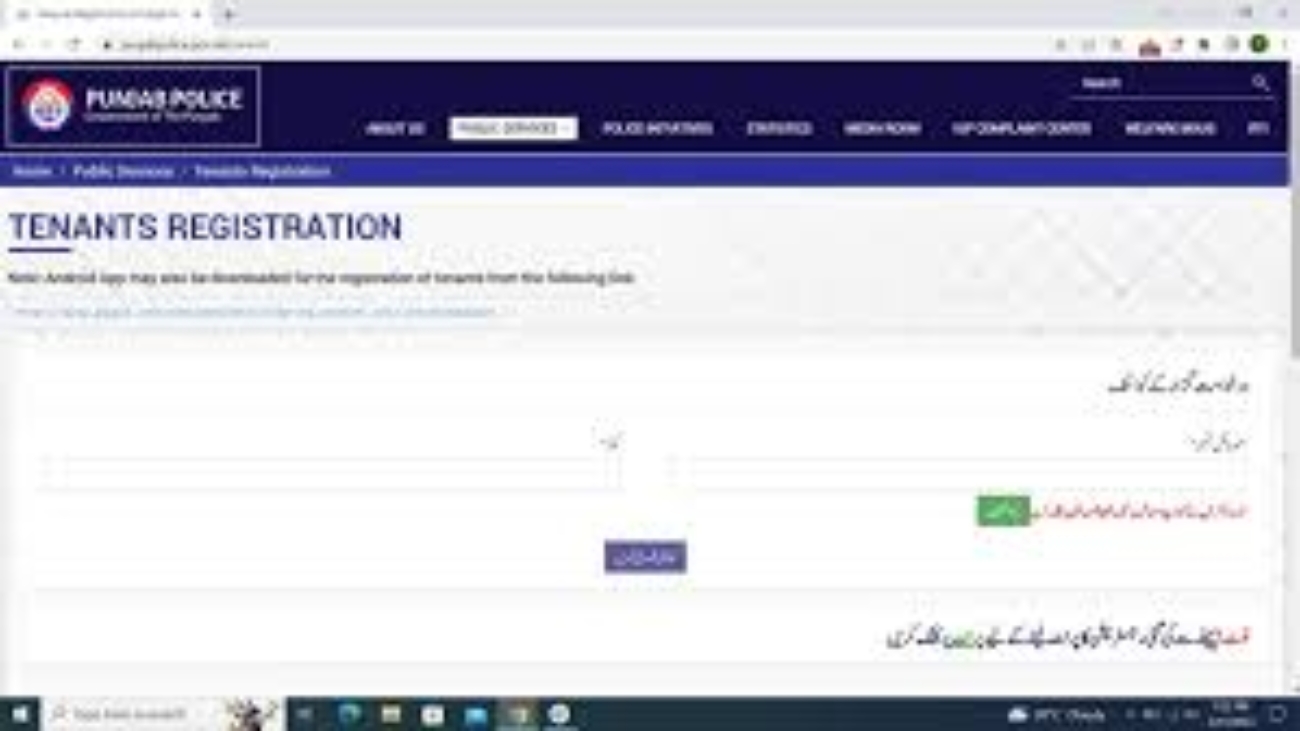
Punjab Tenant Registration

Punjab Tenant Registration – A Complete Guide for 2025

In Punjab, both landlords and tenants are required by law to register their tenancy agreements with the police. This rule is part of the government’s broader initiative to improve public safety, maintain records of residential movement, and reduce criminal misuse of rental properties.

Tenant registration is a quick and simple process that can be completed either in-person at a local Police Khidmat Markaz (PKM) or online via official platforms. This guide will walk you through everything you need to know about tenant registration in Punjab, including required documents, procedures, benefits, and common issues.

Why Tenant Registration Matters

Tenant registration isn’t just a legal requirement—it’s a safety measure. By keeping track of who is renting residential and commercial properties, the authorities can ensure greater accountability, which plays a critical role in crime prevention. For landlords, this offers peace of mind. For tenants, it ensures transparency and legal protection in their rental agreements.

Where and How to Register

There are two main ways to register a tenant in Punjab:

1. In-Person Registration
You can visit your nearest Police Khidmat Markaz (PKM) or local police station. This method is preferred by many because it ensures face-to-face verification and instant document receipt.

2. Online Registration (App or Portal)
Punjab Police has also enabled online and mobile app-based tenant registration options. These services are available 24/7 and are designed to streamline the process for both landlords and tenants. However, some users report OTP (One-Time Password) delays during verification, which may require a follow-up visit to a police station.

Required Documents

To register a tenancy, both landlord and tenant must provide:

  • CNIC copies of both parties (originals for verification)

  • Rent agreement (clearly printed and signed)

  • Passport-size photographs of tenant and landlord

  • Affidavit or declaration form (template usually provided at PKM)

There is no fee charged for tenant registration, and the entire process can take as little as 15–20 minutes if done in person.

Step-by-Step Registration Process

  1. Prepare Documents
    Collect the CNICs, signed rent agreement, photos, and affidavit form.

  2. Visit PKM or Use Online App
    Choose your preferred method—either physically visit the PKM or submit the application via mobile or online portal.

  3. Submit Application & Verify
    Documents will be verified by officials. If everything is in order, your application is accepted.

  4. Get Confirmation Slip
    You will receive a stamped acknowledgment or a digital receipt confirming registration.

  5. Update If Changes Occur
    If the tenant vacates or renews the agreement, you’ll need to update the record.

Key Benefits

  • Legal Documentation
    Tenant registration serves as official proof of residency.

  • Improved Security
    Helps prevent unlawful subletting or use of premises for illegal purposes.

  • Fast Verification for Other Needs
    Useful when applying for utilities, banking, or during visa processes.

  • Transparency in Rental Relations
    Prevents disputes by ensuring the rent agreement is recorded with law enforcement.

Common Issues and Their Solutions

  • Delayed OTP for Online Registration
    If you don’t receive your OTP, proceed to register at the nearest PKM instead.

  • Missing or Blurry Documents
    Submissions may be rejected if documents aren’t clear or properly signed.

  • No Affidavit Provided
    Always ask for or download the affidavit template before submission.

Frequently Asked Questions

Q: Is the landlord required to be present?
Yes, in most cases, both the landlord and tenant must be present for verification.

Q: How long does it take to register?
In-person registration typically takes 15–20 minutes if all documents are complete.

Q: Is tenant registration mandatory for commercial properties?
Yes. The same procedure applies for both residential and commercial rental agreements.

Q: Can overseas landlords complete the process remotely?
Yes, with digital tools and proper documentation, online registration is possible. However, in some cases, local representation may be needed.

Final Thoughts

Tenant registration is not only a legal necessity in Punjab—it’s a smart move for both landlords and tenants. Whether you’re renting out a portion of your home, a commercial property, or managing multiple units, registering your tenants ensures that you’re protected by the law.

It’s quick. It’s free. And it adds a layer of legal and personal security that benefits everyone involved.

If you’re a property owner or tenant in Punjab, don’t delay. Make sure your registration is complete and your documents are up to date.

online-teaching

Pakistan to tax online academies, freelance teachers

The Senate Standing Committee on Finance has approved major amendments to the Finance Bill 2025, signaling a major shift in Pakistan’s tax policy.

Chaired by Senator Saleem Mandviwala, the committee gave the green light to several proposals, including a 500% increase in the property purchase limit for non-filers. Non-filers can now purchase property up to five times their declared assets, a move aimed at easing real estate transactions while encouraging asset declaration.

The bill also replaces the traditional “filer” and “non-filer” categories with “eligible” and “ineligible” persons. Ineligible individuals—those who don’t file tax returns—will face strict restrictions on buying property, vehicles, investing in securities, and operating bank accounts.

Additionally, a new tax on digital services has been introduced. Online academies, cloud services, streaming platforms, and telemedicine providers will now be taxed. However, small-scale freelancers and online sellers were exempted from this clause.

The Islamabad Club and other elite clubs lost their non-profit status due to their luxury services limited to a small elite group. Withholding tax on cash withdrawals by ineligible persons has been raised from 0.6% to 1%, while the income surcharge on earnings above Rs10 million was reduced slightly from 10% to 9%.

Finance Minister Muhammad Aurangzeb emphasized the need to eliminate the concept of “non-filers” and expand the tax net to restore credibility in Pakistan’s tax system.