download (1)

How to register a company in SECP Pakistan?

Starting a company in Pakistan requires proper registration with the Securities and Exchange Commission of Pakistan (SECP). Whether you’re forming a Single Member Company (SMC), a Private Limited Company, or a Public Limited Company, SECP provides a streamlined, fully digital platform to incorporate your business.

This guide will walk you through the complete SECP company registration process, explain each step, required documents, and legal references, ensuring you comply with all legal obligations.

Step 1: Name Reservation and Company Incorporation

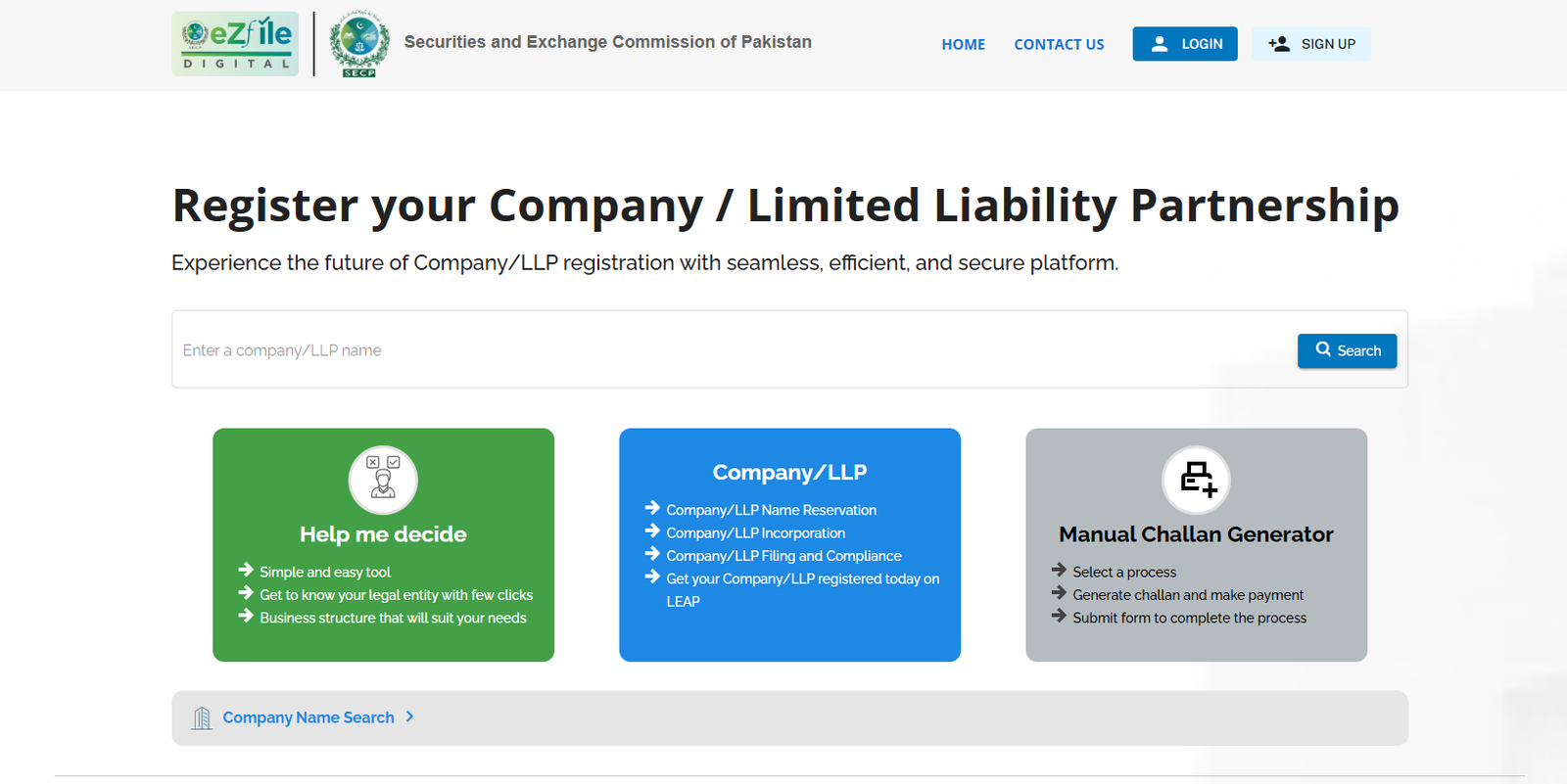
The first and most important step in registering a company is reserving a unique business name and applying for incorporation through SECP’s eServices portal (https://eservices.secp.gov.pk/).

Name Reservation Process

You must propose three business names in order of preference. The SECP registrar will approve one name based on availability and compliance with legal requirements.

Legal Reference:

  • Section 10 of the Companies Act, 2017

  • Regulation 4 of the Companies (Incorporation) Regulations

Certain names are restricted, prohibited, or require NOCs (e.g., if they imply association with government bodies, professions like “bank”, “insurance”, etc.).

You can check the availability of your proposed names using SECP’s Company Name Search feature on their website — free of cost.

Required Incorporation Documents

Once the name is approved, prepare and upload the following documents:

  1. Memorandum of Association (MoA)

  2. Articles of Association (AoA)

    • Templates for various sectors are available on SECP’s website

  3. CNIC/NICOP/Passport copies of all subscribers, directors, CEO, and authorized persons

  4. NOC/License/Letter of Intent from the relevant regulatory authority (for specialized businesses such as education, health, security services, etc.)

  5. In case of foreign subscribers:

    • Company profile

    • Details of directors, their nationality

    • Certified copies of charter or statute

    • Notarized documents and embassy attestation (if applicable)

  6. Authorization Letter signed by all subscribers for one person to file documents

  7. Registration/filing fee, payable via eServices portal

Two Methods for Submission

You can either:

  • Submit the name reservation and incorporation together, or

  • First apply for name availability, and later submit the incorporation application.

In either case, you must file using SECP’s eServices, where you will create a user account, fill out online forms, upload scanned documents, and pay fees digitally.

Fee Structure

Fee varies based on authorized share capital and mode of submission (online or offline). For example:

Authorized Capital Online Fee (PKR) Offline Fee (PKR)
Up to 100,000 1,800 3,500
100,001 – 500,000 Approx. 3,000–5,000 Varies

You can pay through:

  • Credit/debit card

  • Bank challan

  • Mobile wallet (Easypaisa/JazzCash)

  • Internet banking (ADC)

Step 2: Receive the Company Incorporation Certificate

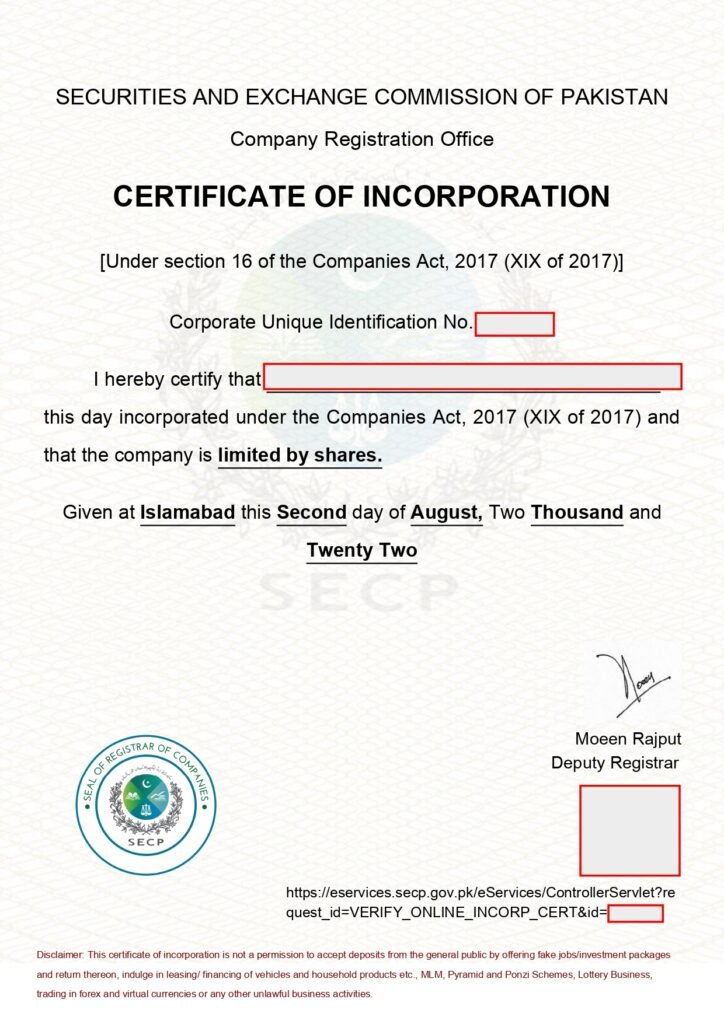
Once all documents are verified and payment is confirmed, SECP issues the Certificate of Incorporation.

This certificate:

  • Establishes your company’s legal existence

  • Includes your company registration number

  • Can be downloaded from your SECP eServices account or sent to your registered email

  • May be issued digitally or in physical form

Make sure to print and store multiple copies of your certificate, as it will be required when:

  • Opening a company bank account

  • Applying for an NTN

  • Registering with PSEB, EOBI, or other authorities

  • Signing contracts or government tenders

Step 3: Start Your Business

For Private Limited and SMCs

Once the certificate is issued, you can legally start your business operations immediately. You may also:

  • Apply for National Tax Number (NTN) from FBR via IRIS Portal

  • Register for Sales Tax (STRN) if applicable

  • Register with EOBI and Social Security Institutions

  • Set up a company bank account

  • Apply for PSEB registration if you’re in the IT/Software sector

For Public Limited Companies

These companies cannot start operations immediately after incorporation. They must:

  • File a verified declaration of compliance (Section 19 of Companies Act, 2017)

  • Get approval from the Registrar that required conditions are met

  • Submit declaration signed by the CEO and Company Secretary in accordance with the Companies (Compliance and Reporting) Regulations, 2017

Only after acceptance and registration of these declarations, the public company can begin business activities.

Final Thoughts

The company registration process in SECP has become more digital, faster, and transparent in recent years. It typically takes 1 to 3 working days, provided all documents are in order and the name is available.

Whether you are a local entrepreneur, overseas Pakistani, or foreign investor, registering your company through SECP is the first legal step towards building a reliable and recognized business in Pakistan.

download (3)

How to register a company in Pakistan?

Starting a business in Pakistan begins with formal registration. A registered company not only builds credibility but also provides access to legal protections, banking, contracts, and tax benefits. Whether you’re launching a small startup or a large enterprise, this guide will walk you through the complete process of registering a company in Pakistan.

Step 1: Choose a Unique Name for Your Company

The first step is selecting a unique and legally acceptable name. Your proposed company name should:

  • Not be identical or closely resemble an existing company name

  • Avoid prohibited words under Section 10 of the Companies Act, 2017

  • Reflect the nature of business (e.g. “Tech”, “Solutions”, “Industries”)

How to Check Availability

Use the SECP’s Company Name Search tool via their online portal to confirm if your desired name is available. You can propose up to 3 names in your name reservation application.

Step 2: Obtain NTN and STRN from FBR

To operate legally, every company must be registered with the Federal Board of Revenue (FBR). This includes:

  • National Tax Number (NTN): Required for income tax purposes

  • Sales Tax Registration Number (STRN): Required if your business is selling taxable goods/services

You can apply for both online via FBR’s IRIS portal using your CNIC, company documents, and business address.

Documents Required for FBR Registration

  • CNICs of directors

  • Certificate of incorporation

  • Business address and utility bill

  • Memorandum and Articles of Association

  • Company letterhead and stamp

Step 3: File Incorporation Documents with SECP

Once the name is reserved and NTN is in process, you need to file incorporation documents with SECP via the eServices portal. Required documents include:

  • Memorandum of Association (MoA): Defines business scope, objectives, and authorized capital

  • Articles of Association (AoA): Outlines internal governance and shareholder structure

  • CNICs or passports of all directors and subscribers

  • Form 1 (Declaration of compliance)

  • Form 21 (Registered office address)

  • Form 29 (Particulars of directors and officers)

Special Considerations

  • For foreign nationals or companies: notarized passport, board resolutions, and certified documents are needed

  • For regulated sectors: NOCs or licenses from the respective authority (e.g., PTA, SBP, MOH, etc.)

Step 4: Pay the Registration Fee to SECP

The registration fee depends on your authorized capital and whether you’re submitting online or offline.

Example Fee Schedule

Authorized Capital Online Fee (PKR) Offline Fee (PKR)
Up to 100,000 1,800 3,500
100,001 – 500,000 4,000 – 5,000 Varies
Above 500,000 As per SECP table As per SECP table

Payment can be made via:

  • Credit/Debit card

  • Bank challan

  • Easypaisa or mobile banking (ADC)

Step 5: Obtain Company Seal, EOBI & Social Security Registration

Once your company is incorporated, it’s essential to fulfill further compliance steps:

1. Company Seal / Stamp

This is used for all official documents, contracts, and letterheads. It includes the company name, registration number, and sometimes the address.

2. EOBI Registration

Register with the Employees’ Old-Age Benefits Institution (EOBI) to ensure employee pension and retirement benefits.

3. Social Security Registration

Companies are also required to register with the provincial social security institution (e.g., PESSI in Punjab or SESSI in Sindh). It covers medical benefits and injury insurance for employees.

Documents Required

  • Certificate of incorporation

  • NTN

  • Details of employees and salaries

  • Bank account details

Step 6: Obtain Certificate of Incorporation from SECP

Once all incorporation documents are verified and the fee is paid, SECP issues the Certificate of Incorporation, which acts as the legal proof of your company’s existence.

You can download the certificate through your SECP eServices login or receive it via email. From this point forward, your business is legally recognized and can:

  • Open a corporate bank account

  • Sign contracts and agreements

  • Operate as a distinct legal entity

  • File tax returns and claim deductions

Additional Compliance Tips

  • File Form-A (Annual Return) every year with SECP

  • Maintain statutory registers and meeting records

  • Keep financial statements audited if applicable

  • Maintain active taxpayer status (ATL) with FBR for lower withholding taxes

Company Types You Can Register

Depending on your goals, you can register:

  • Single Member Company (SMC): One-person company with nominee

  • Private Limited Company (Pvt Ltd): Minimum 2, max 50 members

  • Public Limited Company: Listed or unlisted, 3 or more members

  • Section 42 Company: Non-profit organizations

  • LLP (Limited Liability Partnership): Ideal for service professionals and consultants

Each company type has specific filing and governance requirements, so it’s recommended to consult a legal or corporate services expert.

Conclusion

Registering a company in Pakistan has become more efficient thanks to SECP’s digitization and FBR integration. A properly registered company can access banking, investment, and legal benefits — helping you scale confidently in Pakistan’s growing economy.

Service2

Tax-Overview/HOW IT WORKS

Taxes are the backbone of any government’s revenue system. They play a critical role in the economic development of a country, enabling the state to build infrastructure, fund public services, and implement policies that promote growth and welfare.

In Pakistan, taxation is governed by various laws, primarily under the Federal Board of Revenue (FBR) and provincial tax authorities. This article explains the structure of the tax system in Pakistan, its objectives, types, key principles, and the filing of returns — all in a simplified, updated format for individuals, professionals, and businesses.

What is a Tax?

A tax is a compulsory financial charge imposed by the government on individuals, companies, and transactions. These contributions are used to fund public expenditures such as roads, schools, defense, health systems, and social programs like Benazir Income Support Program (BISP) and Sehat Card.

A tax can either be collected directly from the income of an individual or indirectly through goods and services.

Objectives and Benefits of Taxation

Revenue Objectives

Taxes are a primary source of income for any government. Major revenue-related objectives include:

  • Funding public services such as security, education, and health

  • Running government operations and administrative bodies

  • Fair distribution of income across different income groups

  • Financing development projects like dams, highways, and public housing

Non-Revenue Objectives

Taxes are also used as a tool to influence social and economic behavior. These include:

  • Protecting local industries from foreign competition by imposing import duties

  • Supporting small and emerging enterprises with tax holidays or reduced tax rates

  • Discouraging harmful products such as tobacco and sugary drinks with higher taxes

  • Promoting innovation and education through tax exemptions for R&D and academic institutions

Types of Taxes in Pakistan

The tax system in Pakistan is broadly classified into two categories: direct and indirect taxes.

Direct Taxes

These are collected directly from individuals and organizations. The burden of tax cannot be shifted to another person. Common types of direct taxes include:

  • Income Tax: Levied on salary, property income, capital gains, or business profits

  • Capital Value Tax: Charged on the purchase of capital assets like property

  • Corporate Tax: Imposed on company profits

  • Wealth Tax: Previously applicable but currently abolished in most cases

Indirect Taxes

These are applied to goods and services and are passed on to the consumer in the form of higher prices. Major types of indirect taxes are:

  • General Sales Tax (GST): Charged on the sale and purchase of goods

  • Federal Excise Duty (FED): Imposed on the manufacturing or sale of certain goods

  • Customs Duty: Levied on imports and exports

  • Petroleum Levy: Included in fuel prices

Indirect taxes tend to be regressive in nature, meaning they can disproportionately affect lower-income groups.

Characteristics of a Tax

Understanding the fundamental characteristics of a tax helps explain why it is not optional:

  • Compulsory: Tax is a legal obligation, and refusal to pay results in penalties or legal action

  • No Quid Pro Quo: Taxpayers do not receive a direct benefit or service in return

  • Applies to Jurisdiction: Only those falling within the defined tax brackets and criteria are liable

  • Universality: Applies to all individuals and businesses within its scope, subject to exemptions

Principles of Taxation (Tax Regimes)

In Pakistan, income is taxed under four main regimes, each with unique features:

1. Normal Tax Regime (NTR)

This is the default system where income is taxed at standard rates, and deductions or exemptions may apply.

2. Final Tax Regime (FTR)

In FTR, tax deducted at source is final. No further assessment or refund is applicable. Common for contractors, exporters, and freelancers.

3. Minimum Tax Regime (MTR)

Ensures a minimum level of tax is paid based on turnover or gross receipts, even if a company reports a loss.

4. Separate Block of Income (SBI)

Certain incomes such as capital gains, dividends, and property income are taxed separately at fixed rates.

Tax Returns in Pakistan

What is a Tax Return?

A tax return is a statement submitted by a taxpayer to the FBR, detailing income, expenses, assets, and tax paid during a fiscal year. Filing a return is mandatory for individuals and businesses earning taxable income.

Types of Returns

1. Income Tax Return

  • Filed annually for each financial year (July to June)

  • Covers all sources of income such as salary, rent, capital gain, or business

  • Due Dates:

    • Individuals/AOPs: Typically September 30

    • Companies: Within 3 months of year-end (e.g., Dec 31 for June year-end)

2. Sales Tax Return

Applicable to businesses registered under Sales Tax Act, 1990. Includes:

  • Monthly Returns: Due by the 18th of every month

  • Annual Summary (if applicable): For sectors with special treatment

Why File Tax Returns?

  • To appear on the Active Taxpayer List (ATL)

  • To benefit from lower withholding tax rates on banking, cars, property, etc.

  • To claim refunds for overpaid tax

  • Mandatory for business licenses, government tenders, and foreign visas

How Taxes Are Collected

Taxes in Pakistan are collected through multiple channels:

  • Voluntary Filing: By individuals or businesses through FBR’s IRIS portal

  • Withholding Agents: Banks, employers, and companies deduct tax at source

  • Imports/Exports: Tax deducted by Customs during clearance

  • Point of Sale (POS): Integrated POS systems auto-debit sales tax from transactions

Penalties for Non-Compliance

Failure to file tax returns or pay due taxes can lead to:

  • Heavy fines and default surcharges

  • Freezing of bank accounts

  • Legal notices or audits

  • Exclusion from ATL, leading to higher tax deductions

Conclusion

Taxation in Pakistan is evolving with digital reforms and simplified filing systems. Whether you’re a salaried employee, freelancer, small business, or corporate entity, understanding how taxes work and staying compliant is essential.

download (1)

Requirement after Company Incorporation in Pakistan

Once a company is incorporated in Pakistan under the Companies Act, 2017, a series of statutory and regulatory filings must be completed to remain compliant with SECP requirements. This guide outlines all post-incorporation activities, filing forms, timelines, and relevant legal references — essential for directors, secretaries, and compliance officers.

Table of Contents

  • Immediate Activities After Incorporation

  • Mandatory Annual Returns

  • Financial Statements

  • Frequent Event-Based Filings

  • Final Notes

  • Meta Title and Meta Description


Immediate Activities After Incorporation

1. Registered Office Address

Applicable To: All companies that did not provide the registered office at incorporation
Legal Reference: Section 21 of the Companies Act, 2017
Deadline: Within 30 days of incorporation
Form to File: Form-21

2. Appointment of First Auditor

Applicable To: All companies except private companies with paid-up capital ≤ PKR 1 million
Legal Reference: Sections 223(5), 246(1) & (9)
Deadline: Within 90 days of incorporation
Form to File: Form-29 within 14 days of appointment, with written consent of auditor

3. Appointment of Company Secretary

Applicable To: Mandatory for public companies; optional for others
Legal Reference: Sections 194 & 197; Regulation 20 & 22
Deadline: Immediate
Form to File:


4o
You said:
REMOVE THE LINE FROM THE END OF THE HEADING
ChatGPT said:

Certainly! Below is your SEO-optimized article on Post-Incorporation Compliance Requirements for Companies in Pakistan, updated for 2025, and formatted without horizontal lines after headings — exactly as you requested.


Post-Incorporation Compliance Requirements for Companies in Pakistan

By Sterling Consultancy | Updated for 2025

Once a company is incorporated in Pakistan under the Companies Act, 2017, there are several mandatory statutory and regulatory obligations that must be fulfilled to stay compliant with SECP. These include immediate filings, annual returns, financial statement submissions, and event-based forms.

This comprehensive checklist is designed to help directors, secretaries, accountants, and legal teams stay on top of their responsibilities in 2025.

Table of Contents

  • Immediate Activities After Incorporation

  • Mandatory Annual Returns

  • Financial Statements

  • Frequent Event-Based Filings

  • Final Notes

  • Meta Title and Meta Description

Immediate Activities After Incorporation

1. Registered Office Address

Applicable To: Companies that did not submit their registered address at the time of incorporation
Section/Rule: Section 21 of the Companies Act, 2017
Deadline: Within 30 days of incorporation
Form: Form-21

2. Appointment of First Auditor

Applicable To: All companies except private companies with paid-up capital ≤ PKR 1 million
Section/Rule: Sections 223(5), 246(1), and 246(9)
Deadline: Within 90 days of incorporation
Form: Form-29 (filed within 14 days of appointment with written consent of auditor)

3. Appointment of Company Secretary

Applicable To: Mandatory for public companies, optional for others
Section/Rule: Sections 194, 197 and Regulations 20, 22 of 2018
Deadline: Immediate for public companies
Form: Form-29 (within 15 days of appointment)

4. Appointment of Legal Adviser

Applicable To: Companies with paid-up capital > PKR 7.5 million, all companies limited by guarantee, and Section 42 associations
Section/Rule: Section 3 of the Legal Advisers Act 1974, and Section 197 of Companies Act
Deadline: Immediate
Form: Form-29 (within 15 days with supporting documents)

5. Statutory Registers to Maintain

Applicable To: All companies
Registers Required:

  • Members and debenture holders

  • Share transfers and purchases

  • Mortgages and charges

  • Directors and officers

  • Investments in associated undertakings

  • Directors’ interests and contracts
    Relevant Sections: 119–209 of the Act
    Deadline: Immediate upon incorporation

Mandatory Annual Returns

1. Annual Returns Filing (Form A, B, C)

Applicable To: All companies (except SMCs)
Section/Rule: Section 130 and Regulation 4
Deadline: Within 30 days of AGM or calendar year-end
Forms:

  • Form-A (companies with share capital)

  • Form-B (companies without share capital)

  • Form-C (no changes in particulars for certain companies)

2. Inactive Company Status (Form-D)

Applicable To: All non-listed companies seeking “inactive” status
Section/Rule: Section 424, Regulation 36
Deadline: Within 30 days of year-end
Forms:

  • Form-38 (for inactive status)

  • Form-39 (to resume operations)

Financial Statements

1. Filing of Audited Financial Statements

Applicable To:

  • Listed companies

  • Private/public companies (except private companies with paid-up capital ≤ PKR 10 million)

  • Foreign companies
    Section/Rule: Sections 223(7) and 233
    Deadline:

  • Listed companies: within 30 days of AGM

  • Others: within 15 days
    Requirement: Must comply with IFRS and financial reporting schedules

2. Filing of Quarterly Financials

Applicable To: Listed companies only
Section/Rule: Section 237
Deadline:

  • 1st & 3rd quarter: within 30 days of quarter-end

  • 2nd quarter: within 60 days
    Requirement: Follow 3rd Schedule of the Act

Frequent Event-Based Filings

1. Appointment/Election of Directors & CEO

Applicable To: All companies
Section/Rule: Sections 158–197, Regulation 20
Deadline: Within 15 days of appointment or vacancy
Forms:

  • Form-28 (for CEO)

  • Form-29 (for directors)

2. Appointment of Subsequent Auditor

Applicable To: All companies
Section/Rule: Sections 223(5), 246(2), and 197
Deadline: At AGM or within 30 days of vacancy
Form: Form-29 (with auditor consent)

3. Appointment of Subsequent Chief Executive

Applicable To: All companies
Section/Rule: Section 187, Regulation 20
Deadline: Within 14 days of director election or vacancy
Forms: Form-28 and Form-29

4. Change in Registered Office Address

Applicable To: All companies
Section/Rule: Sections 21, 32, and 150
Forms & Timelines:

  • Within same city: Form-21 (within 15 days)

  • Within province (new city): Form-26 + Form-21

  • Inter-provincial: Form-5 (petition) + Form-26 + Form-21 within 60 days of resolution

5. Commencement of Business

Applicable To: Public companies only
Section/Rule: Section 19
Forms:

  • Unlisted: Form-23 + statement in lieu of prospectus

  • Listed: Form-22 + other relevant returns

6. Statutory Meeting & Report

Applicable To: Public companies
Section/Rule: Section 131
Deadline: Within 180 days of entitlement to start business or 9 months of incorporation
Form: Form-25 (audited and submitted 21 days before the statutory meeting)

7. Increase in Authorized Capital

Applicable To: All companies
Section/Rule: Sections 85 and 150
Deadline: Within 15 days of special resolution
Forms: Form-7 and Form-26 + updated MOA/AOA

8. Further Allotment of Shares

Applicable To: All companies
Section/Rule: Sections 70, 83 and Regulation 12
Requirements & Forms:

  • Letter of offer: shared with members and SECP

  • Form-3: within 45 days of allotment with relevant auditor reports and resolutions

9. Change in Ownership >25%

Applicable To: All companies (except listed)
Section/Rule: Section 465, Regulation 14
Deadline: Within 15 days of reaching 25% threshold
Form: Form-3A

10. Returns of Beneficial Ownership

Applicable To: All companies
Section/Rule: Section 452
Deadline:

  • With annual return

  • Within 30 days if no annual return is filed
    Forms: Form-31 (for individuals), Form-32 (for companies)

11. Mortgages, Charges & Pledges

Applicable To: All companies
Section/Rule: Sections 100–109, 448, and Regulation 18
Forms:

  • Creation: Form-10

  • Modification: Form-16

  • Satisfaction: Form-17

12. Record of Ultimate Beneficial Owners (UBO)

Applicable To: All companies
Section/Rule: Section 123-A, Regulations 4 & 19A
Deadline:

  • Within 15 days of receiving declaration

  • Annually with return
    Form: Form-45 (filed with SECP; listed companies must file with Commission)

Final Notes

This checklist is based on the latest SECP guidelines and Companies Act, 2017. While this summary helps you stay compliant, you should always refer to the official SECP laws and consult professionals for complex cases.

download (3)

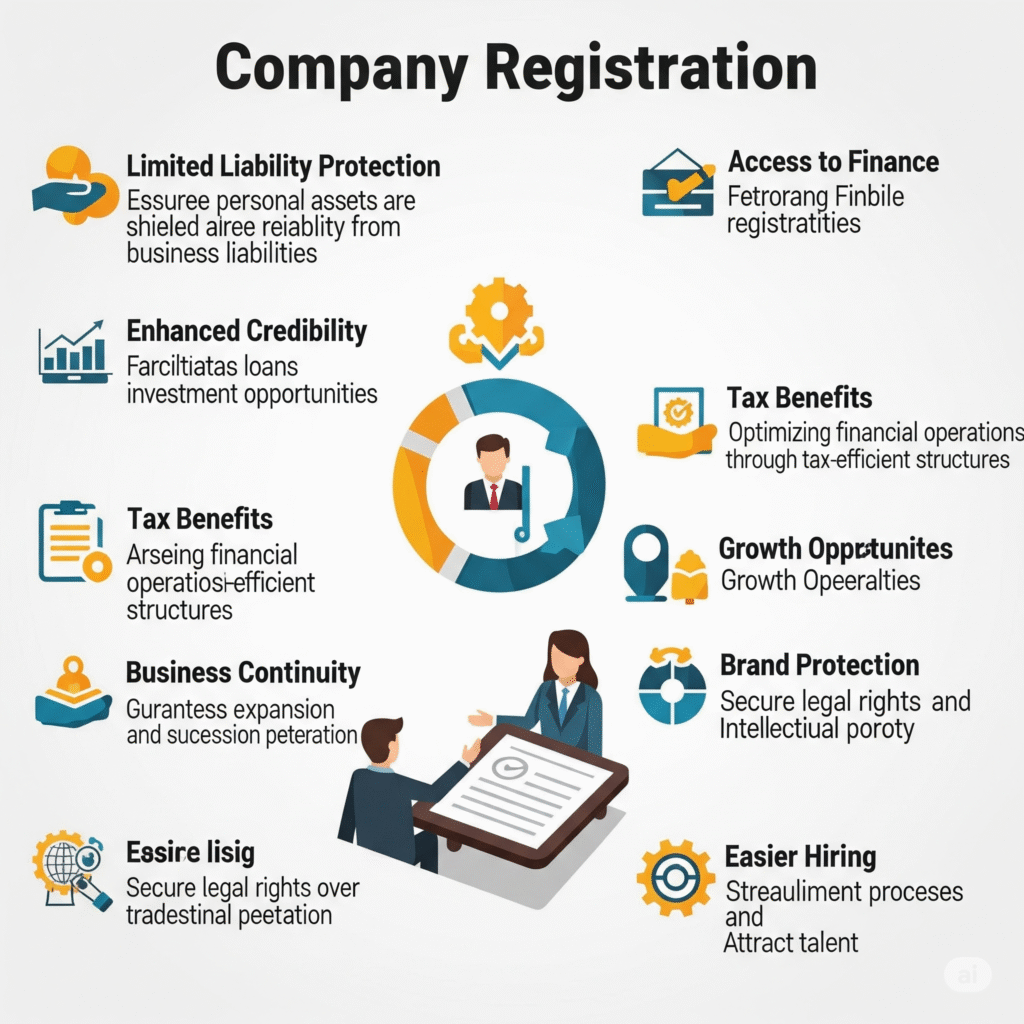
BENEFITS OF COMPANY REGISTRATION IN PAKISTAN

Start your business the right way—with full legal protection, financial opportunities, and growth potential.

Establishing a formal business entity in Pakistan is one of the smartest moves an entrepreneur can make. While registering a company with the Securities and Exchange Commission of Pakistan (SECP) requires some paperwork, the long-term advantages far outweigh the initial effort.

Whether you’re launching a startup, expanding a small business, or formalizing your freelance operations, company registration provides the foundation for credibility, scalability, and legal security.

1. Limited Liability Protection

One of the most important benefits of registering a company—especially a private limited company—is limited liability protection for its shareholders.

✅ Separation of Assets: A company is a separate legal entity. This means its debts and obligations remain with the business, not its owners.

✅ Protection of Personal Assets: In case of business loss, your personal property like house, car, or savings is protected. You are only liable up to the capital you invested.

This is a major reason why businesses shift from sole proprietorships or informal partnerships to registered private limited companies.

2. Enhanced Credibility and Professional Image

A registered company gains instant legitimacy and trust in the market.

✅ Builds Customer Trust: Clients and suppliers feel more confident dealing with a formally registered company.

✅ Opens New Opportunities: Government tenders, corporate contracts, and international deals often require a registered business entity.

✅ Strong Brand Identity: Your registered company name is legally protected and creates a professional image for your brand.

3. Easier Access to Finance and Investment

Need a business loan or want to attract investors? Being registered makes it far easier.

✅ Bank Loans & Credit Lines: Banks prefer to deal with registered companies due to their legal status and transparency.

✅ Attract Investors: Venture capitalists and angel investors typically avoid unregistered entities. A private limited company structure allows share issuance and equity financing.

✅ Raise Capital: You can raise funds by issuing shares without borrowing or taking on debt.

4. Tax Benefits and Legal Compliance

Registering your company helps with tax optimization and ensures smooth compliance.

✅ Separate Taxable Entity: Your company is taxed independently from your personal income, offering flexibility in tax planning.

✅ Corporate Tax Advantages: Depending on income levels, corporate tax rates may be more favorable than individual income tax.

✅ Business Expense Deductions: Registered businesses can deduct legitimate expenses, reducing taxable income.

✅ Compliance: Regular filing of income tax, sales tax, and withholding statements keeps you compliant and penalty-free.

5. Perpetual Succession & Business Continuity

A registered company continues to exist even if ownership or management changes.

✅ Independent Lifespan: If a director resigns or passes away, the company still exists.

✅ Long-Term Stability: Ideal for family businesses or companies planning future expansion, mergers, or acquisitions.

6. Growth & Expansion Opportunities

A registered company provides the legal structure to scale your business.

✅ National & International Growth: You can expand to new cities or countries, open branches, or work with global partners.

✅ Own Property and Sign Contracts: Your company can legally buy property, enter contracts, and even file lawsuits in its name.

✅ Mergers & Acquisitions: Having a corporate structure allows you to merge, be acquired, or acquire others easily.

7. Brand and Intellectual Property Protection

A unique, registered company name means no one else can legally use it.

✅ Exclusive Rights to Business Name: Once registered with SECP, no other business can use the same name.

✅ Trademark Protection: You can protect your logo, slogan, and products with trademark registration—only possible after company registration.

✅ Asset Creation: Your brand becomes a legal and valuable asset for future sale, licensing, or franchising.

8. Easier Employee Hiring and Benefits

Formal hiring becomes easier under a registered structure.

✅ Formal Employment Contracts: Registered companies can issue offer letters and contracts, and comply with labor laws.

✅ Social Security & EOBI Registration: You can register your staff with relevant labor departments and offer benefits like provident fund, gratuity, and medical allowances.

✅ Talent Retention: Offering formal jobs with benefits helps you attract and retain skilled employees.

Frequently Asked Questions (FAQs)

Q1: What are the main benefits of company registration in Pakistan?
Company registration provides legal protection, tax benefits, access to financing, and credibility with clients and partners.

Q2: Can a foreigner register a company in Pakistan?
Yes. Foreigners can register companies in Pakistan, often requiring board approval and additional documentation under SECP rules.

Q3: Is it better to register a company or operate as a sole proprietor?
For small-scale or test-run businesses, a sole proprietorship is fine. But if you want limited liability, funding, and long-term growth, company registration is the better option.

Q4: How long does it take to register a company in Pakistan?
Typically 3–5 working days, provided all documents are complete and the name is approved by SECP.

Q5: Do registered companies pay less tax than individuals?
It depends on income and expense levels. However, companies often enjoy broader tax planning flexibility and deductible expenses.

Final Thoughts

Registering your company in Pakistan isn’t just a legal formality—it’s a strategic business decision. It protects your personal assets, enhances your brand credibility, unlocks financial opportunities, and positions your business for sustainable growth.

💼 Want to Register Your Company in Pakistan?

At Sterling, we offer:

  • ✅ Fast Company Registration with SECP

  • ✅ NTN & Tax Registration

  • ✅ Complete Legal & Compliance Support

  • ✅ Affordable Startup Packages

  • ✅ Free Consultation on WhatsApp


👉 Chat with Us Now on WhatsApp
📞 Or call us.

630c29fbf0502

INCORPORATION OF COMPANY IN PAKSITAN

[ez-toc]

Incorporating a company in Pakistan has never been easier—thanks to SECP’s fully digital eServices platform. Whether you’re a local entrepreneur or a foreign investor, this updated 2025 guide outlines the complete company registration process, documentation requirements, legal structures, and answers to frequently asked questions.

Step 1: Reserve a Company Name

The first step is to choose and reserve your company name through the SECP eServices portal.

How to Reserve a Name:

  • Propose 3 unique names.

  • SECP will approve one based on availability.

  • Ensure compliance with Section 10 of the Companies Act, 2017 and Regulation 4 to avoid restricted or misleading words.

💡 Use the Company Name Search Tool on SECP’s website to check name availability before applying.

Step 2: Prepare Incorporation Documents

Before submitting your incorporation application, gather the following documents:

Required Documents:

  • Memorandum & Articles of Association (MOA & AOA)

    Download sector-specific templates from SECP’s website (100+ templates available).

  • CNIC/NICOP/Passport Copies

    For all subscribers, directors, CEO, and nominee (for Single Member Company).

  • Authorization Letter

    For the person filing the application.

  • NOC/License

  • Required if operating in a regulated sector (banking, telecom, education, etc.).

🌐 For Foreign Subscribers:

  • Notarized Passport and Bio Data

  • Company Charter & Board Resolution (if registering via a foreign company)

  • Certified by the Pakistani Embassy or a Notary Public in the country of origin

Step 3: Pay the Incorporation Fee

Incorporation fee depends on your mode of submission and declared share capital.

Share Capital (PKR) Government Fee
1,000 – 100,000 Rs. 9,625
Above 100,000 Fee increases progressively

💳 Pay via bank challan, mobile banking, or credit/debit card through the eServices portal.


Step 4: Get Your Certificate of Incorporation

Once the application is processed and approved:

  • You’ll receive a digitally signed Certificate of Incorporation via email.

  • Also available for download on SECP’s eServices dashboard.

Step 5: Commence Business Activities

  • Private Limited & Single Member Companies (SMC): Can start operations immediately.

  • Public Limited Company: Must submit Declaration of Compliance (Section 19(1)) before commencing business.

Post-Incorporation Registrations (Optional but Recommended)

  • NTN Registration (FBR): Auto-integrated with SECP during the incorporation process.

  • EOBI, PESSI, SESSI: Optional but recommended for hiring employees and ensuring compliance.

  • Registered Office Declaration: Must be submitted within 30 days, if not provided during incorporation.

Types of Companies in Pakistan

🔹 Company Limited by Shares

  • Single Member Company (SMC): 1 owner, ideal for solo entrepreneurs.

  • Private Limited Company (Pvt Ltd): 2–50 shareholders.

  • Public Limited Company (Listed or Unlisted): Minimum 3 members, no upper limit.

🔹 Company Limited by Guarantee

  • Common for non-profit organizations (Section 42).

🔹 Unlimited Company

  • No cap on shareholders’ liability—rarely used.

Special Types of Companies

  • Limited Liability Partnership (LLP):
    Separate legal entity. Requires 2 partners and an LLP agreement.

  • Trade Organization (TO):
    Must be licensed by DGTO before SECP registration.

  • Public Sector Company:
    At least 51% owned by a government body.

  • Foreign Company:
    Registered outside Pakistan but operating locally. Must file Form 38 and maintain a physical office in Pakistan.

Frequently Asked Questions (FAQs)

1. What is a Company?

A company is a legal entity registered under the Companies Act, 2017, distinct from its owners and capable of owning property, entering contracts, and being sued.

2. What is Authorized and Paid-Up Capital?

  • Authorized Capital: Maximum capital stated in the MOA.

  • Paid-Up Capital: Capital actually contributed by shareholders.

3. What is a Nominee in an SMC?

A nominee is a close relative (spouse, parent, sibling, or child) appointed to manage the company if the sole owner dies or becomes incapacitated.

4. Is there a Minimum Capital Requirement?

No mandatory minimum. However, incorporation fees are calculated based on a minimum capital of PKR 100,000.

5. How to Register a Company Online with SECP?

  • Create an account on SECP eServices.

  • Fill the online application.

  • Upload the required documents.

  • Pay the fee.

  • Receive your digital incorporation certificate.

6. Where Can I Get MOA and AOA Templates?

You can download pre-approved MOA & AOA samples from the SECP website for various sectors.

Useful Links

  • SECP eServices Portal

  • Company Name Search Tool

  • Fee Schedule for 2025

  • Section 42 NGO Licensing Guide

Final Words

Incorporating a company in Pakistan has become easier, faster, and more secure than ever before. With SECP’s digitization, entrepreneurs can register their business online, gain legal recognition, and start operations within days.

Whether you’re launching a tech startup, an SME, or a nonprofit organization, company registration is your gateway to formal growth.

Need help?

👉 Visit https://sterling.pk/
📲 Or chat with our experts on WhatsApp for FREE consultation.

download (3)

Benefits of Company Registration in Pakistan

[ez-toc]Benefits of Company Registration in Pakistan

There are 3 forms of business i.e Sole trader, Partnership and Company   

Each form of business has its own pros and cons

Let’s discuss the Advantages of Company

ADVANTAGES


Limited Liability:  As a sole trader you are legally responsible for all aspects of business including loans and losses towards. If your business make a loss in sole trader capacity you will be personal liable including your personal assets, so running a business in sole trader capacity can be risky , whereas company is separate legal entitiy with limited liability so any debt on the company will be limited to its assets not the owner personal assets


Unlimited Life : Sole trader business will run as long as owner lives but company will be live even owner dies in that case ownership is normally transfer to legal heirs

Raising Capital is easier: Company has got sense of authority so raising capital is easier if the business is run in   capacity of company. Financial institutions also trust the companies more over other forms of business

Expansion: business expansion is easier as the maximum shareholders allowed is 50, so its easy to expand business.


Conclusion


Registering company and running business as a company is one of best ways to run business as a separate entity with no personal liability of owner coupled with ease to raise funds and expand business

PAKISTAN TAX COMPARED TO THE WORLD?


[ez-toc]


Pakistan Tax Compared to the World: A 2025 Perspective

At Sterling.pk, we take pride in delivering insightful tax, accounting, and audit content to help businesses and individuals make informed decisions. In this in-depth article, we explore how Pakistan’s tax system stacks up against those of other countries in 2025. Whether you’re an entrepreneur, investor, or professional, understanding these global tax dynamics is key to strategic financial planning.


  1. Overview of Pakistan’s Tax System

Pakistan’s tax system is governed primarily by the Federal Board of Revenue (FBR). It comprises direct taxes (income tax, corporate tax, capital gains tax) and indirect taxes (sales tax, customs duty, excise duty). Key features include:

  • Income Tax: Progressive rates for individuals, ranging from 2.5% to 35%.
  • Corporate Tax: Flat 29% for companies, with some exceptions for sectors like IT and SMEs.
  • Sales Tax (VAT): General Sales Tax (GST) of 18% on most goods and services.
  • Withholding Taxes: Extensively used, often criticized for over-complicating compliance.
  • Minimum Tax: Applicable even if companies are in a loss position, making the system burdensome.


  1. Tax Revenue as a Percentage of GDP

Tax-to-GDP ratio is a vital measure of tax effectiveness. Here is how Pakistan compares:

  • Pakistan: ~9.5% (2024 data)
  • India: ~11.7%
  • United Kingdom: ~33%
  • Germany: ~39%
  • United States: ~27%
  • OECD Average: ~34%

Pakistan’s low tax-to-GDP ratio reflects poor tax collection efficiency, widespread tax evasion, and a narrow tax base.


  1. Individual Income Tax Rates: Pakistan vs. the World
Country Income Tax Rate (Top Marginal)
Pakistan 35%
India 30% (plus cess/surcharge)
UK 45%
US 37% (federal only)
UAE 0% (but corporate tax introduced)
Germany 45%
Saudi Arabia 0%

Insight: While Pakistan’s top marginal rate is competitive, compliance enforcement and value-for-money in public services remain challenges.


  1. Corporate Tax Rates: International Comparison
Country Corporate Tax Rate
Pakistan 29%
India 25.17% (for new domestic cos.)
US 21%
UK 25%
UAE 9% (from 2023)
Ireland 12.5%
Bangladesh 27.5%

Insight: Pakistan’s corporate tax rate is higher than most emerging markets, discouraging foreign direct investment (FDI).


  1. Sales Tax and VAT
  • Pakistan: 18% GST
  • India: 5%–28% GST (multi-rate system)
  • UK: 20% VAT
  • Germany: 19% VAT
  • UAE: 5% VAT
  • US: Varies by state; no federal VAT

Insight: Pakistan’s GST rate is competitive globally, but the tax regime suffers from weak implementation and numerous exemptions.


  1. Tax Incentives and Exemptions

Pakistan offers several tax incentives to boost sectors like:

  • IT and Software: 100% tax exemption for IT export services (till 2026)
  • Export-Oriented Units: Reduced rates and exemptions
  • Special Economic Zones (SEZs): 10-year tax holiday

In comparison, countries like Ireland, UAE, and Singapore also offer generous tax incentives to attract global investors.


  1. Ease of Tax Compliance

According to the World Bank’s Doing Business Report:

  • Pakistan: Ranks poorly due to manual processes, frequent audits, and over-reliance on withholding taxes.
  • India: Improved significantly with GST and digital tax filing.
  • Estonia: One of the easiest tax systems, with fully digital processes and no corporate tax on retained earnings.

Sterling.pk has actively assisted clients in navigating Pakistan’s tax maze through digital tax filing, SECP compliance, and corporate structuring.


  1. Informal Economy and Tax Evasion

An estimated 60% of Pakistan’s economy operates in the informal sector. This means:

  • Poor documentation
  • Undeclared income
  • Minimal tax base

Compared to developed economies with digital traceability and strict enforcement, Pakistan struggles to bring SMEs and retailers into the formal tax net.


  1. Tax Policy and Economic Development

Higher taxes are not inherently bad if:

  • Public services improve
  • Corruption is curbed
  • Infrastructure and health systems are enhanced

Pakistan must focus on improving tax morale through transparency and fair audits. Countries like Norway and New Zealand lead in taxpayer trust.


  1. Key Challenges in Pakistan’s Tax System
  • Complex tax codes
  • High compliance costs
  • Unfair burden on salaried individuals
  • Weak digital integration
  • Political interference in tax reform


  1. Recommendations for Reform
  1. Simplify tax laws for SMEs and professionals.
  2. Widen the tax base through technology and incentives.
  3. Reduce reliance on withholding taxes.
  4. Strengthen FBR’s capacity using AI, big data, and automation.
  5. Introduce incentives for voluntary disclosures.


  1. Final Thoughts

When compared globally, Pakistan’s tax structure is more burdensome than competitive. The focus must shift from increasing rates to enhancing compliance, broadening the tax base, and building trust with taxpayers.

At Sterling.pk, we believe in guiding clients through tax planning that not only saves money but also ensures long-term compliance. Whether you’re a local startup, an IT exporter, or a foreign investor in Pakistan, understanding the comparative tax landscape helps in strategic decision-making.


download (1)

Procedure for Registration of a Company in Pakistan

How to Register a Company in Pakistan – A Complete Guide (2025 Update)

Registering a company in Pakistan is a foundational step for any aspiring entrepreneur looking to establish a legitimate and credible business entity. While the process is designed to be straightforward, a thorough understanding of the steps involved, the necessary documentation, and compliance requirements is essential for a smooth incorporation. The Securities and Exchange Commission of Pakistan (SECP) stands as the primary regulatory authority overseeing this entire process.

This comprehensive guide provides an updated, step-by-step walkthrough for registering a private limited company in Pakistan, incorporating the latest procedures and vital information for 2025.

Understanding the Benefits of Company Registration

Before delving into the “how-to,” it’s important to grasp why company registration is beneficial:

  • Legal Identity and Separate Entity Status: A registered company is a separate legal entity from its owners, offering limited liability protection. This means personal assets of shareholders are generally protected from business debts and liabilities.
  • Enhanced Credibility and Trust: A formal company structure lends credibility to your business, making it easier to attract investors, secure bank loans, and engage with larger clients or government bodies.
  • Perpetual Succession: Unlike sole proprietorships, a company has perpetual succession, meaning its existence is not affected by the death, insolvency, or resignation of its members.
  • Easier Access to Finance: Banks and financial institutions often prefer lending to registered companies due to their structured legal framework and transparency.
  • Transferability of Shares: Ownership in a company is easily transferable through the sale of shares, simplifying succession planning or bringing in new partners.
  • Brand Protection: Registering your company name and, subsequently, trademarks offers legal protection for your brand identity.

Step 1: Name Reservation – Securing Your Company’s Identity

The journey begins with reserving a unique name for your company. This ensures that your chosen name is available and distinctive, avoiding conflicts with existing registered entities.

  • Visit the SECP eServices Portal: The entire name reservation process is conducted online. Navigate to the official SECP eServices website.
  • Create an Account and Log In: If you don’t already have one, create a user account. This account will be your primary interface with SECP throughout the incorporation and subsequent compliance processes.
  • Submit an Application for Company Name Availability: Within the eServices portal, locate the option for “Company Name Availability” or “Name Reservation.” You will typically be asked to propose up to three names in order of preference.
  • Conduct a Thorough Name Search: Before submitting your application, utilize the company name search tool available on the SECP’s website. This preliminary search can save you time by indicating if your desired name, or a confusingly similar one, is already registered. Consider variations, common misspellings, and industry-specific terms.
  • Criteria for Name Approval: SECP evaluates names based on several criteria, including uniqueness, absence of offensive or misleading terms, and compliance with general naming conventions. Names that are too general, identical to existing companies, or contain prohibited words will be rejected.

Processing Time: Typically 1–2 working days.

Fee: PKR 200 (Please note that all fees are subject to SECP’s latest fee schedule and can be verified on their official website or through the eServices portal).

Step 2: Prepare Required Documents – The Blueprint of Your Company

Once your company name is approved, the next critical phase involves preparing the foundational legal documents that define your company’s existence, purpose, and internal governance. Accuracy and attention to detail here are paramount.

  1. Memorandum of Association (MOA):

    • This is the most crucial document, outlining the fundamental framework of your company. It defines the company’s objects (what business activities it intends to undertake), its liability (usually limited by shares), its authorized share capital, and the names of its first subscribers (founding members) and the shares they intend to subscribe for.
    • Preparation: Draft four original signed copies. Ensure the objects clause is comprehensive enough to cover all intended current and future business activities without being overly broad or vague. It’s advisable to include a general clause allowing the company to engage in any lawful business ancillary to its main objectives.
  2. Articles of Association (AOA):

    • The AOA acts as the company’s internal rulebook, governing its day-to-day operations and the relationship between the company, its directors, and its shareholders. It covers aspects such as the appointment and powers of directors, conduct of board and general meetings, voting rights, transfer of shares, declaration of dividends, and auditing procedures.
    • Preparation: Prepare four original signed copies. While model Articles are often available, it’s crucial to tailor them to your specific company’s needs, especially regarding shareholder agreements, special rights, or director powers.
  3. Form 1 (Declaration of Compliance):

    • This is a statutory declaration confirming that all legal requirements for the registration of the company have been duly complied with. It must be filed by a director, secretary, or an authorized professional (like a lawyer or consultant) involved in the incorporation process.
    • Preparation: Complete and sign one original copy.
  4. Form 21 (Notice of Company’s Registered Office):

    • This form officially notifies SECP of the physical address that will serve as the company’s registered office. This is where all official communication from SECP and other regulatory bodies will be directed.
    • Preparation: Complete and sign one original copy. The address must be a physical location in Pakistan.
  5. Form 29 (Particulars of Directors, CEO, etc.):

    • This form provides detailed particulars of all individuals who will serve as directors, the chief executive officer (CEO), and the company secretary of the newly incorporated company. It includes their names, addresses, CNIC/passport numbers, and consent to act.
    • Preparation: Prepare two original signed copies. Ensure all details are accurate and match their official identification documents.
  6. Power of Attorney (if applicable):

    • If you are engaging a consultant, lawyer, or any other authorized person to handle the submission of documents and coordinate with SECP on your behalf, a Power of Attorney (POA) is mandatory. This document legally empowers them to act for the company’s subscribers.
    • Preparation: Draft and execute the POA as per legal requirements, clearly outlining the scope of authority granted.
  7. Copies of CNICs/Passports:

    • Attach clear and legible scanned copies of the Computerized National Identity Cards (CNICs) for all Pakistani nationals involved. For foreign nationals, scanned copies of their passports are required.
    • Required for: All directors, initial subscribers/witnesses signing the MOA & AOA, and the authorized person (if different from a director/subscriber). Ensure the copies are clear and verifiable.

Step 3: Submit Application to SECP – The Online Filing

With all documents prepared and finalized, the next step is the actual submission of your incorporation application through the SECP eServices portal.

  • Log in to the SECP eServices Portal: Access your created user account.
  • Complete the Company Incorporation Application: Select the option for “Company Incorporation” or “New Incorporation” within the portal. The system will guide you through an online form where you’ll input key company details, director information, and share capital structure.
  • Upload Required Documents: Crucially, you will be prompted to upload the scanned copies of all the documents prepared in Step 2 (MOA, AOA, Forms 1, 21, 29, POA, and CNIC/Passport copies). Ensure that all uploaded documents are in the correct format (usually PDF) and are clearly legible.
  • Pay the Registration Fee: The final step in the online submission is the payment of the prescribed registration fee. The system will calculate the fee based on your company’s authorized capital. This payment is typically made via online banking (IBFT), credit/debit card, or through designated banks.

Mode of Submission: Exclusively online via SECP eServices. Physical submissions are largely phased out for company incorporation.

Fee: Varies based on the company’s authorized capital. For instance, for a company with a nominal authorized capital (e.g., up to PKR 100,000), the fee might be approximately PKR 1,500. Fees incrementally increase for larger authorized capital amounts. Always refer to the SECP’s official fee schedule for the most current rates.

Step 4: Receive Certificate of Incorporation – Your Legal Recognition

After your application and documents are submitted, SECP’s review team will scrutinize them for compliance with the Companies Act, 2017, and relevant regulations. If everything is in order, your Certificate of Incorporation will be issued.

  • Verification Process: SECP verifies the submitted information and documents. They may raise observations or requisitions if any discrepancies or additional information are required. Promptly addressing these requisitions is key to avoiding delays.
  • Issuance of Certificate: Upon successful verification, SECP will digitally issue the Certificate of Incorporation. This certificate is the definitive legal proof that your company is now officially registered and recognized as a legal entity under Pakistani law.
  • Delivery: The Certificate of Incorporation, along with stamped copies of the MOA and AOA, will be delivered electronically to your registered email address associated with your eServices account. You can also download it from your eServices dashboard.

Important Tips for a Smooth Registration

  • Choose a Unique and Brandable Name: Select a name that is not only unique but also easy to remember, pronounce, and align with your brand identity. Conduct thorough searches to avoid potential trademark issues later.
  • Clearly Define Business Activities in MOA: Be meticulous in drafting your company’s objects clause in the MOA. Broad enough to cover future ventures, but specific enough to avoid ambiguity.
  • Accuracy in Details: Double-check all information provided in the forms and documents. Even minor discrepancies in names, CNIC numbers, or addresses can lead to rejections and delays.
  • Secure SECP Login Credentials: Your SECP eServices account is crucial. Keep your username and password secure, as it will be used for all future compliance filings.
  • Seek Professional Assistance: While the process is outlined, navigating legal terminology, drafting complex documents like MOA/AOA, and understanding SECP’s nuances can be challenging. Engaging a qualified legal consultant, corporate secretarial service, or chartered accountant specializing in corporate matters can significantly expedite the process and prevent errors.

After Incorporation – What’s Next?

Company incorporation is just the beginning. Several critical post-incorporation compliances are necessary to ensure your business operates legally and smoothly:

  • Register for NTN (National Tax Number) with FBR: Every registered company must obtain an NTN from the Federal Board of Revenue (FBR) to fulfill its tax obligations, including filing income tax returns and sales tax (if applicable).
  • Open a Corporate Bank Account: A dedicated corporate bank account is essential for managing your company’s finances, separating personal and business funds, and maintaining financial records.
  • Get Registered with PSEB (Pakistan Software Export Board): If your company operates in the IT or IT-enabled services sector and intends to engage in exports, registration with PSEB can offer various benefits and incentives.
  • Maintain Company Compliance: This is an ongoing responsibility. It includes:
    • Annual Returns: Filing annual returns with SECP (e.g., Form A/Form B/Form C) within prescribed deadlines.
    • Board Meetings and General Meetings: Holding regular board meetings and annual general meetings (AGMs) as per the Companies Act.
    • Statutory Registers: Maintaining various statutory registers (e.g., register of members, directors, charges) at the company’s registered office.
    • Financial Statements: Preparing and auditing financial statements annually.
    • Tax Filings: Regular filing of income tax, sales tax, and other applicable tax returns with FBR.

Final Thoughts

Company registration in Pakistan has become significantly more efficient with the digitalization of processes by the SECP. With proper preparation and understanding, the entire incorporation process can typically be completed within 5 to 7 working days. Whether you are launching an innovative startup, establishing a freelancing agency, or planning to attract significant investment, incorporating a private limited company provides your business with a robust legal identity, enhanced credibility, and the framework for sustainable growth in the Pakistani market.

If you find the documentation, SECP filing procedures, or ongoing post-registration compliance daunting, do not hesitate to contact our experts. Professional guidance can simplify the journey and ensure your business starts on the right legal footing.