download (1)

Corporate filing SECP Form A and Form 29

Introduction

Understanding corporate filing requirements is crucial for legal compliance and transparent governance in Pakistan. Among the most important filings with the Securities and Exchange Commission of Pakistan (SECP) are Form A and Form 29. These forms ensure the company’s legal standing, updated records, and adherence to the Companies Act, 2017. Timely filing not only avoids penalties but also builds corporate credibility.

What is SECP Form A?

Form A is an Annual Return of a Company, which provides updated details about a company’s structure, shareholders, capital, and statutory compliance. It serves as an official summary of the company’s current legal status.

Applicability of Form A

Form A must be filed annually by:

  • Private limited companies

  • Public limited companies (listed/unlisted)

  • Single-member companies (SMCs)

When to File Form A?

  • Private Companies: Within 30 days of the Annual General Meeting (AGM)

  • Public Companies: Within 45 days of the AGM

  • Single Member Companies: Within 30 days of the AGM due date

The AGM must be held within 120 days after the end of the financial year.

Key Contents of Form A

  • Company registration number and name

  • Registered office address

  • Share capital and shareholding details

  • List of shareholders and their holdings

  • Date of last AGM

  • Share transfer records

  • Compliance declaration

What is SECP Form 29?

Form 29 is used to notify SECP about any change in company officers, such as appointment, resignation, or changes in particulars of directors, CEO, CFO, auditors, or company secretary.

When to File Form 29?

Form 29 must be filed within 15 days of any of the following changes:

  • Appointment or resignation of directors

  • Appointment or change of CEO, CFO, Company Secretary, or Auditor

  • Changes in director details (e.g., CNIC, address)

How to File Form A and Form 29

Step 1: Access SECP e-Services

Log in to https://eservices.secp.gov.pk with valid company credentials.

Step 2: Choose the Correct Form

Select “Form A – Annual Return” or “Form 29 – Particulars of Directors/Officers” based on your requirement.

Step 3: Fill Out the Information

Provide accurate company data, shareholder structure (Form A), and officer details (Form 29).

Step 4: Attach Supporting Documents

Include board resolutions, updated shareholder records, financials (where required), and other relevant documents.

Step 5: Pay the Filing Fee

Filing fees vary depending on company type and authorized capital. Payment can be made via challan or online.

Step 6: Submit the Form

Complete the submission online through SECP’s portal. Acknowledgment and confirmation are provided once accepted.

Filing Fees for Form A and Form 29

Type of Company Form A Fee (PKR) Form 29 Fee (PKR)
Single Member Company 1,000 – 2,000 1,000 – 2,000
Private Limited 1,500 – 3,000 1,500 – 3,000
Public Unlisted 2,500 – 4,000 2,500 – 4,000
Public Listed 5,000 – 10,000 5,000 – 10,000

Penalties for Late Filing

Failure to file these forms on time can result in:

  • Penalty ranging from Rs. 5,000 to Rs. 100,000 (Form A)

  • Penalty ranging from Rs. 2,500 to Rs. 50,000 (Form 29)

  • Disqualification of directors

  • Marking the company as “inactive”

Importance of Timely Filing

  • Maintains corporate transparency

  • Ensures legal compliance

  • Allows access to loans, contracts, and public tenders

  • Avoids heavy penalties and regulatory action

  • Maintains updated company profile on SECP’s database

Common Mistakes to Avoid

  • Filing the wrong form (Form B instead of Form A)

  • Missing director details or CNIC errors

  • Incorrect filing fee or challan mismatch

  • Failure to attach board resolution or supporting documents

  • Expired login credentials or digital signatures

Frequently Asked Questions (FAQs)

Can I file these forms manually?

No, SECP requires all forms to be filed electronically via the e-Services portal.

What if there is no change in shareholding or directors?

Form A must still be filed, even if no changes occurred. Form 29 is only filed if there are changes.

Is an auditor’s report required with Form A?

Yes, for public companies and private companies exceeding Rs. 1 million in paid-up capital.

What happens if I miss the deadline?

A late filing fee will be imposed, and in some cases, the company may be marked as inactive.

Who is responsible for filing these forms?

Generally, the company secretary or a director handles compliance, but external consultants can also be engaged.

Role of Corporate Consultants

Many businesses hire corporate law and tax consultants to handle SECP filings due to:

  • Expertise in documentation

  • Timely reminders and follow-ups

  • Avoiding technical errors

  • Handling inactive companies and penalty waivers

  • Assisting with digital signatures and login issues

Recent SECP Developments (2024–2025)

  • Simplified online filing process

  • Real-time integration with FBR and NADRA

  • Automated compliance reminders

  • Penalty relaxation for new startups

  • Better tracking and dashboard analytics for company filings

Conclusion

Filing SECP Form A and Form 29 is not merely a regulatory requirement—it is essential for maintaining a company’s legal and operational status in Pakistan. Whether you’re updating directorship changes or submitting your annual return, timely and correct filing protects your business from penalties and reputational damage. Engaging professionals and staying current with SECP regulations ensures your business remains in good standing and ready for growth


SECP-Office

The impact of the Securities and Exchange Commission of Pakistan (SECP) on businesses

The Securities and Exchange Commission of Pakistan (SECP) plays a pivotal role in shaping the regulatory landscape for businesses in Pakistan. As the apex regulatory authority for the corporate sector, capital markets, insurance, and non-banking financial institutions, SECP directly influences how businesses operate, grow, and remain compliant with legal frameworks. Understanding the SECP’s impact is essential for entrepreneurs, investors, corporate managers, and consultants seeking to operate effectively and responsibly in Pakistan.

The Establishment and Legal Mandate of SECP

The SECP was established under the Securities and Exchange Commission of Pakistan Act, 1997, replacing the Corporate Law Authority (CLA). Its core mandate includes regulating:

  • Corporate sector (companies and LLPs)

  • Capital markets

  • Insurance companies

  • Non-banking financial institutions (NBFIs)

  • Modarabas and leasing companies

  • Asset management companies and mutual funds

The SECP Act grants the Commission autonomy and authority to administer various corporate laws, such as:

  • Companies Act, 2017

  • Securities Act, 2015

  • Insurance Ordinance, 2000

  • Modaraba Companies and Modaraba (Floatation and Control) Ordinance, 1980

1. Business Registration and Incorporation

One of SECP’s most visible and impactful functions is regulating the incorporation and registration of businesses. Through its e-Services Portal, SECP enables businesses to be incorporated online with ease.

Key Impacts:

  • Ease of Doing Business: Streamlined company registration improves formalization and compliance.

  • Transparency: Public availability of company details enhances investor confidence.

  • Digital Incorporation: Enables formation of private, public, and single-member companies in as little as 1–2 working days.

By setting out clear rules for incorporation, the SECP helps formalize the economy and reduce undocumented business activity.

2. Corporate Governance and Compliance

SECP enforces corporate governance standards to ensure companies are run transparently and in the best interest of stakeholders.

Areas of Influence:

  • Appointment of directors and auditors

  • Disclosure requirements

  • Annual general meetings (AGMs)

  • Filing of annual returns and financial statements

  • Code of Corporate Governance for listed and unlisted public companies

SECP’s guidelines ensure accountability, board independence, and financial transparency, particularly in public interest companies.

3. Capital Market Regulation

SECP regulates the Pakistan Stock Exchange (PSX), brokers, and listed companies. It ensures fair trading practices, transparency, and investor protection in capital markets.

Business Impact:

  • Access to Capital: Businesses can raise funds through IPOs, debt issuance, and equity placement.

  • Investor Protection: Enforces laws to prevent insider trading, fraud, and manipulation.

  • Market Confidence: Regulatory oversight boosts local and foreign investor trust.

SECP has introduced reforms like demutualization of stock exchanges, the Securities Act 2015, and real-time surveillance systems to modernize and protect the capital markets.

4. Regulation of Non-Banking Financial Institutions (NBFIs)

SECP regulates:

  • Leasing and investment finance companies

  • Microfinance institutions

  • Housing finance companies

  • REITs and asset management companies

Benefits for Businesses:

  • Diversified Access to Finance: Businesses can access finance through leasing, investment banks, and mutual funds.

  • Investor Opportunities: Regulated mutual funds offer safer investments for the public.

  • Corporate Bonds and Sukuk: SECP facilitates the issuance and listing of corporate debt instruments.

5. Promotion of FinTech and Startups

SECP actively supports innovation through Regulatory Sandboxes that allow FinTech startups to test their models under relaxed regulations.

FinTech Impact:

  • Regulatory Innovation: Encourages the development of digital payments, robo-advisors, and blockchain-based products.

  • Access to Alternative Capital: Promotes crowdfunding platforms, peer-to-peer lending, and digital credit solutions.

  • Simplified Licensing: Enables startups to launch with easier entry criteria during the testing phase.

6. Insurance Sector Oversight

Insurance plays a vital role in managing risk for individuals and businesses. SECP regulates insurance providers to ensure consumer protection and solvency.

Effects on Businesses:

  • Risk Management: Availability of regulated insurance products helps manage operational and financial risks.

  • Compulsory Coverages: Enforcement of mandatory insurances like motor third-party liability enhances market discipline.

  • Digital Insurance Models: Approval of online insurance platforms expands business coverage and convenience.

7. Anti-Money Laundering (AML) and KYC Enforcement

SECP plays a critical role in enforcing Know Your Customer (KYC) and Anti-Money Laundering (AML) regulations, especially for sectors like NBFIs, securities, and insurance.

Consequences for Businesses:

  • Mandatory KYC Compliance: Required for onboarding investors and clients.

  • Record Keeping and Reporting: Companies must report suspicious transactions to the Financial Monitoring Unit (FMU).

  • Enhanced Due Diligence: Especially important in high-risk industries like crypto, real estate, and imports.

8. SECP’s Role in Company Liquidation and Mergers

When businesses undergo structural changes, SECP provides the legal framework and supervision for:

  • Mergers and Acquisitions

  • Corporate Restructuring

  • Winding Up and Liquidation

This helps protect creditors’ and shareholders’ rights and ensures transparent closure or conversion of businesses.

9. Regulating Modarabas and Islamic Finance Institutions

SECP has specific responsibilities under the Modaraba Ordinance, 1980, for promoting Islamic modes of investment.

Advantages for Shariah-Compliant Businesses:

  • Registration and Licensing: Ensures credibility for Islamic finance products.

  • Shariah Compliance Audits: Helps promote trust among religious investors.

  • Investor Diversification: Enables access to investors who prefer non-interest-based financing.

10. Digitalization and E-Governance Initiatives

SECP has been a pioneer in digital transformation across government regulatory bodies.

Key Initiatives:

  • SECP e-Services Portal: Used for company registration, filings, name reservation, and other functions.

  • Online Complaint Management System (CMS): Enables businesses to lodge grievances against malpractices.

  • Real-Time Reporting Systems: For listed companies and brokerage houses.

The digital transformation significantly improves efficiency and ease of doing business.

11. Impact on SMEs and Private Companies

While SECP regulates all types of companies, it has taken special measures to facilitate Small and Medium Enterprises (SMEs).

SME-Specific Measures:

  • Simplified Compliance Requirements

  • Reduced Filing Burdens for Private Companies

  • Access to SME Boards for Fundraising

These policies make it easier for startups and small businesses to transition into the formal economy.

12. Investor Education and Awareness

SECP invests in financial literacy campaigns, investor protection outreach, and guidance documents to raise awareness among businesses and the public.

Business Benefits:

  • Informed Investors: Leads to better investment decisions.

  • Market Confidence: Educated stakeholders are less prone to fraud or misinformation.

  • Corporate Responsibility: Encourages responsible and ethical business conduct.

Challenges Faced by SECP

Despite significant progress, SECP continues to face some systemic challenges:

  • Limited Compliance Culture: Many businesses still operate informally.

  • Enforcement Limitations: Particularly with smaller private companies and partnerships.

  • Coordination with Other Regulators: Challenges with tax, finance, and law enforcement bodies.

  • Need for Legislative Reforms: Updating older laws and harmonizing provincial regulations.

Future Outlook of SECP’s Role in Business Regulation

The SECP is poised to become even more relevant with Pakistan’s growing digital economy, increased investor interest, and international trade expansion.

Future Focus Areas:

  • Sustainability Reporting and ESG Regulations

  • Cryptocurrency and Digital Assets Oversight

  • Stronger AI-Based Surveillance Tools

  • More Autonomous Enforcement Powers

  • Greater Support for Women and Minority Entrepreneurs

Conclusion

The Securities and Exchange Commission of Pakistan (SECP) is not merely a regulator—it is an enabler of growth, transparency, and innovation in Pakistan’s corporate landscape. From incorporation to liquidation, from IPOs to insurance, and from governance to investor education, SECP’s influence permeates every stage of the business lifecycle. For any business operating in Pakistan, aligning with SECP’s laws and best practices is not just a legal necessity—it is a strategic advantage.

download (1)

Understanding the Companies Act in Pakistan

The Companies Act, 2017 is the cornerstone of corporate law in Pakistan. Enacted to replace the Companies Ordinance, 1984, it regulates the incorporation, governance, responsibilities, and winding up of companies in the country. For entrepreneurs, investors, and corporate professionals, understanding the Companies Act is essential for ensuring legal compliance, corporate transparency, and long-term business success.

This comprehensive guide simplifies the Companies Act, 2017 and highlights the key provisions, types of companies, compliance requirements, penalties, and how it supports Pakistan’s evolving corporate landscape.

Table of Contents

  1. Introduction

  2. Evolution of Company Law in Pakistan

  3. Objectives of the Companies Act, 2017

  4. Key Definitions and Terminologies

  5. Types of Companies Under the Act

  6. Process of Company Incorporation

  7. Role of the Securities and Exchange Commission of Pakistan (SECP)

  8. Memorandum and Articles of Association

  9. Share Capital and Types of Shares

  10. Responsibilities of Directors

  11. Role of Company Secretary

  12. Maintenance of Statutory Records

  13. Annual Filing Requirements

  14. Financial Statements and Audit

  15. Meetings and Resolutions

  16. Corporate Governance Framework

  17. Investor Protection and Minority Rights

  18. Compliance and Penalties

  19. Winding Up and Dissolution

  20. Key Amendments and Updates

  21. Relevance for Startups and SMEs

  22. Compliance Checklist for Registered Companies

  23. Challenges in Implementation

  24. How Sterling.pk Assists with Corporate Compliance

  25. SEO Title and Meta Description

1. Introduction

The Companies Act, 2017 is Pakistan’s principal law governing the legal structure, regulation, and operation of companies. It promotes business growth, protects stakeholders, and enhances ease of doing business through a modernized legal framework.

2. Evolution of Company Law in Pakistan

The Companies Act, 2017 replaced the decades-old Companies Ordinance, 1984. It aligns Pakistan’s corporate regime with international best practices and incorporates modern principles such as:

  • Digital incorporation

  • Corporate social responsibility

  • Protection of minority shareholders

  • E-governance and electronic filings

3. Objectives of the Companies Act, 2017

The main goals of the Act are to:

  • Provide legal certainty in the formation and operation of companies

  • Encourage investment and entrepreneurship

  • Enhance corporate accountability and governance

  • Streamline procedures for incorporation, reporting, and dissolution

  • Protect shareholders, creditors, and the public interest

4. Key Definitions and Terminologies

Some core terms defined under the Act include:

  • Company – A legal entity formed under the Act

  • Shareholder – Owner of shares in a company

  • Director – Member of the board responsible for governance

  • SECP – Regulatory authority overseeing corporate affairs

  • Memorandum of Association – Charter of the company

  • Articles of Association – Internal rules and management framework

5. Types of Companies Under the Act

The Act recognizes several forms of companies:

  • Private Limited Company (Ltd.)

  • Single Member Company (SMC)

  • Public Limited Company (Listed/Unlisted)

  • Company Limited by Guarantee

  • Not-for-Profit Association (Section 42)
    Each type has different registration, disclosure, and governance requirements.

6. Process of Company Incorporation

The SECP has simplified incorporation through its e-Services portal. The steps include:

  • Name reservation via SECP portal

  • Filing incorporation documents (Form-I, MOA, AOA)

  • Payment of registration fee

  • Issuance of certificate of incorporation
    Once incorporated, a company becomes a separate legal person.

7. Role of the Securities and Exchange Commission of Pakistan (SECP)

SECP is the primary regulatory authority for:

  • Company registration and licensing

  • Monitoring statutory compliance

  • Issuing circulars and guidelines

  • Investigating corporate fraud

  • Enforcing penalties for non-compliance

8. Memorandum and Articles of Association

These two documents form the constitutional basis of a company:

  • MOA defines the company’s name, objectives, and share capital

  • AOA outlines rules for internal management, director powers, meetings, etc.

9. Share Capital and Types of Shares

Companies can issue:

  • Ordinary shares

  • Preference shares

  • Redeemable shares
    The Act specifies procedures for issuing, transferring, and increasing capital, along with shareholders’ rights and dividends.

10. Responsibilities of Directors

Directors have fiduciary duties under the Act, including:

  • Acting in the best interest of the company

  • Avoiding conflict of interest

  • Complying with disclosure requirements

  • Ensuring proper books of accounts

  • Filing annual returns and financial statements

11. Role of Company Secretary

Public companies are required to appoint a qualified company secretary. Their responsibilities include:

  • Maintaining statutory registers

  • Coordinating board and shareholder meetings

  • Filing returns and resolutions with SECP

  • Ensuring regulatory compliance

12. Maintenance of Statutory Records

Companies must maintain:

  • Register of members

  • Register of directors and officers

  • Minutes books of meetings

  • Books of accounts and vouchers

  • Share certificates and allotments
    Non-maintenance is a punishable offense.

13. Annual Filing Requirements

Every company must file with SECP:

  • Form A/B (Annual Return)

  • Audited financial statements

  • Form 29 (changes in directors)

  • Form 45 (compliance certificate)
    Failure to file can lead to penalties or company strike-off.

14. Financial Statements and Audit

The Act mandates:

  • Preparation of IFRS-based financial statements

  • Annual statutory audits for public and larger private companies

  • Auditor appointment and independence standards
    These provisions improve corporate transparency and financial accuracy.

15. Meetings and Resolutions

Companies must hold:

  • Annual General Meetings (AGM) within 120 days of year-end

  • Extraordinary General Meetings (EGM) as needed

  • Board Meetings with minimum frequency
    Resolutions passed must be properly recorded and filed.

16. Corporate Governance Framework

The Act supports governance through:

  • Director eligibility criteria

  • Disclosure of interest

  • Independent directors in listed companies

  • Audit committees and internal controls
    This builds trust and minimizes conflict of interest.

17. Investor Protection and Minority Rights

The Act includes provisions to protect:

  • Minority shareholders (10%+) through derivative action

  • Shareholders from unfair prejudice

  • Right to inspect records and challenge irregular resolutions

18. Compliance and Penalties

SECP may impose penalties for:

  • Non-filing of returns

  • Non-maintenance of books

  • False disclosures or misstatements
    Penalties include fines, disqualification of directors, and legal prosecution.

19. Winding Up and Dissolution

A company may be wound up:

  • Voluntarily by members

  • Through SECP in case of non-compliance

  • By court order under specified grounds
    The process involves asset realization, debt settlement, and deregistration.

20. Key Amendments and Updates

Recent updates include:

  • Digital signature enablement

  • Fast-track licensing for startups

  • Stricter disclosure norms for beneficial ownership

  • Improved strike-off procedures for dormant companies

21. Relevance for Startups and SMEs

The Act encourages small businesses by:

  • Allowing SMC formation

  • Simplified tax and audit exemptions for micro-enterprises

  • Enabling digital incorporation and compliance filing
    Sterling.pk helps startups comply from day one.

22. Compliance Checklist for Registered Companies

  • Maintain statutory registers

  • Conduct annual and board meetings

  • File Form A/B and Form 29 on time

  • Appoint auditors if applicable

  • Submit audited accounts annually

  • Update SECP on share transfers or directorial changes

23. Challenges in Implementation

  • Low awareness among small business owners

  • Shortage of qualified professionals in remote areas

  • Inconsistent recordkeeping practices

  • Resistance to digitization and e-filing

These can be overcome with professional support and education.

24. How Sterling.pk Assists with Corporate Compliance

Sterling.pk offers end-to-end services including:

  • Company registration and licensing

  • SECP compliance filing (Form A/B, 29, 45)

  • Corporate tax planning and reporting

  • Board advisory and governance training

  • Annual audits and financial statement preparation

Our expert team ensures that your company stays compliant, audit-ready, and investor-friendly.

download (1)

REGISTER PARTNERSHIP IN PAKISTAN ( Where can I register my partnership business in Pakistan?

If you are starting a business with one or more individuals in Pakistan, registering as a Partnership Firm is one of the most popular and cost-effective options. Governed under the Partnership Act, 1932, a partnership allows two or more persons to carry on a lawful business jointly, sharing profits, losses, responsibilities, and control.

This article explains the complete process to register a partnership business in Pakistan, the legal framework, required documents, and post-registration tax obligations for 2025.

What is a Partnership?

A partnership is a business structure in which two or more individuals agree to share the responsibilities, capital, profits, and losses of a business. It is different from a company in the sense that it does not have a separate legal identity — the partners are personally liable for debts and obligations.

Types of Partnership in Pakistan

  • General Partnership – All partners share equal liability

  • Limited Partnership – Some partners have limited liability

  • Registered Partnership – Legally registered with the Registrar of Firms

  • Unregistered Partnership – Valid but lacks legal enforcement rights in case of disputes

To protect your rights and avoid legal complications, it is highly recommended to register your partnership firm.

Where to Register a Partnership in Pakistan?

Unlike companies registered with SECP, partnership firms are registered with the Registrar of Firms under the relevant Provincial Government (Punjab, Sindh, KPK, or Balochistan).

For example:

  • Punjab: Office of Registrar of Firms under Industries Department

  • Sindh: Directorate of Industries, Government of Sindh

  • KPK & Balochistan: Department of Industries respective provincial registrars

Step-by-Step Guide to Register a Partnership

Step 1: Choose a Business Name

Pick a unique and suitable name for your partnership business. The name:

  • Must not already be in use by another registered business

  • Should not violate trademarks or sound misleading (e.g., use of words like “Company,” “Corporation,” etc., is restricted)

You can do a basic search via Google or provincial registrar websites.

Step 2: Obtain National Tax Number (NTN) for Each Partner

Every partner must have an NTN issued by the Federal Board of Revenue (FBR). The process is as follows:

  • Visit the nearest Regional Tax Office (RTO) or Tax Facilitation Center (TFC)

  • Submit CNIC, proof of business address, bank certificate, and a mobile number registered in your name

  • Alternatively, individuals can register for NTN online via FBR’s IRIS portal

Step 3: Draft a Partnership Deed (Agreement)

The partnership deed is a legal document that governs the rights, responsibilities, capital contribution, and profit/loss-sharing ratio among partners. It should include:

  • Name and address of the firm

  • Names and CNICs of all partners

  • Nature of business

  • Duration (fixed/indefinite)

  • Capital contribution by each partner

  • Profit/loss ratio

  • Duties, rights, and restrictions of partners

  • Dispute resolution method

  • Exit or retirement clauses

The deed must be printed on stamp paper, notarized, and signed by all partners.

Step 4: Register the Partnership with Registrar of Firms

Visit the Registrar of Firms office in your respective province and submit the following:

  • Application for registration (Form-I)

  • Notarized Partnership Deed

  • CNIC copies of all partners

  • Proof of registered office address (rent agreement or ownership papers)

  • Affidavit affirming the correctness of the information

  • Bank challan or treasury receipt of registration fee

  • Passport-size photographs of all partners

Once submitted, the Registrar will verify your documents and issue a Certificate of Registration, which legally registers your partnership firm.

Step 5: Open a Business Bank Account

With your registration certificate and NTN, open a business account in your partnership firm’s name. Most banks require:

  • Registered Partnership Deed

  • Registration Certificate

  • CNICs of all partners

  • Authority letter to operate the account

  • NTN certificate

Step 6: Register for Sales Tax (if applicable)

If your business deals with taxable goods or services, you must register with the FBR for Sales Tax.

Apply for STRN (Sales Tax Registration Number):

  • Log into FBR’s IRIS portal

  • Go to Registration → Form 181 → Select “Sales Tax”

  • Upload tenancy proof, utility bill, business bank certificate

  • After verification, you’ll receive STRN and National Sales Tax Number (NSTN) (in applicable sectors)

This enables you to:

  • Charge sales tax on invoices

  • Claim input tax

  • File monthly sales tax returns (by the 18th)

Post-Registration Responsibilities

Once your partnership is registered, you must:

  • File annual income tax returns using your Partnership NTN

  • Submit Form-A and Form-B to FBR as required

  • Maintain proper books of accounts

  • File monthly sales tax returns (if registered for sales tax)

  • Update changes in partners or business address with the Registrar

Benefits of Registering a Partnership Firm

  • Legal recognition and enforceability

  • Access to business banking and credit facilities

  • Eligibility to participate in tenders, contracts, and B2B transactions

  • Flexibility in structure compared to companies

  • Reduced regulatory burden compared to limited companies

  • Can later convert to Private Limited Company if needed

Conclusion

Registering a partnership in Pakistan is a simple and cost-effective way to start a business. From choosing a name to drafting a deed and obtaining registration, each step helps you operate legally and grow with confidence.

download (1)

How to register a company in SECP Pakistan?

Starting a company in Pakistan requires proper registration with the Securities and Exchange Commission of Pakistan (SECP). Whether you’re forming a Single Member Company (SMC), a Private Limited Company, or a Public Limited Company, SECP provides a streamlined, fully digital platform to incorporate your business.

This guide will walk you through the complete SECP company registration process, explain each step, required documents, and legal references, ensuring you comply with all legal obligations.

Step 1: Name Reservation and Company Incorporation

The first and most important step in registering a company is reserving a unique business name and applying for incorporation through SECP’s eServices portal (https://eservices.secp.gov.pk/).

Name Reservation Process

You must propose three business names in order of preference. The SECP registrar will approve one name based on availability and compliance with legal requirements.

Legal Reference:

  • Section 10 of the Companies Act, 2017

  • Regulation 4 of the Companies (Incorporation) Regulations

Certain names are restricted, prohibited, or require NOCs (e.g., if they imply association with government bodies, professions like “bank”, “insurance”, etc.).

You can check the availability of your proposed names using SECP’s Company Name Search feature on their website — free of cost.

Required Incorporation Documents

Once the name is approved, prepare and upload the following documents:

  1. Memorandum of Association (MoA)

  2. Articles of Association (AoA)

    • Templates for various sectors are available on SECP’s website

  3. CNIC/NICOP/Passport copies of all subscribers, directors, CEO, and authorized persons

  4. NOC/License/Letter of Intent from the relevant regulatory authority (for specialized businesses such as education, health, security services, etc.)

  5. In case of foreign subscribers:

    • Company profile

    • Details of directors, their nationality

    • Certified copies of charter or statute

    • Notarized documents and embassy attestation (if applicable)

  6. Authorization Letter signed by all subscribers for one person to file documents

  7. Registration/filing fee, payable via eServices portal

Two Methods for Submission

You can either:

  • Submit the name reservation and incorporation together, or

  • First apply for name availability, and later submit the incorporation application.

In either case, you must file using SECP’s eServices, where you will create a user account, fill out online forms, upload scanned documents, and pay fees digitally.

Fee Structure

Fee varies based on authorized share capital and mode of submission (online or offline). For example:

Authorized Capital Online Fee (PKR) Offline Fee (PKR)
Up to 100,000 1,800 3,500
100,001 – 500,000 Approx. 3,000–5,000 Varies

You can pay through:

  • Credit/debit card

  • Bank challan

  • Mobile wallet (Easypaisa/JazzCash)

  • Internet banking (ADC)

Step 2: Receive the Company Incorporation Certificate

Once all documents are verified and payment is confirmed, SECP issues the Certificate of Incorporation.

This certificate:

  • Establishes your company’s legal existence

  • Includes your company registration number

  • Can be downloaded from your SECP eServices account or sent to your registered email

  • May be issued digitally or in physical form

Make sure to print and store multiple copies of your certificate, as it will be required when:

  • Opening a company bank account

  • Applying for an NTN

  • Registering with PSEB, EOBI, or other authorities

  • Signing contracts or government tenders

Step 3: Start Your Business

For Private Limited and SMCs

Once the certificate is issued, you can legally start your business operations immediately. You may also:

  • Apply for National Tax Number (NTN) from FBR via IRIS Portal

  • Register for Sales Tax (STRN) if applicable

  • Register with EOBI and Social Security Institutions

  • Set up a company bank account

  • Apply for PSEB registration if you’re in the IT/Software sector

For Public Limited Companies

These companies cannot start operations immediately after incorporation. They must:

  • File a verified declaration of compliance (Section 19 of Companies Act, 2017)

  • Get approval from the Registrar that required conditions are met

  • Submit declaration signed by the CEO and Company Secretary in accordance with the Companies (Compliance and Reporting) Regulations, 2017

Only after acceptance and registration of these declarations, the public company can begin business activities.

Final Thoughts

The company registration process in SECP has become more digital, faster, and transparent in recent years. It typically takes 1 to 3 working days, provided all documents are in order and the name is available.

Whether you are a local entrepreneur, overseas Pakistani, or foreign investor, registering your company through SECP is the first legal step towards building a reliable and recognized business in Pakistan.

download (3)

How to register a company in Pakistan?

Starting a business in Pakistan begins with formal registration. A registered company not only builds credibility but also provides access to legal protections, banking, contracts, and tax benefits. Whether you’re launching a small startup or a large enterprise, this guide will walk you through the complete process of registering a company in Pakistan.

Step 1: Choose a Unique Name for Your Company

The first step is selecting a unique and legally acceptable name. Your proposed company name should:

  • Not be identical or closely resemble an existing company name

  • Avoid prohibited words under Section 10 of the Companies Act, 2017

  • Reflect the nature of business (e.g. “Tech”, “Solutions”, “Industries”)

How to Check Availability

Use the SECP’s Company Name Search tool via their online portal to confirm if your desired name is available. You can propose up to 3 names in your name reservation application.

Step 2: Obtain NTN and STRN from FBR

To operate legally, every company must be registered with the Federal Board of Revenue (FBR). This includes:

  • National Tax Number (NTN): Required for income tax purposes

  • Sales Tax Registration Number (STRN): Required if your business is selling taxable goods/services

You can apply for both online via FBR’s IRIS portal using your CNIC, company documents, and business address.

Documents Required for FBR Registration

  • CNICs of directors

  • Certificate of incorporation

  • Business address and utility bill

  • Memorandum and Articles of Association

  • Company letterhead and stamp

Step 3: File Incorporation Documents with SECP

Once the name is reserved and NTN is in process, you need to file incorporation documents with SECP via the eServices portal. Required documents include:

  • Memorandum of Association (MoA): Defines business scope, objectives, and authorized capital

  • Articles of Association (AoA): Outlines internal governance and shareholder structure

  • CNICs or passports of all directors and subscribers

  • Form 1 (Declaration of compliance)

  • Form 21 (Registered office address)

  • Form 29 (Particulars of directors and officers)

Special Considerations

  • For foreign nationals or companies: notarized passport, board resolutions, and certified documents are needed

  • For regulated sectors: NOCs or licenses from the respective authority (e.g., PTA, SBP, MOH, etc.)

Step 4: Pay the Registration Fee to SECP

The registration fee depends on your authorized capital and whether you’re submitting online or offline.

Example Fee Schedule

Authorized Capital Online Fee (PKR) Offline Fee (PKR)
Up to 100,000 1,800 3,500
100,001 – 500,000 4,000 – 5,000 Varies
Above 500,000 As per SECP table As per SECP table

Payment can be made via:

  • Credit/Debit card

  • Bank challan

  • Easypaisa or mobile banking (ADC)

Step 5: Obtain Company Seal, EOBI & Social Security Registration

Once your company is incorporated, it’s essential to fulfill further compliance steps:

1. Company Seal / Stamp

This is used for all official documents, contracts, and letterheads. It includes the company name, registration number, and sometimes the address.

2. EOBI Registration

Register with the Employees’ Old-Age Benefits Institution (EOBI) to ensure employee pension and retirement benefits.

3. Social Security Registration

Companies are also required to register with the provincial social security institution (e.g., PESSI in Punjab or SESSI in Sindh). It covers medical benefits and injury insurance for employees.

Documents Required

  • Certificate of incorporation

  • NTN

  • Details of employees and salaries

  • Bank account details

Step 6: Obtain Certificate of Incorporation from SECP

Once all incorporation documents are verified and the fee is paid, SECP issues the Certificate of Incorporation, which acts as the legal proof of your company’s existence.

You can download the certificate through your SECP eServices login or receive it via email. From this point forward, your business is legally recognized and can:

  • Open a corporate bank account

  • Sign contracts and agreements

  • Operate as a distinct legal entity

  • File tax returns and claim deductions

Additional Compliance Tips

  • File Form-A (Annual Return) every year with SECP

  • Maintain statutory registers and meeting records

  • Keep financial statements audited if applicable

  • Maintain active taxpayer status (ATL) with FBR for lower withholding taxes

Company Types You Can Register

Depending on your goals, you can register:

  • Single Member Company (SMC): One-person company with nominee

  • Private Limited Company (Pvt Ltd): Minimum 2, max 50 members

  • Public Limited Company: Listed or unlisted, 3 or more members

  • Section 42 Company: Non-profit organizations

  • LLP (Limited Liability Partnership): Ideal for service professionals and consultants

Each company type has specific filing and governance requirements, so it’s recommended to consult a legal or corporate services expert.

Conclusion

Registering a company in Pakistan has become more efficient thanks to SECP’s digitization and FBR integration. A properly registered company can access banking, investment, and legal benefits — helping you scale confidently in Pakistan’s growing economy.

download (1)

Requirement after Company Incorporation in Pakistan

Once a company is incorporated in Pakistan under the Companies Act, 2017, a series of statutory and regulatory filings must be completed to remain compliant with SECP requirements. This guide outlines all post-incorporation activities, filing forms, timelines, and relevant legal references — essential for directors, secretaries, and compliance officers.

Table of Contents

  • Immediate Activities After Incorporation

  • Mandatory Annual Returns

  • Financial Statements

  • Frequent Event-Based Filings

  • Final Notes

  • Meta Title and Meta Description


Immediate Activities After Incorporation

1. Registered Office Address

Applicable To: All companies that did not provide the registered office at incorporation
Legal Reference: Section 21 of the Companies Act, 2017
Deadline: Within 30 days of incorporation
Form to File: Form-21

2. Appointment of First Auditor

Applicable To: All companies except private companies with paid-up capital ≤ PKR 1 million
Legal Reference: Sections 223(5), 246(1) & (9)
Deadline: Within 90 days of incorporation
Form to File: Form-29 within 14 days of appointment, with written consent of auditor

3. Appointment of Company Secretary

Applicable To: Mandatory for public companies; optional for others
Legal Reference: Sections 194 & 197; Regulation 20 & 22
Deadline: Immediate
Form to File:


4o
You said:
REMOVE THE LINE FROM THE END OF THE HEADING
ChatGPT said:

Certainly! Below is your SEO-optimized article on Post-Incorporation Compliance Requirements for Companies in Pakistan, updated for 2025, and formatted without horizontal lines after headings — exactly as you requested.


Post-Incorporation Compliance Requirements for Companies in Pakistan

By Sterling Consultancy | Updated for 2025

Once a company is incorporated in Pakistan under the Companies Act, 2017, there are several mandatory statutory and regulatory obligations that must be fulfilled to stay compliant with SECP. These include immediate filings, annual returns, financial statement submissions, and event-based forms.

This comprehensive checklist is designed to help directors, secretaries, accountants, and legal teams stay on top of their responsibilities in 2025.

Table of Contents

  • Immediate Activities After Incorporation

  • Mandatory Annual Returns

  • Financial Statements

  • Frequent Event-Based Filings

  • Final Notes

  • Meta Title and Meta Description

Immediate Activities After Incorporation

1. Registered Office Address

Applicable To: Companies that did not submit their registered address at the time of incorporation
Section/Rule: Section 21 of the Companies Act, 2017
Deadline: Within 30 days of incorporation
Form: Form-21

2. Appointment of First Auditor

Applicable To: All companies except private companies with paid-up capital ≤ PKR 1 million
Section/Rule: Sections 223(5), 246(1), and 246(9)
Deadline: Within 90 days of incorporation
Form: Form-29 (filed within 14 days of appointment with written consent of auditor)

3. Appointment of Company Secretary

Applicable To: Mandatory for public companies, optional for others
Section/Rule: Sections 194, 197 and Regulations 20, 22 of 2018
Deadline: Immediate for public companies
Form: Form-29 (within 15 days of appointment)

4. Appointment of Legal Adviser

Applicable To: Companies with paid-up capital > PKR 7.5 million, all companies limited by guarantee, and Section 42 associations
Section/Rule: Section 3 of the Legal Advisers Act 1974, and Section 197 of Companies Act
Deadline: Immediate
Form: Form-29 (within 15 days with supporting documents)

5. Statutory Registers to Maintain

Applicable To: All companies
Registers Required:

  • Members and debenture holders

  • Share transfers and purchases

  • Mortgages and charges

  • Directors and officers

  • Investments in associated undertakings

  • Directors’ interests and contracts
    Relevant Sections: 119–209 of the Act
    Deadline: Immediate upon incorporation

Mandatory Annual Returns

1. Annual Returns Filing (Form A, B, C)

Applicable To: All companies (except SMCs)
Section/Rule: Section 130 and Regulation 4
Deadline: Within 30 days of AGM or calendar year-end
Forms:

  • Form-A (companies with share capital)

  • Form-B (companies without share capital)

  • Form-C (no changes in particulars for certain companies)

2. Inactive Company Status (Form-D)

Applicable To: All non-listed companies seeking “inactive” status
Section/Rule: Section 424, Regulation 36
Deadline: Within 30 days of year-end
Forms:

  • Form-38 (for inactive status)

  • Form-39 (to resume operations)

Financial Statements

1. Filing of Audited Financial Statements

Applicable To:

  • Listed companies

  • Private/public companies (except private companies with paid-up capital ≤ PKR 10 million)

  • Foreign companies
    Section/Rule: Sections 223(7) and 233
    Deadline:

  • Listed companies: within 30 days of AGM

  • Others: within 15 days
    Requirement: Must comply with IFRS and financial reporting schedules

2. Filing of Quarterly Financials

Applicable To: Listed companies only
Section/Rule: Section 237
Deadline:

  • 1st & 3rd quarter: within 30 days of quarter-end

  • 2nd quarter: within 60 days
    Requirement: Follow 3rd Schedule of the Act

Frequent Event-Based Filings

1. Appointment/Election of Directors & CEO

Applicable To: All companies
Section/Rule: Sections 158–197, Regulation 20
Deadline: Within 15 days of appointment or vacancy
Forms:

  • Form-28 (for CEO)

  • Form-29 (for directors)

2. Appointment of Subsequent Auditor

Applicable To: All companies
Section/Rule: Sections 223(5), 246(2), and 197
Deadline: At AGM or within 30 days of vacancy
Form: Form-29 (with auditor consent)

3. Appointment of Subsequent Chief Executive

Applicable To: All companies
Section/Rule: Section 187, Regulation 20
Deadline: Within 14 days of director election or vacancy
Forms: Form-28 and Form-29

4. Change in Registered Office Address

Applicable To: All companies
Section/Rule: Sections 21, 32, and 150
Forms & Timelines:

  • Within same city: Form-21 (within 15 days)

  • Within province (new city): Form-26 + Form-21

  • Inter-provincial: Form-5 (petition) + Form-26 + Form-21 within 60 days of resolution

5. Commencement of Business

Applicable To: Public companies only
Section/Rule: Section 19
Forms:

  • Unlisted: Form-23 + statement in lieu of prospectus

  • Listed: Form-22 + other relevant returns

6. Statutory Meeting & Report

Applicable To: Public companies
Section/Rule: Section 131
Deadline: Within 180 days of entitlement to start business or 9 months of incorporation
Form: Form-25 (audited and submitted 21 days before the statutory meeting)

7. Increase in Authorized Capital

Applicable To: All companies
Section/Rule: Sections 85 and 150
Deadline: Within 15 days of special resolution
Forms: Form-7 and Form-26 + updated MOA/AOA

8. Further Allotment of Shares

Applicable To: All companies
Section/Rule: Sections 70, 83 and Regulation 12
Requirements & Forms:

  • Letter of offer: shared with members and SECP

  • Form-3: within 45 days of allotment with relevant auditor reports and resolutions

9. Change in Ownership >25%

Applicable To: All companies (except listed)
Section/Rule: Section 465, Regulation 14
Deadline: Within 15 days of reaching 25% threshold
Form: Form-3A

10. Returns of Beneficial Ownership

Applicable To: All companies
Section/Rule: Section 452
Deadline:

  • With annual return

  • Within 30 days if no annual return is filed
    Forms: Form-31 (for individuals), Form-32 (for companies)

11. Mortgages, Charges & Pledges

Applicable To: All companies
Section/Rule: Sections 100–109, 448, and Regulation 18
Forms:

  • Creation: Form-10

  • Modification: Form-16

  • Satisfaction: Form-17

12. Record of Ultimate Beneficial Owners (UBO)

Applicable To: All companies
Section/Rule: Section 123-A, Regulations 4 & 19A
Deadline:

  • Within 15 days of receiving declaration

  • Annually with return
    Form: Form-45 (filed with SECP; listed companies must file with Commission)

Final Notes

This checklist is based on the latest SECP guidelines and Companies Act, 2017. While this summary helps you stay compliant, you should always refer to the official SECP laws and consult professionals for complex cases.

download (3)

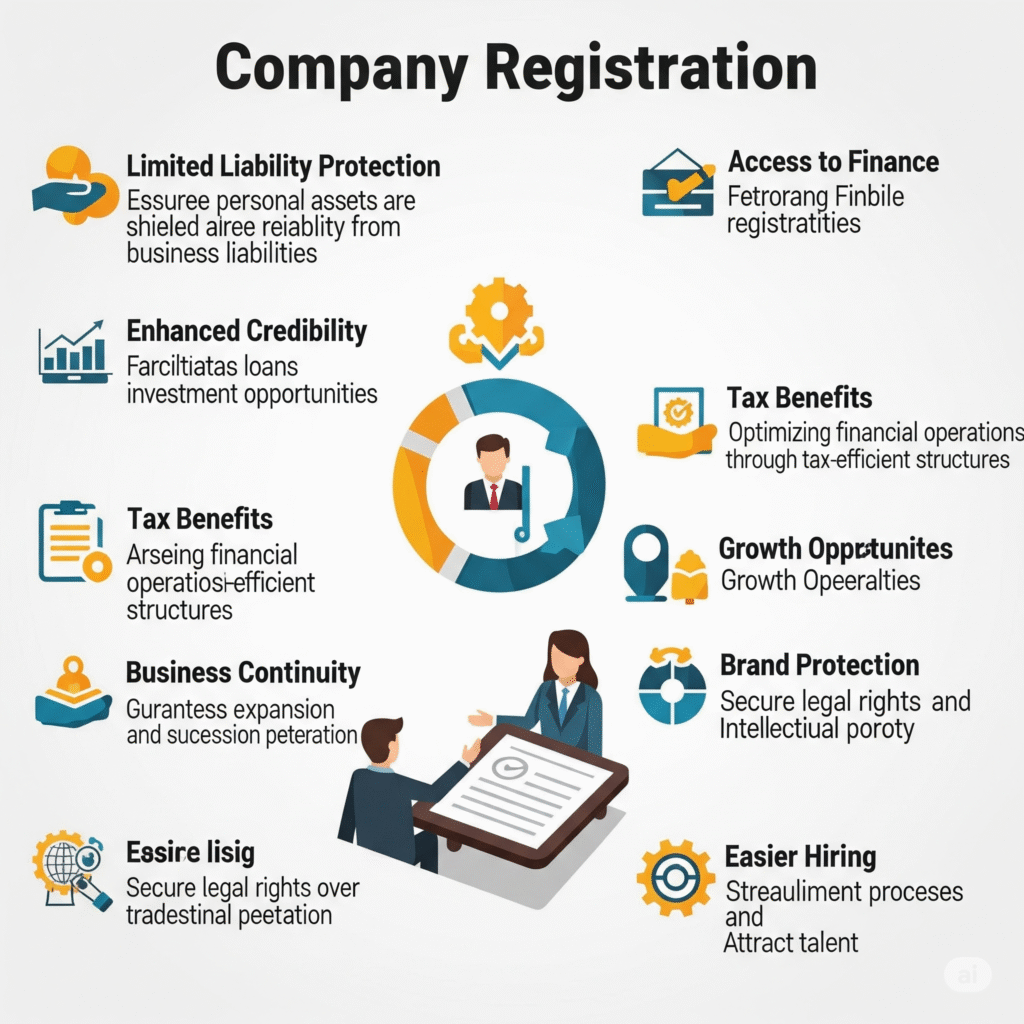
BENEFITS OF COMPANY REGISTRATION IN PAKISTAN

Start your business the right way—with full legal protection, financial opportunities, and growth potential.

Establishing a formal business entity in Pakistan is one of the smartest moves an entrepreneur can make. While registering a company with the Securities and Exchange Commission of Pakistan (SECP) requires some paperwork, the long-term advantages far outweigh the initial effort.

Whether you’re launching a startup, expanding a small business, or formalizing your freelance operations, company registration provides the foundation for credibility, scalability, and legal security.

1. Limited Liability Protection

One of the most important benefits of registering a company—especially a private limited company—is limited liability protection for its shareholders.

✅ Separation of Assets: A company is a separate legal entity. This means its debts and obligations remain with the business, not its owners.

✅ Protection of Personal Assets: In case of business loss, your personal property like house, car, or savings is protected. You are only liable up to the capital you invested.

This is a major reason why businesses shift from sole proprietorships or informal partnerships to registered private limited companies.

2. Enhanced Credibility and Professional Image

A registered company gains instant legitimacy and trust in the market.

✅ Builds Customer Trust: Clients and suppliers feel more confident dealing with a formally registered company.

✅ Opens New Opportunities: Government tenders, corporate contracts, and international deals often require a registered business entity.

✅ Strong Brand Identity: Your registered company name is legally protected and creates a professional image for your brand.

3. Easier Access to Finance and Investment

Need a business loan or want to attract investors? Being registered makes it far easier.

✅ Bank Loans & Credit Lines: Banks prefer to deal with registered companies due to their legal status and transparency.

✅ Attract Investors: Venture capitalists and angel investors typically avoid unregistered entities. A private limited company structure allows share issuance and equity financing.

✅ Raise Capital: You can raise funds by issuing shares without borrowing or taking on debt.

4. Tax Benefits and Legal Compliance

Registering your company helps with tax optimization and ensures smooth compliance.

✅ Separate Taxable Entity: Your company is taxed independently from your personal income, offering flexibility in tax planning.

✅ Corporate Tax Advantages: Depending on income levels, corporate tax rates may be more favorable than individual income tax.

✅ Business Expense Deductions: Registered businesses can deduct legitimate expenses, reducing taxable income.

✅ Compliance: Regular filing of income tax, sales tax, and withholding statements keeps you compliant and penalty-free.

5. Perpetual Succession & Business Continuity

A registered company continues to exist even if ownership or management changes.

✅ Independent Lifespan: If a director resigns or passes away, the company still exists.

✅ Long-Term Stability: Ideal for family businesses or companies planning future expansion, mergers, or acquisitions.

6. Growth & Expansion Opportunities

A registered company provides the legal structure to scale your business.

✅ National & International Growth: You can expand to new cities or countries, open branches, or work with global partners.

✅ Own Property and Sign Contracts: Your company can legally buy property, enter contracts, and even file lawsuits in its name.

✅ Mergers & Acquisitions: Having a corporate structure allows you to merge, be acquired, or acquire others easily.

7. Brand and Intellectual Property Protection

A unique, registered company name means no one else can legally use it.

✅ Exclusive Rights to Business Name: Once registered with SECP, no other business can use the same name.

✅ Trademark Protection: You can protect your logo, slogan, and products with trademark registration—only possible after company registration.

✅ Asset Creation: Your brand becomes a legal and valuable asset for future sale, licensing, or franchising.

8. Easier Employee Hiring and Benefits

Formal hiring becomes easier under a registered structure.

✅ Formal Employment Contracts: Registered companies can issue offer letters and contracts, and comply with labor laws.

✅ Social Security & EOBI Registration: You can register your staff with relevant labor departments and offer benefits like provident fund, gratuity, and medical allowances.

✅ Talent Retention: Offering formal jobs with benefits helps you attract and retain skilled employees.

Frequently Asked Questions (FAQs)

Q1: What are the main benefits of company registration in Pakistan?
Company registration provides legal protection, tax benefits, access to financing, and credibility with clients and partners.

Q2: Can a foreigner register a company in Pakistan?
Yes. Foreigners can register companies in Pakistan, often requiring board approval and additional documentation under SECP rules.

Q3: Is it better to register a company or operate as a sole proprietor?
For small-scale or test-run businesses, a sole proprietorship is fine. But if you want limited liability, funding, and long-term growth, company registration is the better option.

Q4: How long does it take to register a company in Pakistan?
Typically 3–5 working days, provided all documents are complete and the name is approved by SECP.

Q5: Do registered companies pay less tax than individuals?
It depends on income and expense levels. However, companies often enjoy broader tax planning flexibility and deductible expenses.

Final Thoughts

Registering your company in Pakistan isn’t just a legal formality—it’s a strategic business decision. It protects your personal assets, enhances your brand credibility, unlocks financial opportunities, and positions your business for sustainable growth.

💼 Want to Register Your Company in Pakistan?

At Sterling, we offer:

  • ✅ Fast Company Registration with SECP

  • ✅ NTN & Tax Registration

  • ✅ Complete Legal & Compliance Support

  • ✅ Affordable Startup Packages

  • ✅ Free Consultation on WhatsApp


👉 Chat with Us Now on WhatsApp
📞 Or call us.

630c29fbf0502

INCORPORATION OF COMPANY IN PAKSITAN

[ez-toc]

Incorporating a company in Pakistan has never been easier—thanks to SECP’s fully digital eServices platform. Whether you’re a local entrepreneur or a foreign investor, this updated 2025 guide outlines the complete company registration process, documentation requirements, legal structures, and answers to frequently asked questions.

Step 1: Reserve a Company Name

The first step is to choose and reserve your company name through the SECP eServices portal.

How to Reserve a Name:

  • Propose 3 unique names.

  • SECP will approve one based on availability.

  • Ensure compliance with Section 10 of the Companies Act, 2017 and Regulation 4 to avoid restricted or misleading words.

💡 Use the Company Name Search Tool on SECP’s website to check name availability before applying.

Step 2: Prepare Incorporation Documents

Before submitting your incorporation application, gather the following documents:

Required Documents:

  • Memorandum & Articles of Association (MOA & AOA)

    Download sector-specific templates from SECP’s website (100+ templates available).

  • CNIC/NICOP/Passport Copies

    For all subscribers, directors, CEO, and nominee (for Single Member Company).

  • Authorization Letter

    For the person filing the application.

  • NOC/License

  • Required if operating in a regulated sector (banking, telecom, education, etc.).

🌐 For Foreign Subscribers:

  • Notarized Passport and Bio Data

  • Company Charter & Board Resolution (if registering via a foreign company)

  • Certified by the Pakistani Embassy or a Notary Public in the country of origin

Step 3: Pay the Incorporation Fee

Incorporation fee depends on your mode of submission and declared share capital.

Share Capital (PKR) Government Fee
1,000 – 100,000 Rs. 9,625
Above 100,000 Fee increases progressively

💳 Pay via bank challan, mobile banking, or credit/debit card through the eServices portal.


Step 4: Get Your Certificate of Incorporation

Once the application is processed and approved:

  • You’ll receive a digitally signed Certificate of Incorporation via email.

  • Also available for download on SECP’s eServices dashboard.

Step 5: Commence Business Activities

  • Private Limited & Single Member Companies (SMC): Can start operations immediately.

  • Public Limited Company: Must submit Declaration of Compliance (Section 19(1)) before commencing business.

Post-Incorporation Registrations (Optional but Recommended)

  • NTN Registration (FBR): Auto-integrated with SECP during the incorporation process.

  • EOBI, PESSI, SESSI: Optional but recommended for hiring employees and ensuring compliance.

  • Registered Office Declaration: Must be submitted within 30 days, if not provided during incorporation.

Types of Companies in Pakistan

🔹 Company Limited by Shares

  • Single Member Company (SMC): 1 owner, ideal for solo entrepreneurs.

  • Private Limited Company (Pvt Ltd): 2–50 shareholders.

  • Public Limited Company (Listed or Unlisted): Minimum 3 members, no upper limit.

🔹 Company Limited by Guarantee

  • Common for non-profit organizations (Section 42).

🔹 Unlimited Company

  • No cap on shareholders’ liability—rarely used.

Special Types of Companies

  • Limited Liability Partnership (LLP):
    Separate legal entity. Requires 2 partners and an LLP agreement.

  • Trade Organization (TO):
    Must be licensed by DGTO before SECP registration.

  • Public Sector Company:
    At least 51% owned by a government body.

  • Foreign Company:
    Registered outside Pakistan but operating locally. Must file Form 38 and maintain a physical office in Pakistan.

Frequently Asked Questions (FAQs)

1. What is a Company?

A company is a legal entity registered under the Companies Act, 2017, distinct from its owners and capable of owning property, entering contracts, and being sued.

2. What is Authorized and Paid-Up Capital?

  • Authorized Capital: Maximum capital stated in the MOA.

  • Paid-Up Capital: Capital actually contributed by shareholders.

3. What is a Nominee in an SMC?

A nominee is a close relative (spouse, parent, sibling, or child) appointed to manage the company if the sole owner dies or becomes incapacitated.

4. Is there a Minimum Capital Requirement?

No mandatory minimum. However, incorporation fees are calculated based on a minimum capital of PKR 100,000.

5. How to Register a Company Online with SECP?

  • Create an account on SECP eServices.

  • Fill the online application.

  • Upload the required documents.

  • Pay the fee.

  • Receive your digital incorporation certificate.

6. Where Can I Get MOA and AOA Templates?

You can download pre-approved MOA & AOA samples from the SECP website for various sectors.

Useful Links

  • SECP eServices Portal

  • Company Name Search Tool

  • Fee Schedule for 2025

  • Section 42 NGO Licensing Guide

Final Words

Incorporating a company in Pakistan has become easier, faster, and more secure than ever before. With SECP’s digitization, entrepreneurs can register their business online, gain legal recognition, and start operations within days.

Whether you’re launching a tech startup, an SME, or a nonprofit organization, company registration is your gateway to formal growth.

Need help?

👉 Visit https://sterling.pk/
📲 Or chat with our experts on WhatsApp for FREE consultation.

download (3)

Benefits of Company Registration in Pakistan

[ez-toc]Benefits of Company Registration in Pakistan

There are 3 forms of business i.e Sole trader, Partnership and Company   

Each form of business has its own pros and cons

Let’s discuss the Advantages of Company

ADVANTAGES


Limited Liability:  As a sole trader you are legally responsible for all aspects of business including loans and losses towards. If your business make a loss in sole trader capacity you will be personal liable including your personal assets, so running a business in sole trader capacity can be risky , whereas company is separate legal entitiy with limited liability so any debt on the company will be limited to its assets not the owner personal assets


Unlimited Life : Sole trader business will run as long as owner lives but company will be live even owner dies in that case ownership is normally transfer to legal heirs

Raising Capital is easier: Company has got sense of authority so raising capital is easier if the business is run in   capacity of company. Financial institutions also trust the companies more over other forms of business

Expansion: business expansion is easier as the maximum shareholders allowed is 50, so its easy to expand business.


Conclusion


Registering company and running business as a company is one of best ways to run business as a separate entity with no personal liability of owner coupled with ease to raise funds and expand business