Ecommerce-business

E-Commerce Sector Warns of Disruption Over New Tax Proposals in Finance Bill 2025

KARACHI / LAHORE – June 2025:
Leaders of Pakistan’s e-commerce industry have expressed deep concern over new taxation measures proposed in the Finance Bill 2025-26, warning that the changes could severely impact the growth of digital businesses and push thousands of compliant sellers back into the informal economy.

In a press conference held at the Karachi Press Club, Pakistan E-Commerce Association (PEA) Karachi Chapter President Shoaib Bhatti criticized the government’s plan to impose an additional 2% withholding sales tax on online businesses, in addition to the existing 18% general sales tax. He said this would place an excessive compliance burden on digital sellers who are already operating under formal tax systems.

“This is not just unfair—it’s damaging. Online businesses are being taxed more while informal retailers in major markets pay nothing,” Bhatti stated.

He added that the new tax burden threatens to undermine recent progress made in formalizing the digital economy. Pakistan’s e-commerce sector has grown by more than 35% annually over the past five years, with over 100,000 active online sellers currently supporting more than 1 million jobs across the country.

E-Commerce Sector Contribution Undervalued

The total size of Pakistan’s e-commerce market is estimated at Rs2.2 trillion, or approximately $7.7 billion, representing less than 2% of the national GDP and only 4% of total retail activity. Industry representatives say that while the sector is still emerging, it is already contributing significant revenue through transparent, digital payment systems.

They warn that rather than encouraging growth and documentation, the government’s abrupt tax changes could force small sellers to shut down or return to cash-based, unregistered models, weakening the digital economy.

Industry Leaders Raise Alarm in Lahore

In Lahore, a PEA delegation held a meeting with Lahore Chamber of Commerce and Industry (LCCI) President Mian Abuzar Shad to voice similar concerns. The group included former LCCI President Muhammad Ali Mian, Shahbaz Siddique, Imran Haider, and other members of the association’s executive committee.

The delegation emphasized that the Finance Bill introduces complex tax obligations without consulting stakeholders or providing a phased rollout plan. They said this has caused confusion and fear among sellers and digital marketplaces.

“These vague regulations and sudden taxes are disrupting the sector,” said one delegate. “Small businesses can’t afford this uncertainty.”

Regulated Platforms at a Disadvantage

Saad Shah, CEO of e-commerce platform Ucaaz, stated that platforms operating through banks and formal invoicing systems are being punished, while sellers in informal physical markets continue to operate tax-free.

“This move risks punishing compliance while rewarding informality. It sends the wrong message to entrepreneurs trying to do the right thing,” Shah noted.

He warned that disruption of the digital ecosystem would affect not just businesses, but also consumers, logistics providers, freelancers, and payment gateways that rely on steady online commerce growth.

PEA Urges Policy Review

The Pakistan E-Commerce Association has formally urged the government to:

  • Withdraw the proposed 2% withholding sales tax

  • Simplify tax procedures for small online sellers

  • Avoid surprise policy changes without consultation

  • Introduce reforms in a phased and structured manner

Members of the association indicated that they are willing to collaborate with the government to develop practical tax policies that encourage documentation without stifling growth.

Salaried

Salaried Class Terms Budget 2025-26 Tax Relief a “Joke”; Calls It Number Juggling, Not Real Reform

KARACHI – The Salaried Class Alliance of Pakistan (SCAP) has strongly rejected the government’s claims of providing meaningful tax relief to salaried individuals in the recently unveiled federal budget for FY2025–26. In a charged press conference at the Karachi Press Club, SCAP leaders described the so-called relief measures as cosmetic and misleading, accusing the government of using “number juggling” to mask the continued economic burden on Pakistan’s working class.

Government Cuts Tax — But Relief Called Insignificant

Finance Minister Muhammad Aurangzeb recently announced a reduction in income tax rates for low and middle-income earners as part of broader fiscal reforms. While the rate for annual incomes between Rs600,001 and Rs1.2 million has been reduced from 5% to 2.5%, and for Rs1.2 million to Rs2.2 million it has dropped from 15% to 11%, SCAP argues that the actual financial benefit is negligible.

“This is number juggling — not relief,” said SCAP member Bilal Farooq Rizvi.
“A Rs10 billion reduction spread across the entire working population is practically meaningless.”

SCAP provided data from the Federal Board of Revenue (FBR), showing income tax collections from salaried individuals stood at Rs550 billion in FY25, already Rs112 billion above the FBR’s own target. In FY26, the target is set at Rs540 billion — just a Rs10 billion difference, further fueling SCAP’s argument that no real effort has been made to ease the burden on formal-sector employees.

Tax Cuts Explained — But Impact Called Minimal

Here’s a breakdown of the proposed tax changes for FY26:

Income Bracket (Annual) Old Tax Rate New Tax Rate Fixed Tax Cut
Rs600,001 – Rs1.2 million 5% 2.5%
Rs1.2 million – Rs2.2 million 15% 11% Rs30,000 → Rs6,000
Rs2.2 million – Rs3.2 million 25% 23% Rs180,000 → Rs116,000
Rs3.2 million – Rs4.1 million 30% 30% Rs430,000 → Rs346,000
Above Rs4.1 million 35% 35% Rs700,000 → Rs616,000

A 1% reduction in the super tax for those earning over Rs10 million was also included, dropping from 10% to 9%. But SCAP representatives argue that these small tweaks fail to offer any substantial relief, especially considering how much salaried professionals already contribute to the national tax pool.

“The salaried class paid five times more in taxes than exporters and retailers in FY25,” claimed Rizwan Hussain, another SCAP member.
“This discrimination must end.”

Demand for Real Reform: 2.5% Cut Across All Slabs

SCAP leaders urged the government to implement a minimum 2.5% tax cut across all income slabs — not just for the lowest earners — and to completely eliminate the super tax. They also called for relief on taxes applied to mutual funds and similar investment vehicles, arguing that encouraging formal investments is key to economic growth.

Adeel Khan, another SCAP representative, criticized the disproportionate increase in tax burden over the past few years. He pointed out that income tax collection from salaried individuals has grown seven to eight times over just three to four years, from Rs70-80 billion to over Rs550 billion — a shocking increase not matched by relief or services.

“We’ve received a maximum relief of Rs7,000 per month — that’s not even enough to cover electricity bills. This is not relief; it’s a joke,” he said.

Legal Action on the Horizon

The alliance also hinted at legal action if the proposed rates are passed without revision. Rizwan Hussain confirmed that SCAP is preparing to file a case to demand fairer tax treatment if Parliament approves the Finance Bill 2025 as it currently stands.

“We will not stay silent. If Parliament doesn’t fix this injustice, the courts will have to,” he said.

Sialkot Chamber of Commerce & Industry (SCCI)

Massive Relief for Salaried Class: Pakistan Slashes Income Tax Rate to 1% for Annual Income Up to Rs1.2 Million

Massive Relief for Salaried Class: Pakistan Slashes Income Tax Rate to 1% for Annual Income Up to Rs1.2 Million

ISLAMABAD – In a major relief for the inflation-hit salaried segment, the Government of Pakistan has announced a sharp reduction in income tax for individuals earning up to Rs1.2 million annually — cutting the rate from 5% to just 1%.

The announcement was made by Finance Minister Muhammad Aurangzeb during the Senate session, following directives from Prime Minister Shehbaz Sharif. The move is part of the Rs17.57 trillion federal budget for FY2025–26 and aims to ease the financial burden on working professionals while increasing tax compliance and restoring public trust in the taxation system.

Income Tax Relief Breakdown

Income Bracket (Annual) Old Tax Rate New Tax Rate
Rs600,000 – Rs1.2 million 5% 1%
Up to Rs2.2 million 15% 11%
Rs2.2 million – Rs3.2 million 25% 23%

Initially, the government had proposed a reduced tax rate of 2.5% for individuals earning between Rs600,000 and Rs1.2 million. However, after extensive consultations and feedback from various stakeholders, the rate was further dropped to 1% — a historic low designed to offer meaningful relief to the middle-income group.

Aurangzeb acknowledged that the salaried class has been disproportionately affected by inflation and rising living costs. He emphasized that this tax cut is not just economic relief but a gesture to restore fairness in the system.

Additional Measures in the FY2025–26 Budget

Aside from relief for lower and middle-income earners, the budget also includes:

  • A 1% reduction in surcharge for professionals earning above Rs1 million to prevent talent migration abroad.

  • Revision of the solar panel sales tax from the previously proposed 18% down to 10%, aimed at promoting clean energy adoption.

  • Federal expenditures kept at a modest 1.9% increase, reflecting fiscal discipline.

The Federal Board of Revenue (FBR) has been tasked with collecting Rs14,131 billion in taxes for the fiscal year — marking an 18.7% increase over last year. Of this, Rs8,206 billion will be distributed to the provinces under the NFC award.

Additionally, the government projects Rs5,147 billion in non-tax revenues, bringing the net income to Rs11,072 billion, while total expenditures are estimated at Rs17,573 billion. Debt servicing alone will consume Rs8,207 billion, underlining the need for prudent fiscal management and enhanced revenue streams.

installing-solar-panels

Senators Criticize Budget 2025-26, Demand Tax Relief and Solar Reforms

Senators Criticize Budget 2025-26, Demand Tax Relief and Solar Reforms

ISLAMABAD – In a heated session of the Senate, lawmakers sharply criticized key elements of Budget 2025-26, with a particular focus on tax policy, energy reforms, and foreign affairs. Senators from across party lines condemned the recent Israeli aggression against Iran and called for greater fiscal relief for Pakistan’s citizens struggling under inflation and economic hardship.

The ongoing debate on the Finance Bill saw Senator Dost Ali Jeesor denounce Israel’s attack on Iran and praise Pakistan’s principled response. He urged the Organization of Islamic Cooperation (OIC) to convene an emergency session to address escalating regional tensions. His sentiments were echoed by other senators, who lauded Bilawal Bhutto Zardari’s role in promoting Pakistan’s diplomatic efforts for peace.

On the domestic front, tax policy remained a central point of contention. Lawmakers condemned the 10% General Sales Tax (GST) on solar panels, arguing it would discourage the adoption of renewable energy among the middle and lower classes. Multiple senators, including Muhammad Aslam Abro and Ahmed Khan, demanded a complete repeal of the solar tax, highlighting solar power’s role in bridging Pakistan’s energy gap and supporting rural electrification.

The senators also expressed frustration over inadequate allocations for major infrastructure projects, especially the long-delayed M-6 Hyderabad–Sukkur Motorway. They warned that insufficient funding would hinder regional connectivity and economic growth in Sindh and Balochistan.

Senator Jam Saifullah Khan went further, linking environmental sustainability with budget priorities, criticizing new taxes on electric and hybrid vehicles. He stressed that such measures contradict Pakistan’s climate goals and called for incentivizing clean transportation.

Senator Rubina Qaimkhani highlighted the disproportionate impact of taxation on the poor and middle class, criticizing the meager 10% salary increase for government employees as insufficient in the face of skyrocketing inflation. She demanded higher budget allocations for education and healthcare, warning that over 270 million children remain out of school and nearly half the population lives below the poverty line.

Senator Abdul Qadir also weighed in on economic strategy, advocating for export-led growth to reduce Pakistan’s reliance on loans and imports. He called for government support to the IT and e-commerce sectors, noting that excessive taxation on digital services could hinder innovation and global competitiveness.

Senator Husna Bano welcomed road development projects for Balochistan but urged the government to address the province’s persistent shortages in gas, electricity, and clean water.

The session concluded with calls for greater transparency in budget formulation, improved consultation with stakeholders, and a broader commitment to economic justice and sustainable growth.

online-teaching

Pakistan to tax online academies, freelance teachers

The Senate Standing Committee on Finance has approved major amendments to the Finance Bill 2025, signaling a major shift in Pakistan’s tax policy.

Chaired by Senator Saleem Mandviwala, the committee gave the green light to several proposals, including a 500% increase in the property purchase limit for non-filers. Non-filers can now purchase property up to five times their declared assets, a move aimed at easing real estate transactions while encouraging asset declaration.

The bill also replaces the traditional “filer” and “non-filer” categories with “eligible” and “ineligible” persons. Ineligible individuals—those who don’t file tax returns—will face strict restrictions on buying property, vehicles, investing in securities, and operating bank accounts.

Additionally, a new tax on digital services has been introduced. Online academies, cloud services, streaming platforms, and telemedicine providers will now be taxed. However, small-scale freelancers and online sellers were exempted from this clause.

The Islamabad Club and other elite clubs lost their non-profit status due to their luxury services limited to a small elite group. Withholding tax on cash withdrawals by ineligible persons has been raised from 0.6% to 1%, while the income surcharge on earnings above Rs10 million was reduced slightly from 10% to 9%.

Finance Minister Muhammad Aurangzeb emphasized the need to eliminate the concept of “non-filers” and expand the tax net to restore credibility in Pakistan’s tax system.

Gtt8MdRWoAI6kkT

FBR’s New Certificate of Eligibility

FBR’s New Certificate of Eligibility

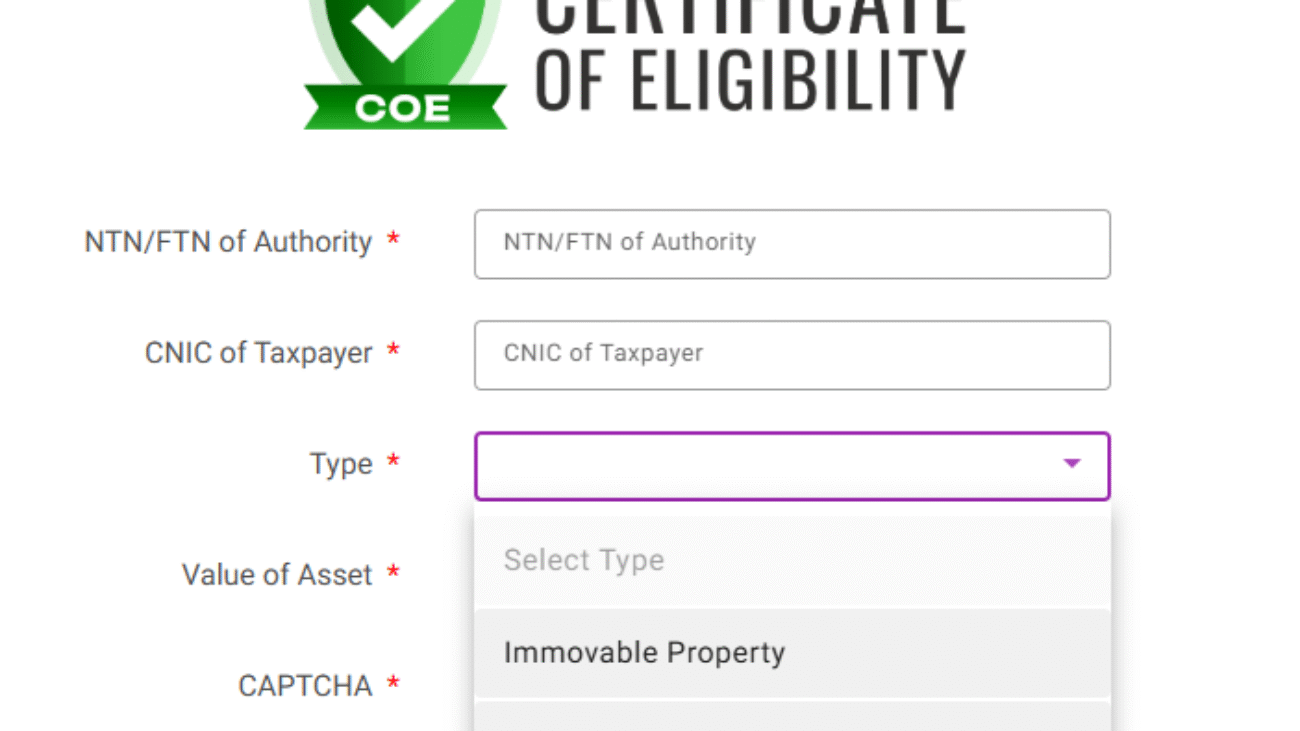
The Federal Board of Revenue (FBR) has introduced a new legal requirement under the Finance Bill 2025–26 that significantly changes how individuals purchase property and vehicles in Pakistan. As per the latest update, a Certificate of Eligibility is now mandatory before executing any high-value transaction involving immovable property or motor vehicles. This move is part of a broader strategy to improve tax compliance, discourage the use of undeclared income in large purchases, and strengthen digital monitoring of asset acquisition.

The new rule applies to both individual taxpayers and business entities planning to buy real estate or a vehicle exceeding a certain threshold, which will be formally notified by the federal government. Before such a transaction can proceed, the buyer must obtain a Certificate of Eligibility from the FBR via its IRIS online system. The registration authorities—such as the provincial excise department or land registrar offices—will be instructed not to register any property or vehicle unless this certificate is provided at the time of transaction.

This certificate acts as an official confirmation that the buyer is a registered taxpayer, has filed their return for the previous tax year, and has disclosed adequate income or assets in their tax profile to justify the intended purchase. The eligibility criteria will be auto-assessed by the IRIS portal. Upon logging into the FBR’s IRIS platform, users will find a new application feature for the Certificate of Eligibility. Once they apply, the system cross-checks their filing status, reported income, and declared assets. If all checks are cleared, the portal generates a digital certificate that must be presented to the relevant authority to complete the purchase process.

Failure to obtain the certificate means that the buyer cannot proceed with the transaction. This digital barrier ensures that no large property or vehicle acquisition can be made using undeclared or black money. This provision is expected to close a major loophole that previously allowed non-filers and individuals with under-reported income to make big-ticket purchases without scrutiny. The certificate must be acquired before registration, not after, and non-compliance will result in outright rejection of registration applications.

FBR’s move also aligns with Pakistan’s broader commitments to financial transparency and tax reform, including conditions set forth by global financial bodies such as the IMF. The government aims to gradually expand the tax base by linking high-value lifestyle indicators with compliance behavior. Individuals making such purchases will now face an automated digital check that assesses whether their tax history supports such spending. In other words, the system will now ask: “Are you financially eligible to buy this asset as per your declared income?”

This also means that a person must ensure their tax return for the preceding year has been filed. Moreover, the declared income or assets must logically support the purchase value. For example, if a person earning Rs. 1.2 million annually applies to purchase property worth Rs. 25 million, the system will likely flag the transaction unless the person has declared substantial prior assets, inheritance, or capital gains. This step is not just about checking box compliance, but matching reported financial activity with actual transactions.

Real estate agents, car dealers, and registration authorities will need to update their internal processes to comply with this new requirement. Buyers must now be advised early in the process to ensure they are compliant and eligible before making any financial commitment. For this reason, many tax consultants and registration service providers have started offering IRIS login support, return filing, and eligibility application services to avoid rejection and delays.

This reform is part of FBR’s wider digitization and enforcement strategy. Over the past few years, FBR has linked various databases, such as NADRA, vehicle registration, land records, utility payments, and travel history, to create a more complete picture of a citizen’s financial profile. The Certificate of Eligibility is one more tool in this data-driven enforcement system. It shifts the compliance burden onto the buyer before they complete a large transaction, instead of relying solely on post-purchase investigations.

Although the move is largely praised for improving accountability, it has also raised concerns among stakeholders about ease of doing business. Critics argue that it may slow down the pace of genuine property and vehicle transactions, especially in urgent cases. However, FBR officials maintain that the certificate process is fully digital and can be completed within minutes if the taxpayer is compliant. They urge buyers to maintain up-to-date tax filings and use licensed professionals for assistance.

For ordinary citizens, the message is simple: if you plan to buy a car or property of significant value in Pakistan, ensure you are a filer, have declared sufficient assets, and get your Certificate of Eligibility approved from FBR beforehand. Ignoring this requirement can lead to legal complications, financial loss, or rejection of registration altogether.

Taxpayers are advised to consult their tax consultants or log into the IRIS system directly to check their eligibility and understand what documents or declarations might be needed. Those who have not yet filed their tax return for the previous year should prioritize doing so immediately, as this is now a prerequisite for obtaining eligibility.

Shabz Sharif

Government Sets Criteria for Arrests in Tax Fraud: PM Outlines Six Key Points

Government Sets Criteria for Arrests in Tax Fraud: PM Outlines Six Key Points


ISLAMABAD – June 17, 2025:
Prime Minister Shehbaz Sharif has directed the Federal Board of Revenue (FBR) to implement a strict set of conditions before arresting individuals in tax fraud cases. Amid growing concerns from parliamentarians and the business community, the Prime Minister called for amendments to the Finance Act to prevent the misuse of authority by tax officials.

Chairing a high-level review meeting on Monday, Shehbaz Sharif emphasized the need for checks and balances within the FBR’s enforcement mechanism. He instructed that no taxpayer or businessperson should face harassment under any circumstances, and ordered the creation of a special oversight committee. The meeting was attended by several federal ministers, economic experts, the Chairman of FBR, and other senior officials.

Officials briefed the Prime Minister that the power to arrest sales tax defaulters has existed since the 1990s. However, recent court decisions prompted a review of these provisions. As a result, changes are being incorporated to ensure legal clarity and avoid undue harassment of taxpayers.

“The respect and dignity of taxpayers, especially the business community and investors, are of utmost importance,” Shehbaz stated. He added that arrest powers should only apply in extraordinary cases involving large-scale tax fraud, and must be backed by clear procedural safeguards.

The Prime Minister laid down six conditions that must be met before any arrest is made under tax laws. These include: the accused attempts to escape or flee jurisdiction; evidence tampering is suspected or observed; the person fails to appear despite being served three separate notices; the tax fraud exceeds a certain monetary threshold; for arrest of senior executives such as CEOs, CFOs, or board members, the fraud must exceed PKR 50 million; and approval must be obtained from a special board that includes FBR officials and a private sector representative.

Shehbaz Sharif further ordered the establishment of an external review mechanism and instructed that these safeguards be included in the Finance Act. He also directed that coalition partners in the Parliament be consulted before finalizing the provisions.

The FBR, under pressure to meet its Rs389 billion revenue enforcement target agreed with the IMF, had proposed increasing the arrest threshold and penalties. This included eliminating the PKR 1 billion fraud threshold and raising imprisonment from five to ten years. However, the PM’s directions aim to balance enforcement with fairness.

The Senate Standing Committee on Finance, chaired by Senator Saleem Mandviwalla, also raised serious concerns over tax enforcement. Senator Farooq H. Naek proposed reducing penalties and sentencing terms to make them more proportionate. He also recommended a phased legal process: separate stages for inquiry, investigation, and trial.

Senator Anusha Rehman exposed how surplus funds of various authorities, including Rs45 billion from an abandoned body, were being parked outside the government’s consolidated account. She also criticized NADRA’s excessive verification charges, including those applied to the ECP during elections.

The committee also discussed FBR’s regulation of online marketplaces. Senator Anusha Rehman emphasized protecting youth and women entrepreneurs by avoiding blanket taxes on all e-commerce activity. She proposed setting a reasonable threshold for mandatory registration.

On e-billing, Senator Mohsin Aziz urged the government to assess readiness, citing Malaysia’s three-year phased rollout. Mandviwalla supported bringing structured proposals forward.

The Senate panel reviewed multiple clauses of the Finance Bill 2025-26, including the gradual phasing out of tax exemptions for FATA/PATA. Starting with a 10% GST, it will rise to 18% in the coming years. The committee also approved abolition of the Federal Excise Duty (FED) on immovable property. Concerns were raised by provincial representatives regarding FBR’s expanding role in areas constitutionally reserved for provinces, particularly on service taxes.

The meeting concluded with the Prime Minister’s firm direction to maintain balance between enforcement and protection of taxpayer rights. All legal and constitutional safeguards must be integrated into the Finance Act before implementation begins.

600457f136514

Steel Mills Association Rejects 10% Manufacturing Tax

PESHAWAR – June 2025: Steel Mills Association Rejects 10% Manufacturing Tax
Leaders of the FATA Steel Mills Owners’ Association have strongly condemned the federal government’s recent decision to impose a 10% tax on manufacturing units operating in the merged tribal districts. Speaking at a news conference at the Peshawar Press Club, Association Chairman Wajid Afridi called the tax ‘a betrayal of the promises made at the time of the merger.’

Government Commitments Ignored

During the merger of the Federally Administered Tribal Areas (FATA) with Khyber Pakhtunkhwa, the government had pledged to exempt industries in the region from federal taxes until at least 2028. This commitment was also recorded in the proceedings of the National Assembly. However, association members stated that the new tax measure contradicts those assurances.

Industries Already in Crisis

The association’s representatives expressed deep concern that the new tax would exacerbate the fragile industrial environment of the region. Many businesses are already struggling due to insufficient infrastructure, security challenges, and a lack of investment incentives. They emphasized that such a fiscal burden could force several units to shut down.

Unmet Development Promises

In addition to the tax grievance, the steel mill owners also criticized the federal and provincial governments for not delivering on development commitments made at the time of the merger. These included the creation of industrial zones, road infrastructure upgrades, and utility provisions—all of which remain largely unfulfilled.

Warning of Protest Movement

The association warned that if the federal government fails to withdraw the tax, they would be compelled to launch a protest campaign. They called on relevant authorities to reconsider the policy and prioritize economic support for struggling industries in the merged districts.

The steel mills association reiterated that their demand is not only based on economic viability but also on constitutional commitments made during a sensitive transitional period. ‘It’s time the government stands by its word and supports industrial growth rather than suffocating it,’ said Afridi.

Cyber_Wing_Minstry_of_IB_and_NH_62573

Punjab Unveils Rs5.3 Trillion Tax-Free Budget for FY2025-26

Punjab Government Unveils Rs5.3 Trillion Tax-Free Budget for FY2025-26 with Record Development Outlay

Lahore – June 16, 2025:
Punjab Finance Minister Mujtaba Shuja-ur-Rehman on Monday presented a Rs5.335 trillion tax-free budget for the fiscal year 2025-26, marking a significant step towards development-focused governance. The budget was presented in the Punjab Assembly, just a week after the federal government’s budget announcement.

Key Budget Highlights:

  • Total Budget Outlay: Rs5.335 trillion
  • Non-Development Expenditure: Rs2.706 trillion (+6%)
  • Current Capital Expenditure: Rs590 billion
  • Development Budget: Rs1.24 trillion — a record-high, up 47% from FY25
  • Federal Transfers (FDP): Rs4,062.2 billion
  • Provincial Revenue Target: Rs828.1 billion
  • Punjab Revenue Authority (PRA) Target: Rs340 billion

Focus on Social Services

The budget allocates Rs494 billion to the social sector, accounting for 40% of the development budget. The provincial government announced a 10% salary increase for government employees and a 5% pension raise.

Education Sector Boost

  • Development Expenditure: Rs148 billion
  • Non-Development Expenditure: Rs661 billion
  • Laptop Scheme: Rs15.1 billion for 112,000 students
  • School Uplift: Rs40 billion
  • Merit Scholarship Programme: Rs15 billion
  • Higher Education: Rs25 billion
  • Special Education: Rs5 billion

Health Sector: Major Investment

  • Total Health Budget: Rs630.5 billion
  • Development Expenditure: Rs181 billion (+131%)
  • Non-Development Expenditure: Rs450 billion
  • Free Medicines: Rs79.5 billion
  • Nawaz Sharif Medical District (Lahore): Rs109 billion
  • Nawaz Sharif Institute of Cancer Treatment and Research: Rs72 billion

Support for Local Bodies & Infrastructure

  • Local Government Bodies: Rs411.1 billion
  • Waste Management & Municipal Grants: Rs150 billion + Rs20 billion
  • Construction Sector: Rs335.5 billion

Agriculture and Social Protection

  • Agriculture, Livestock & Irrigation Development: Rs123 billion
  • Non-Development (Agri Sector): Rs56.2 billion
  • Social Security Package: Rs70 billion

The finance minister lauded both political and military leadership for maintaining national interests and mentioned that 6,104 development projects were completed during the current fiscal year.

Opposition Reaction

The budget session saw protests from opposition lawmakers of Pakistan Tehreek-e-Insaf (PTI), highlighting political tensions amid the provincial government’s presentation.

No New Taxes Introduced

Staying true to its “tax-free” label, the provincial government introduced no new taxes in the budget. Instead, the focus remains on efficient revenue collection, increased development expenditure, and expanding public welfare programs.

Strategic Focus

Calling it a “strategic shift in Punjab’s history,” the finance minister emphasized infrastructure, health, education, and sanitation as core priorities. The budget outlines over 850 development schemes, including public-private partnerships for new hospitals under the expansion of Nawaz Sharif Medical City.

With an estimated Rs740 billion in provincial surplus aligned with IMF commitments, Punjab’s FY2025-26 budget aims to drive inclusive growth, improve public service delivery, and boost socio-economic development across the province.

Sialkot Chamber of Commerce & Industry (SCCI)

FBR Likely to Raise Daily Tax-Free Cash Withdrawal Limit for Non-Filers

Finance Bill 2025-26 Proposes Major Tax Reforms for Non-Filers and E-Commerce Sector

Islamabad – June 16, 2025: The Federal Board of Revenue (FBR) has proposed key changes in the Finance Bill 2025-26 aimed at broadening the tax base and regulating the growing digital economy, ARY News reported.

One of the major proposals includes increasing the daily tax-free cash withdrawal limit for non-filers from Rs. 50,000 to Rs. 75,000. However, withdrawals beyond this limit will now be subject to a higher withholding tax of 0.8%, up from the previous 0.6%. This move is designed to encourage tax compliance and promote financial documentation among non-filers.

During a recent briefing to the National Assembly Standing Committee on Finance, FBR officials outlined several new tax measures targeting the e-commerce sector. Under the proposed bill, online clothing sales will be taxed at 2%, while electronics will face a 0.5% income tax. All other online businesses will be subject to a 1% tax rate.

Registered e-commerce businesses will be required to provide detailed customer billing information as part of their tax returns. Additionally, online platforms will be barred from passing on the tax burden to customers through extra charges.

The Finance Bill also introduces a significant increase in advance tax on digital services. Companies like Google, YouTube, and Facebook will see their tax rate rise from 10% to 15%. However, the government is offering an incentive for digital giants to establish a local presence — companies that set up offices in Pakistan will benefit from a reduced 5% tax rate.

To streamline tax collection, banks and courier companies will be designated as authorized agents, playing a critical role in enforcing the new regulations.

These comprehensive measures reflect the government’s broader strategy to improve transparency in financial transactions, ensure fair taxation, and regulate the fast-evolving digital and informal economies.