sugar-textile

Industry Awaits Notification on 18% Tax Imposed on Cotton Imports

Industry Awaits Notification on 18% Tax Imposed on Cotton Imports

The Pakistan Business Forum (PBF) has urged the Federal Board of Revenue (FBR) to promptly issue a Statutory Regulatory Order (SRO) to enforce the 18% general sales tax (GST) on imported cotton, as announced in the Finance Bill 2025.

In an official statement, the PBF noted that although the federal budget explicitly called for GST on cotton imports, the implementation has yet to begin due to the absence of the necessary SRO. “It has been more than three weeks since the budget’s approval, but the delay continues without justification,” the forum stated.

PBF Chief Organiser Ahmad Jawad alleged that powerful interest groups are influencing the delay, obstructing efforts to support domestic cotton growers. “The government must ensure transparency and move swiftly to implement this tax in the larger interest of the economy and the farming community,” he said.

The forum highlighted a critical shift in Pakistan’s cotton trade dynamics, warning that imports have now surpassed domestic production for the first time in the country’s history—a development that threatens the sustainability of both the textile and agriculture sectors.

“The FBR must act with urgency and issue the SRO without any further delay,” the PBF asserted.

According to the forum, Pakistani importers have already finalized contracts to bring in 7.5 million bales of cotton from international sources. “After years of struggle, our farmers were finally given a level playing field through budgetary measures. It is now time to implement those measures effectively,” said Jawad.

To restore Pakistan’s standing as a global cotton leader, he urged both federal and provincial governments to roll out a comprehensive cotton revival programme. He also recommended that imports of raw materials affecting local industries, such as cotton, should be excluded from the Export Facilitation Scheme.

The PBF also voiced concern over the current cotton crop performance, particularly in Sindh. Latest figures show Sindh’s cotton supply at just 152,650 bales so far this year, a steep 53% drop from 327,666 bales during the same period last year.

Punjab, on the other hand, has shown improvement, recording a 27% increase with 145,101 bales delivered. Districts such as Khanewal (28,825 bales), Vehari (33,950 bales), Dera Ghazi Khan (19,397 bales), and Rajanpur (9,200 bales) have reported notable yield improvements.

Reason-to-Invest-in-Tower-12-60-1024x683

Real Estate Market Hit by Steep Property Tax Hike

Real Estate Market Hit by Steep Property Tax Hike

July 22, 2025 – Lahore
The recent surge in property taxes across several major cities in Pakistan has triggered widespread concern among homebuyers, investors, and real estate developers. What was once considered a stable and growing market is now seeing hesitation from potential buyers, many of whom are pausing their plans due to increased costs.

A Sudden Hike Catching Buyers Off Guard

In a move that surprised many, local and provincial authorities revised property valuation tables and tax rates for residential and commercial properties earlier this month. In some urban areas such as Lahore, Karachi, and Islamabad, property taxes have surged by as much as 35% to 50%.

“This increase is simply unaffordable,” said Muhammad Irfan, a first-time buyer in Lahore’s Johar Town area. “I had been saving for years to buy a small plot, but now the upfront tax alone has made it out of reach.”

According to real estate consultants, the sharp increase has not only affected individual buyers but also investors and small developers, many of whom are now reconsidering or delaying their transactions.

Impact on the Real Estate Market

The effects of the tax surge have been immediate. Real estate offices across major cities report a decline in walk-in clients and reduced inquiries.

“Deal finalizations have dropped by 40% in the past two weeks,” said a DHA-based property dealer in Karachi. “Buyers are either backing out or asking sellers to share the increased tax burden, which has led to conflicts and failed negotiations.”

Moreover, the timing has raised further eyebrows. With inflation already pinching middle-class households and bank markup rates remaining high, many stakeholders question the rationale behind such a drastic hike during an economic downturn.

Developers and Industry Leaders Raise Alarm

Property developers have voiced strong criticism, warning that the current tax policies could halt development activities and result in job losses in construction and allied industries.

“As an industry that contributes over 9% to Pakistan’s GDP and supports 40+ allied sectors, real estate cannot absorb such shocks without consequences,” said Shahid Khan, a Lahore-based developer and board member of the Association of Builders and Developers (ABAD). “The government must revise the increase or introduce phased implementation to avoid economic stagnation.”

Government’s Perspective

In response, officials from the Federal Board of Revenue (FBR) and provincial finance departments argue that the increase is part of a broader effort to document the economy and raise much-needed revenue.

“Valuation tables have remained outdated for years,” said an FBR representative. “The new rates reflect the real market values and are necessary for fair taxation and public infrastructure funding.”

However, critics claim that abrupt implementation without consultation or relief measures risks destabilizing a key economic pillar.

What’s Next for Buyers?

With budget constraints intensifying, many potential homebuyers are now exploring alternatives such as smaller plots, shared property investments, or shifting to less-developed areas where the tax burden is comparatively lower.

Financial advisors recommend that buyers reassess their budgets and seek professional consultation before proceeding with transactions under the new rates. Some experts also anticipate legal challenges from real estate bodies if no relief is provided in the coming weeks.

Pakistan_China_Border_at_khunjerab_Pass

Tax Dispute Halts Pak-China Trade: Protests Spark Detentions, Highway Blockade in Hunza & Nagar

Tax Dispute Halts Pak-China Trade: Protests Spark Detentions, Highway Blockade in Hunza & Nagar

By Monitoring Desk

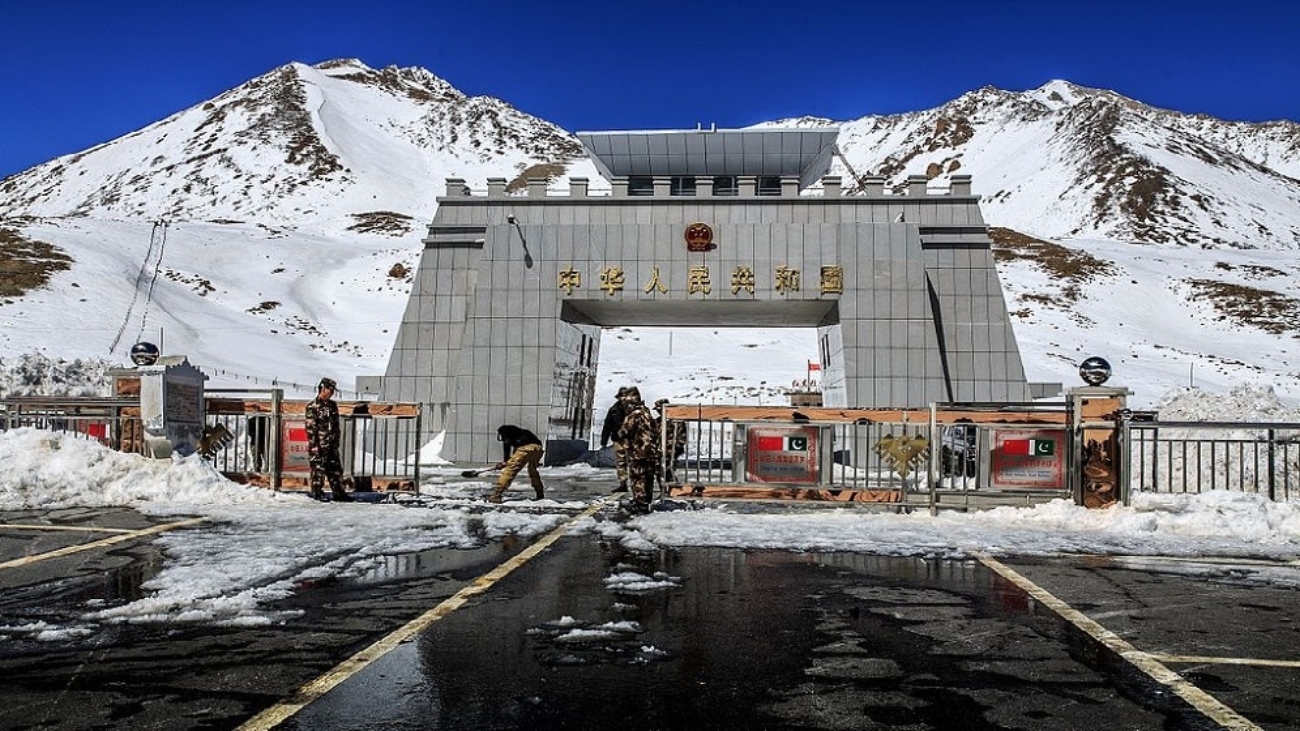
Trade activities between Pakistan and China came to a grinding halt on Monday as traders in Gilgit-Baltistan shut down the Silk Route Dry Port in Sost and blocked key points of the Karakoram Highway in protest against Federal Board of Revenue (FBR) tax policies. The demonstration, led by the Pak-China Trades Action Committee, also resulted in the detention of several traders, escalating tensions in the region.

According to Dawn, the protest was triggered by demands for the reversal of income and sales taxes collected at the Sost Dry Port. The traders’ body declared a complete closure of the port and staged sit-ins across Hunza and Nagar districts, severely disrupting traffic and leaving hundreds of local and international tourists stranded.

Hunza Deputy Commissioner (DC) Huzaifa Anwar confirmed that sit-ins had been held at Murtazaabad and Sost, near the Pakistan-China border. “The Murtazaabad protest has ended, but the Sost sit-in is ongoing. We are negotiating with the demonstrators and hope to resolve the issue soon,” he told Dawn.com.

DC Anwar added that three traders were placed under “protective custody” at the Sost Dry Port following the protest announcement. One of them has since been released, and no formal arrests or FIRs have been registered so far. “Our immediate priority is to reopen the Karakoram Highway and assist the stranded tourists,” he said.

Meanwhile, local traders accused authorities of launching a late-night crackdown prior to the Monday demonstration. They claim police raided the homes of key protest leaders — including Ali Nazar, Abbas Mir, and Farman Tajik — and took them into custody.

As a result, tents have been set up by protesters along the highway in Nagar’s Rakaposhi area and in Murtazaabad, Hunza. These encampments have contributed to major roadblocks, stranding travelers and affecting cross-border trade flow through the Khunjerab Pass.

Addressing protesters in Nagar, former Gilgit-Baltistan Chamber of Commerce president Javed Hussain condemned the crackdown and squarely blamed the district administration for provoking a peaceful protest. “If the administration has the power to detain our traders, let them keep them. Otherwise, we’ll break them out ourselves,” he warned, adding that he would not hesitate to leave his party, PML-N, over the issue. “I won’t compromise on the rights of the people of Gilgit-Baltistan.”

Protesters also raised slogans against the Hunza deputy commissioner and the district police chief, accusing them of mishandling the situation.

Former Chamber president Imran Ali echoed the sentiment, stating that the sit-in was sparked by the FBR’s renewed efforts to collect taxes at the dry port. “There was a prior agreement not to enforce these taxes, but it has been violated. That’s why we have shut down the port and blocked the highway,” he said.

In a separate statement, Nagar DC Asghar Khan offered a different perspective, attributing some road closures to a Muharram procession. He insisted that no traders had been detained in Nagar and claimed that the Karakoram Highway had not been blocked there.

This week’s protest is the latest in a series of actions by local traders. In June, they staged similar demonstrations with support from political parties, decrying what they called exploitative tax policies imposed by the FBR. Earlier in May, an indefinite sit-in at Pissan, Nagar also paralyzed traffic, stranding thousands of travelers on both sides of the Khunjerab Pass.

As the standoff continues, pressure is mounting on authorities to resolve the crisis and restore normal trade and travel operations along the critical Pak-China corridor.

Google-logo-Googleplex-headquarters-Mountain-View-California

Pakistan Grants Tax Relief to Google Under New Digital Economy Law

Pakistan Grants Tax Relief to Google Under New Digital Economy Law

ISLAMABAD – July 2025

In a significant policy development, Pakistan has granted tax relief to Google under the newly enacted Digital Presence Proceeds Act 2025, sparking debate over the law’s scope and implications for foreign digital companies operating in the country.

According to official sources, the Federal Board of Revenue (FBR) recently assured Kyle Gardner, Google’s South Asia representative, that the company would not be subject to the newly introduced 5% digital services tax. This exemption stems from the fact that Google operates through a registered branch in Pakistan, qualifying it as a local tax resident.

The Digital Presence Proceeds Act 2025—passed in June—was introduced to tax international digital firms with a significant user base in Pakistan but no physical or registered presence. While the law targets services such as cloud computing, e-learning, streaming platforms, telemedicine, and automated digital products, companies like Google with local operations are exempt.

Taxation History and Shifting Policy

Previously, Google’s payments were taxed at 10% under Section 152 of the Income Tax Ordinance, which was later revised to 15%. However, the FBR has now clarified that only a 5% withholding tax may apply to services performed from outside Pakistan. This represents a notable shift in the taxation approach toward one of the country’s biggest digital service providers.

Industry Impact and Criticism

Google is currently the largest digital taxpayer in Pakistan—contributing more than global giants like Meta, Amazon, and Netflix. The recent tax relief has sparked criticism from tax experts and digital policy analysts, who argue that the Digital Presence Proceeds Act 2025 may fall short of expectations.

“Providing exemptions to companies with local branches weakens the core intent of the law,” said a tax analyst. “If major players are given relief, the regulation risks becoming ineffective in generating the projected revenue from the digital economy.”

Special Incentives Under STZ Policy

In a further incentive, the FBR reportedly informed Google that it could avail a complete income tax exemption until 2035 by relocating operations to a Special Technology Zone (STZ), under Clause 123EA of the Income Tax Ordinance, 2001. This clause offers generous tax holidays to tech companies operating within designated innovation zones.

Concerns Over Unequal Tax Treatment

While the Act was designed to ensure tax fairness among global tech firms benefiting from Pakistan’s digital ecosystem, critics fear that selective relief and regulatory ambiguities may lead to unequal tax treatment, discourage local startups, and undermine investor confidence.

The government’s reassurances to Google are now under scrutiny as stakeholders await clarity on how the new law will be applied to other international digital entities operating in Pakistan without a local presence.

712815_9171977_fbr_akhbar

FBR Plans Revamp of Tax Dispute Mechanism with Stakeholder Input

FBR Plans Revamp of Tax Dispute Mechanism with Stakeholder Input

By Monitoring Desk
ISLAMABAD – July 21, 2025

In a major step toward improving the efficiency and credibility of Pakistan’s tax dispute resolution system, the Federal Board of Revenue (FBR) has initiated consultations with stakeholders to reform the process of appointing members to the Alternative Dispute Resolution Committee (ADRC).

According to Dr. Ishtiaq, Director General (Law) at the FBR, the board is in the process of collecting feedback from legal and tax experts, industry representatives, and business stakeholders to develop a new framework that ensures greater transparency and trust in the ADRC system.

“The FBR will prepare a comprehensive report after the consultation process concludes. Our aim is to make the committee more transparent and credible,” said Dr. Ishtiaq.

The move comes in response to a directive issued by the Supreme Court of Pakistan. During a hearing on July 3, a two-member bench headed by Chief Justice Yahya Afridi ordered the FBR to submit a detailed report on the structure and functioning of the ADRC by July 24, following a petition filed by Zarai Taraqiati Bank Ltd.

Dr. Ishtiaq informed the court that the FBR welcomes constructive suggestions under the law and is actively engaging with relevant stakeholders to gather input. The Chief Justice subsequently granted permission to the FBR to proceed with its consultative process.

Growing Need for ADR Reform

Commenting on the initiative, Advocate Hafiz Ahsaan Ahmad Khokhar, a well-known constitutional and tax law expert, emphasized the urgent need to reform the existing tax litigation system. He said that Pakistan’s judiciary is currently overwhelmed with thousands of unresolved tax cases, many involving hundreds of billions of rupees.

“A well-structured and effective ADR system is essential to reduce the burden on the judiciary, resolve tax disputes efficiently, and ensure timely recovery of government revenue,” he said.

Khokhar pointed out that the current litigation-based model creates prolonged uncertainty for businesses, discourages investment, and stalls revenue collection efforts.

Policy Implications

The ADRC was initially introduced to provide an alternative mechanism for resolving tax disputes without the need for lengthy court proceedings. However, questions have been raised over its effectiveness, impartiality, and structure—particularly regarding how committee members are appointed.

By revisiting the appointment process and incorporating stakeholder input, the FBR hopes to restore confidence in the ADRC and encourage its use as a credible alternative to traditional litigation in tax matters.

The forthcoming report, expected by the end of July, will play a key role in shaping the future of tax dispute resolution in Pakistan, with potential long-term benefits for both the business community and the state’s revenue authority.

Digital-Marketing-1

ADB Warns Pakistan to Reform Telecom Sector or Risk Falling Behind in Global Digital Race

ADB Warns Pakistan to Reform Telecom Sector or Risk Falling Behind in Global Digital Race

Islamabad – July 14, 2025:
The Asian Development Bank (ADB) has sounded the alarm on Pakistan’s faltering digital progress, calling for urgent policy reforms to revive the country’s telecom and digital infrastructure. In a newly released report titled “Pakistan’s Digital Ecosystem,” ADB highlights excessive taxation, flawed spectrum pricing, and policy instability as major barriers to digital growth.

The report urges the government to rationalize taxes on digital infrastructure, fix spectrum pricing for at least 10 years, and remove dollar-based indexation to shield telecom operators from currency shocks. It also stresses that inefficient spectrum auctions and a lack of investor confidence could delay Pakistan’s 5G rollout.

ADB recommends provinces take the lead in driving digital services by subscribing to broadband for schools and hospitals, which would push network expansion into underserved areas. The report also calls for overhauling the Universal Service Fund (USF), supporting smartphone affordability, and encouraging local mobile manufacturing to reduce dependency on imports.

Crucially, ADB notes the absence of a unified industry voice in telecom policymaking and urges structured dialogue between the government and private sector to shape a more inclusive and competitive digital future.

“This is a make-or-break moment for Pakistan’s digital economy,” the report concludes, warning that without swift reforms, the country risks deepening the digital divide and missing out on global 5G opportunities.

Reason-to-Invest-in-Tower-12-60-1024x683

FBR Now Requires Actual Property Market Value in Tax Returns 2025

FBR Now Requires Actual Property Market Value in Tax Returns 2025

Islamabad – July 14, 2025:
The Federal Board of Revenue (FBR) has introduced a new requirement for all taxpayers to declare the actual market value of properties in their income tax returns for the tax year 2025. The directive applies to all immovable properties—land or buildings—whether owned, purchased, or sold.

Effective from July 1, 2025, this new rule was outlined through SRO 1213(I)/2025, issued on July 7, 2025. The FBR’s updated electronic return form now includes a dedicated section requiring taxpayers to manually input details of each property, including its current market price, regardless of any auto-filled data already present in the system.

Taxpayers must also reconfirm all previously declared properties and re-enter their details manually, ensuring accuracy and completeness of information. The move is aimed at curbing the widespread issue of undervaluation in real estate transactions and ensuring transparency in asset disclosures.

FBR officials have stated that failure to comply with this requirement may result in penalties, audit flags, or further legal scrutiny. The initiative is part of FBR’s broader strategy to tighten documentation and expand the tax base through improved property record verification.

Tax professionals are advising individuals and businesses to reassess their property records and seek updated valuations before filing their returns to avoid discrepancies.

FBR-Office

FBR’s Clarification on Property Tax for Overseas Pakistanis Sparks Debate

Published: July 5, 2025

The Federal Board of Revenue (FBR) has officially clarified that overseas Pakistanis can avail the lower “filer” tax rates on the purchase and sale of immovable property—even if they are non-filers—provided they meet specific eligibility criteria.

In a newly released set of Frequently Asked Questions (FAQs), the FBR addressed confusion around applicable tax rates for non-resident Pakistanis conducting property transactions in the country. The move is expected to bring relief to overseas Pakistanis and simplify compliance with real estate tax obligations.

Eligibility for Filer Rate

According to the FBR, individuals who:

  • Hold a valid Pakistan Origin Card (POC) or National Identity Card for Overseas Pakistanis (NICOP), and

  • Are classified as non-resident under Pakistani tax law (i.e., they spend fewer than 183 days in Pakistan during a financial year),

will be eligible to pay the lower “filer” rate of advance income tax on real estate transactions—even if they are not listed on the Active Taxpayers List (ATL).

This applies to taxes levied under:

  • Section 236C (advance tax on sale of property)

  • Section 236K (advance tax on purchase of property)

These taxes are normally charged at higher rates for non-filers.

How to Avail Filer Rate as an Overseas Pakistani

To benefit from this exemption, overseas Pakistanis must complete the following steps through the FBR online portal:

  1. Visit the “Overseas Pakistanis” section on the FBR portal.

  2. Register and generate a Payment Slip ID (PSID) specific to the property transaction.

  3. Upload required supporting documents (POC or NICOP, proof of non-residency, etc.).

  4. Submit the application to the relevant Commissioner Inland Revenue for approval.

  5. Once verified and approved, the portal system will enable payment at filer rates.

The FBR emphasized that only approved users will be able to pay tax at the reduced rate. All others will be automatically assessed under the standard non-filer regime.

Purpose of the Clarification

This clarification is intended to remove ambiguity and facilitate non-resident Pakistanis investing in real estate. It ensures that those with a verifiable overseas status are not penalized by higher non-filer tax rates, thereby encouraging legal compliance and property market participation from the overseas diaspora.

agricultural-tax-smk-mojo-222-1024x576

Fields of Exemption: Tax Injustice and Elite Influence in Pakistani Agriculture

Fields of Exemption: Tax Injustice and Elite Influence in Pakistani Agriculture

Pakistan’s failure to equitably tax agricultural income has deepened elite capture, worsened its fiscal deficits, and undermined both IMF commitments and the constitutional principle of equity.
By Dr. Ikramul Haq
Published: July 5, 2025 | Analysis | Main Slider

“Taxing agriculture is a core component of the IMF’s new program for Pakistan and is critical to its success. If this commitment is not upheld, the program will be at risk.”
Nathan Porter, IMF Mission Chief to Pakistan, Nikkei Asia, July 18, 2024

“All provinces are committed to fully harmonising their agriculture income tax regimes with the federal personal and corporate income tax laws, effective from January 1, 2025.”
IMF Press Release No. 24/273, July 12, 2024

Despite strong recommendations by the IMF, Pakistan has continued to exempt vast agricultural incomes from meaningful taxation—benefitting a tiny elite, aggravating fiscal shortfalls, and violating the principles of constitutional equity.

According to widely cited data, just 5% of large landowners in Pakistan control 64% of all farmland, while 65% of smallholders own only 15% (Nazeer, 2015). Similarly, the agriculture and population census reveals that 1% of farmers own 22% of all agricultural land (Hafiz Pasha, 2019). Yet, the taxation burden falls disproportionately on lower-income citizens, including small farmers who struggle under mounting debt and rising input costs.

A Constitutional Loophole or a Legal Shield?

The Constitution of Pakistan grants provinces exclusive authority to tax agricultural income, as stipulated in Entry 47, Part I of the Federal Legislative List and Article 142(c). However, in Islamabad Capital Territory (ICT), this authority lies solely with the National Assembly under Article 142(d).

Crucially, Article 260 of the Constitution provides a specific and exhaustive definition of “agricultural income” based on the Income Tax Ordinance, 2001 (Section 41). This includes:

  • Revenue or rent from land used for agricultural purposes

  • Income from cultivation and sale of produce with minimal processing

  • Income from buildings on or near agricultural land used by cultivators

This definition binds both federal and provincial legislators—they cannot deviate from it to either widen or narrow the tax base.

The ICT Contradiction: Law Exists, Enforcement Does Not

Even within ICT—where the federal government has complete authority to tax agricultural income—no meaningful steps have been taken. The applicable Tax on Agricultural Land Ordinance, 1996 sets rates as low as:

Use of Land Rate
Orchards, vegetables, flowers Rs. 300 per acre
Irrigated land (>5 acres) Rs. 50 per acre
Un-irrigated land (>5 acres) Rs. 25 per acre

These token rates are not just outdated—they are a mockery of serious fiscal policy. Despite a clear constitutional mandate, the federal government has not enacted a proper income tax regime for agriculture in ICT, owing to pressure from powerful absentee landowners and elite interests.

IMF Requirements and Provincial Inaction

Under the IMF’s $7 billion Extended Fund Facility (EFF), Pakistan agreed to harmonise agricultural income tax regimes across provinces with the federal income tax framework, starting January 1, 2025. However, while provinces such as Punjab and Sindh have passed amendments, no province has launched a digital portal or enforcement framework for collection.

Notably, provinces already collect sales tax on services via automated platforms. Extending these systems to cover agricultural income would not require significant new infrastructure.

The Elite Capture Dilemma

The primary obstacle to reform is political resistance from wealthy absentee landowners. These elites earn substantial income from agriculture yet pay either no tax or minimal fixed charges. Meanwhile, small farmers bear the brunt of both provincial and federal levies, including inflated input costs for electricity, diesel, seeds, and fertilisers.

Shockingly, Punjab’s Agricultural Income Tax (Amendment) Act, 2024 attempted to classify livestock income as agricultural income—despite clear legal precedent and constitutional constraints—rendering it exempt. This not only violates the Constitution but also undermines equitable tax policy. Punjab has also failed to notify new tax rates for 2025.

What Is Really “Agricultural Income”?

Many mistakenly assume all agricultural-sector activities fall under provincial tax jurisdiction. In reality, only “agricultural income” as per Section 41 of the Income Tax Ordinance, 2001, is excluded from federal tax. Activities such as:

  • Livestock and cattle farming

  • Poultry and fish farming

  • Forestry and value-added agriculture

fall under FBR jurisdiction, but data on taxation from these activities remains unpublished—underscoring a troubling lack of transparency.

Revenue Potential and Ground Realities

The Tax Expenditure Report 2020 estimated a revenue loss of Rs. 69.5 billion annually due to agricultural income tax exemptions. More recent studies estimate the national potential to be up to Rs. 400 billion, assuming full enforcement and realistic income assumptions.

In contrast, in FY 2024–25, the total AIT collected by all provinces combined was a paltry Rs. 8.14 billion, broken down as:

  • Punjab: Rs. 4.0 billion

  • Sindh: Rs. 4.0 billion

  • KP: Rs. 130 million

  • Balochistan: Rs. 10 million

This accounted for just 0.7% of total provincial tax revenue, despite agriculture contributing nearly 23.5% to the national GDP.

Reimagining Pakistan’s Tax Architecture

To solve this crisis, a comprehensive reform of Pakistan’s tax framework is essential. One viable model would involve:

  • Centralising agricultural income tax under the federal government

  • Restoring provinces’ pre-independence right to sales tax on goods

  • Creating a unified national tax administration with decentralized enforcement

Such measures would align with the constitutional principle of fiscal equity, and improve Pakistan’s dismal tax-to-GDP ratio of 10.3%.


properties-tax-in-pakistan-taxationpk-scaled-1

New 16% Tax Set to Raise Commercial Property Rents Across Punjab

Commercial Property Rent in Punjab Becomes Costlier After 16% Sales Tax Imposed

KARACHI – July 5, 2025

Renting commercial property in Punjab has become significantly more expensive following the government’s implementation of a 16% sales tax on all non-residential leases, effective July 1, 2025.

The move is part of the Punjab Finance Act 2025, which marks a significant shift in the province’s taxation framework. In a major policy change, the Punjab government has adopted a “tax by default” approach, where all services are deemed taxable unless specifically exempted in the First Schedule of the Act.

Since commercial leasing is not listed among the exemptions, it now falls squarely under the taxable services category.

What’s Taxed and What’s Not?

Under the revised rules:

  • 16% sales tax will apply to all rentals of commercial, non-residential properties, including offices, shops, and retail spaces.

  • Residential properties for personal use remain exempt from sales tax.

  • The Punjab Revenue Authority (PRA) will be responsible for overseeing implementation, enforcement, and collection.

This change broadens the tax base significantly compared to prior years, where only a limited set of services were subject to sales tax.

Impact on Property Owners and Tenants

The new tax will directly impact:

  • Real estate developers

  • Commercial building owners

  • Tenants of office, retail, and warehouse spaces

All fixed-fee rental invoices must now include a 16% sales tax, and failure to comply may result in penalties and legal action under PRA regulations.

Several real estate firms and commercial landlords have already begun issuing notices to tenants, informing them about the new tax obligations and updating their billing procedures accordingly.

Compliance Advisory for Businesses

Tax experts and property consultants are advising businesses to:

  • Review all lease agreements and update invoicing to reflect the added tax

  • Ensure registration with PRA, if required, and file returns accordingly

  • Seek legal or tax advice to avoid non-compliance and potential fines

With the real estate sector under increased scrutiny, compliance with tax laws is now more important than ever, especially as provincial and federal authorities look to maximize revenue collection in a tightening fiscal environment.