Partnership Deed in Pakistan

Partnership Deed in Pakistan

Partnership Deed in Pakistan: Complete Guide for 2025

A Partnership Deed is a foundational document for any business operated jointly by two or more individuals. In Pakistan, forming a partnership firm requires more than just verbal agreement—it must be legally documented to avoid future conflicts and ensure smooth business operations. This guide explains everything you need to know about partnership deeds in Pakistan, including their components, legal requirements, registration process, and benefits.

What is a Partnership Deed?

A Partnership Deed is a written agreement between partners of a business that outlines the rights, responsibilities, profit-sharing ratios, and duties of each partner. It serves as a legal contract that governs the internal workings of the partnership firm and is usually signed at the time of business formation.

Legal Framework for Partnerships in Pakistan

Partnerships in Pakistan are regulated under the Partnership Act, 1932. According to this law:

  • A partnership is formed when two or more individuals agree to carry on a business jointly and share its profits and losses.

  • Although registration is optional, an unregistered firm cannot file a case in court to enforce contractual rights.

  • Therefore, creating a written and registered partnership deed is highly recommended.

Key Elements of a Partnership Deed

A standard partnership deed in Pakistan should include the following clauses:

1. Firm Name and Business Address

Clearly state the name of the partnership firm and its principal place of business.

2. Details of Partners

Include full names, CNIC numbers, permanent addresses, and occupations of all partners.

3. Nature of Business

Mention the type of business activity the firm will engage in (e.g., trading, services, manufacturing).

4. Capital Contribution

Specify how much capital each partner is contributing to the business initially and whether future capital contributions are allowed.

5. Profit and Loss Sharing Ratio

Clearly define how profits and losses will be shared among the partners.

6. Duties and Responsibilities

Mention the role of each partner in day-to-day management, decision-making authority, and specific responsibilities.

7. Bank Account Operations

Specify how the firm’s bank account will be operated (e.g., joint signatures or individual authority).

8. Duration of Partnership

Indicate whether the partnership is formed for a fixed period, a specific project, or indefinitely.

9. Admission and Retirement of Partners

Outline the process and terms under which a new partner may join or an existing one may retire.

10. Dispute Resolution Clause

Mention how disputes among partners will be resolved—mediation, arbitration, or legal proceedings.

11. Dissolution Clause

Explain under what circumstances the firm may be dissolved and how assets and liabilities will be settled.

Stamp Paper Requirement

To be legally valid, a partnership deed must be:

  • Typed on stamp paper worth at least Rs. 1,000 to Rs. 2,000 (depending on capital contribution).

  • Signed by all partners.

  • Witnessed by two individuals.

  • Notarized by a Notary Public (if not registered with the Registrar).

Partnership Deed Registration Process in Pakistan

Although optional, registering the partnership deed with the Registrar of Firms under the Industries Department offers legal recognition and benefits.

Step-by-Step Process:

  1. Prepare the Partnership Deed
    Draft the deed with all necessary clauses and print it on the prescribed stamp paper.

  2. Fill Form-I
    This is the prescribed form for registration under the Partnership Act.

  3. Attach Supporting Documents

    • Copy of CNICs of all partners

    • Electricity or utility bill as address proof

    • Proof of business premises (rent agreement or ownership document)

  4. Submit to Registrar of Firms
    Submit the documents at the local office of the Registrar of Firms (usually located in the Deputy Commissioner’s office).

  5. Pay Registration Fee
    A small fee (Rs. 1,000 – Rs. 2,500) may apply depending on the province.

  6. Get Certificate of Registration
    Once approved, you’ll receive an official Certificate of Registration for your partnership firm.

Benefits of a Registered Partnership Deed

Registering a partnership deed offers multiple legal and operational advantages:

  • Legal Enforceability in courts of law

  • Clarity on profit-sharing and responsibilities

  • Avoidance of Disputes through clearly defined roles

  • Bank Account Opening in firm’s name

  • Eligibility for Government Tenders and contracts

  • Better Credibility with clients, suppliers, and financial institutions


Partnership Deed Sample Format (Basic)

Here’s a simplified sample of a partnership deed format:

This Deed of Partnership is made on [Date] at [City] by and between:

Mr. A, son of Mr. X, CNIC #, Resident of [Address] (hereinafter called First Partner)

AND

Mr. B, son of Mr. Y, CNIC #, Resident of [Address] (hereinafter called Second Partner)

Whereas the parties have decided to enter into a partnership to run a business under the name and style of “ABC & Co.” located at [Address], the terms and conditions are as follows:

1. Capital Contribution
2. Profit Sharing Ratio
3. Management Responsibilities
4. Banking Operations
5. Admission/Retirement of Partners
6. Dispute Resolution
7. Dissolution Clause

IN WITNESS WHEREOF, the parties have signed this deed on the day, month, and year mentioned above.

Signatures:
Partner A ______________
Partner B ______________

Witness 1 ______________
Witness 2 ______________

Final Words

A Partnership Deed is more than just a formality—it’s a legal framework that governs the relationship between partners and the functioning of the business. Whether you’re starting a small business or scaling up, having a well-drafted and preferably registered deed is essential for transparency, conflict resolution, and long-term success.

If you’re unsure about how to draft one, it’s best to consult a corporate lawyer or visit your local Registrar of Firms office for assistance.
Section 7E Explained

Section 7E Explained: Applicability, Benefits, and Drawbacks of the Capital Value Tax in Pakistan

With the evolving tax regime in Pakistan, Section 7E of the Income Tax Ordinance, 2001 has emerged as a crucial provision impacting property owners across the country. Introduced through the Finance Act 2022, Section 7E imposes a “deemed income tax” on the ownership of immovable properties, primarily aiming to bring unproductive real estate assets into the tax net.

In this guide, we’ll break down:

  • What is Section 7E?

  • Who does it apply to?

  • What are the key exemptions?

  • What are the benefits and drawbacks?

  • What should property owners and investors keep in mind?

What is Section 7E?

Section 7E imposes tax on deemed income from capital assets located in Pakistan, owned by a resident person. The FBR assumes that the property earns a notional income — regardless of whether it is actually rented out — and levies a 20% tax on 5% of the fair market value of the property.

In simpler terms:

Deemed income = 5% of fair market value
Tax payable = 20% of that deemed income
Effective tax = 1% of property’s fair market value per year

Applicability of Section 7E

Section 7E applies to:

  • Resident individuals, AOPs (Association of Persons), and companies

  • Owners of capital assets (immovable properties) that are not part of active business use or excluded categories

  • Properties located anywhere in Pakistan

💡 Key Note: The market value is determined via FBR-notified valuation tables or DC rates, whichever is higher.

Exemptions under Section 7E

Not all properties are taxed under this section. The following are exempt:

  1. One capital asset owned by the resident person for personal residential use

  2. Property used exclusively for the owner’s business

  3. Properties owned by:

    • Local governments

    • Provincial or federal governments

    • Development authorities

  4. Properties held for low-cost housing schemes

  5. Agricultural land used for cultivation

  6. Properties acquired within the current tax year

These exemptions are claimed by filing a declaration with the FBR during return submission.

Benefits of Section 7E

Discourages Real Estate Hoarding
The primary goal of 7E is to reduce speculative hoarding and underutilized real estate investments, which contribute to artificial inflation in the property market.

Broadens the Tax Net
Section 7E brings high-value asset holders into the tax system even if they don’t disclose rental income — curbing tax evasion.

Encourages Productive Use of Property
Since tax is levied on unused or non-income-generating properties, it nudges owners to either rent out, sell, or put the property into productive use.

Enhances FBR’s Data Collection
FBR valuation tables and declared property data improve transparency and help strengthen Pakistan’s fiscal infrastructure.

Drawbacks and Criticisms of Section 7E

Double Taxation Risk
Some experts argue that this tax leads to double taxation — once on the property value under 7E and again on actual rental income (if declared under Section 15).

Unfair to Non-Renting Owners
Owners who hold properties for future use (such as retirement) or have inherited assets without intent to rent may find this tax unjust.

Market Confusion & Legal Challenges
There has been considerable litigation on the implementation of Section 7E in various High Courts, especially regarding the legality and retrospective application.

Burden on Genuine Investors
Small investors who have invested in real estate to safeguard savings (without income generation) face an additional annual tax liability.

Recent Legal and Implementation Updates

  • In 2023 and 2024, various High Courts, including Lahore and Islamabad, have given interim relief to some petitioners challenging the section’s applicability.

  • However, FBR continues to implement 7E in most jurisdictions unless a specific court order applies.

  • Filing property tax returns without the correct 7E declaration can result in automatic system-based tax liability at the time of return submission.

Compliance Tip for Property Owners

If you own real estate in Pakistan and believe you’re exempt under Section 7E:

  • Mention exemption at the time of filing the return

  • Attach required declarations/documents

  • Consult a tax advisor to avoid auto-calculated tax penalties

Final Thoughts

Section 7E represents a major shift in how immovable property is taxed in Pakistan. While it offers a mechanism to reduce speculative property investments and widen the tax base, it also places a new burden on honest, non-commercial property owners.

As the courts continue to interpret and refine the provision, staying updated on its latest applicability and properly filing your tax return is crucial to avoid penalties and legal complications.

If you’re unsure whether Section 7E applies to your property or how to declare it, consult with our experts at Sterling.pk — Pakistan’s trusted tax and legal compliance firm for individuals and businesses.

How to Check Your Filer Status in Pakistan

How to Check Your Filer Status in Pakistan (Updated 2025 Guide)

If you live or do business in Pakistan, staying updated on your filer status with the FBR (Federal Board of Revenue) is essential. Being an active taxpayer (filer) not only keeps you compliant with the law but also unlocks financial perks like lower taxes and faster refunds.

This step-by-step guide will walk you through all the easy ways to check your filer status — online, by SMS, through mobile apps, or by downloading the official ATL list.

🔍 4 Ways to Check Your Filer Status with FBR

✅ 1. Check Online via FBR IRIS Portal


Steps:

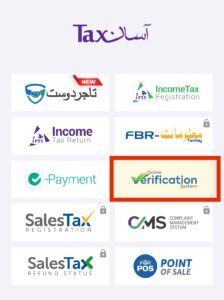
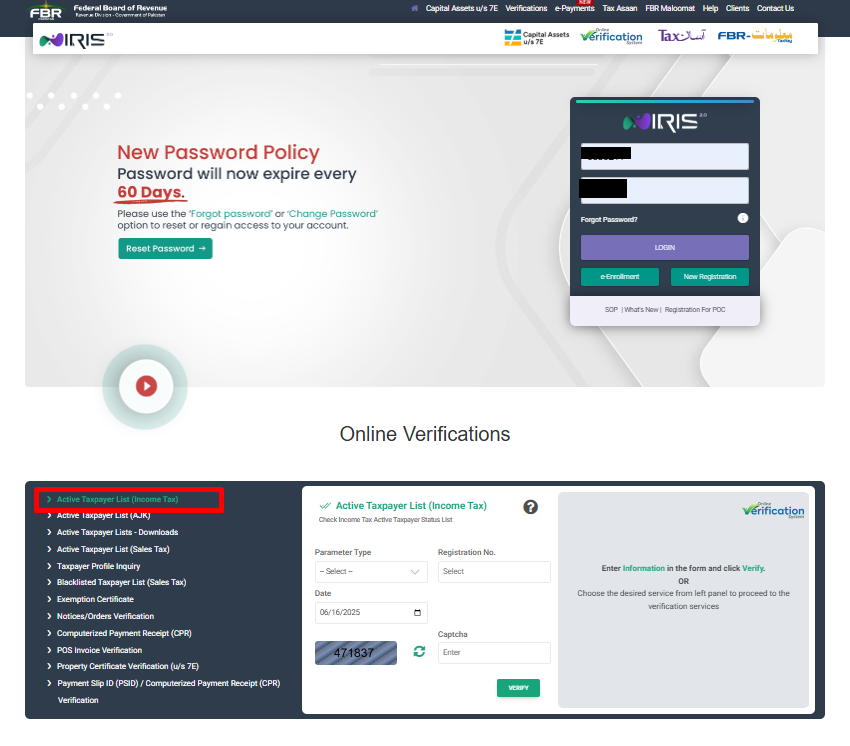
  1. Visit the official FBR verification page: https://iris.fbr.gov.pk/#verifications

  2. Scroll down to “Online Verification Services.”

  3. Select “ATL (Active Taxpayer List)” from the list.

  4. Enter your CNIC, NTN, or Passport number.

  5. Choose the appropriate parameter (CNIC, NTN, or Passport).

  6. Enter today’s date and the Captcha.

  7. Click “Verify”.

The system will show whether you’re a filer or non-filer.

✅ 2. Check via SMS (No Internet Needed)

Quick & Easy:

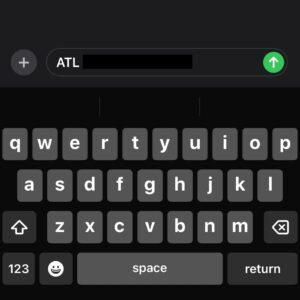
  • Send an SMS to 9966

  • Format: ATL<space>CNIC number (without dashes)

  • Example: ATL 3520112345678

You’ll get an instant reply with your tax status.

✅ 3. Use the FBR Tax Asaan Mobile App

Steps:


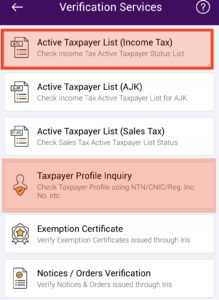
  1. Download “Tax Asaan” from Google Play or Apple App Store.

  2. Open the app and go to Active Taxpayer List.

  3. Enter your CNIC, NTN, or Passport number.

  4. View your filer status on-screen.

The app also allows you to file returns, view tax history, and generate payment challans.

✅ 4. Download the Active Taxpayer List (ATL)

  • Go to FBR’s website and download the ATL in Excel format.

  • The list is updated after every 24-48 Hours.

🎯 Why You Should Be a Filer in Pakistan

Being listed as an Active Taxpayer gives you significant financial benefits:

Benefit Description
💸 Lower Tax Rates On property transactions, banking, vehicles, etc.
💼 Business Credibility Required for tenders, licenses, and contracts
🔄 Tax Refunds Claim eligible refunds faster
⛔ Avoid Extra Charges Non-filers pay up to 100% more in withholding tax

If you check your status and find that you’re not on the ATL, it usually means:

  • You haven’t filed your tax return, or

  • You didn’t pay the annual ATL surcharge.

Surcharge Fees to be Included:

  • 🏢 Companies: PKR 20,000

  • 🏘️ AOPs (Partnerships): PKR 10,000

  • 👤 Individuals: PKR 1,000

After paying the surcharge and/or filing your return, your name is added to the ATL.

📞 Need Help Filing or Getting on the ATL?

ABH Tax Consultants (Islamabad) can help you:

  • File your tax return correctly

  • Pay your ATL surcharge

  • Maintain your active filer status

  • Avoid higher taxes and penalties

🔚 Final Thoughts

Staying active on the FBR’s ATL is more than just compliance — it’s smart money management. Whether you’re a freelancer, salaried person, or business owner, knowing your tax status and taking action can save you thousands annually.

Stay informed. Stay compliant. Stay ahead.

Need help? Sterling.pk are just a call away.

Self Assessment

What Is FBR’s Order to Make Self-Assessment Under Section 120?

What Does ‘Order to Make Self-Assessment Under Section 120’ Mean in Pakistan?

If you have filed your income tax return on the FBR portal and received a message titled “Order to Make Self-Assessment under Section 120,” this is a standard confirmation notice from the Federal Board of Revenue (FBR). It means your return has been successfully accepted and processed under the self-assessment scheme.

Understanding Section 120 of the Income Tax Ordinance, 2001

Section 120 allows taxpayers to assess their own income, calculate tax liability, and file it voluntarily. When a return is submitted completely and accurately, FBR issues an automatic order under Section 120, treating your declared figures as final unless selected for audit or review.

What This Order Means for You

It confirms that your return is accepted by the FBR. No further information or action is needed unless you are selected for audit (Section 177) or amendment proceedings (Section 122). Your declared income and tax liability are now legally recognized.

No Immediate Action Required

Once the order is issued, it signifies that your self-assessment stands approved and you are considered compliant for that tax year. You are also added to the Active Taxpayer List (ATL) if all other conditions are met.

Legal Standing of Section 120 Order

This order holds legal value as your officially accepted tax assessment. However, it does not prevent the FBR from issuing notices later if inconsistencies or red flags are detected.

Conclusion

An Order under Section 120 is a positive acknowledgment of your tax compliance. It confirms that the FBR has accepted your filed return and determined your tax obligation based on your self-declared figures. Keep a copy of the order for your records, and ensure timely tax filing every year to stay compliant.

Fbr

NTN Inquiry in Pakistan

Complete Guide to National Tax Number (NTN) in Pakistan

A National Tax Number (NTN) is a unique identification number issued by the Federal Board of Revenue (FBR) to individuals and businesses in Pakistan for tax purposes. It is required for income tax filing, business registration, and many types of financial transactions.

Quick Summary

This comprehensive guide explains what an NTN is, how to verify it, the benefits of having one, common issues faced during the process, and practical solutions to overcome them.

What is a National Tax Number (NTN)?

An NTN is a 7-digit unique identification number issued by the Federal Board of Revenue (FBR) to individuals, companies, and associations for tax purposes in Pakistan. It serves as your unique identifier within Pakistan's tax system.

Important Distinction

For salaried individuals and sole proprietors, their CNIC (Computerized National Identity Card) number acts as their NTN. For business entities like companies, AOPs (Association of Persons), and partnerships, a separate NTN is issued by the FBR.

Having an NTN is a legal requirement for taxpayers in Pakistan and is essential for financial transparency, tax compliance, and accessing various government and financial services.

How to Check Your NTN Online in Pakistan

The FBR has made NTN verification accessible through multiple digital channels. Here are the three main methods to check your NTN status:

NTN Verification Through IRIS Portal

  1. Visit the official IRIS portal
  2. Navigate to 'Online Verifications' section
  3. Select 'Taxpayer Profile Inquiry'
  4. Choose parameter type (CNIC or Registration Number)
  5. Enter your CNIC without dashes (e.g., 4230112345671)
  6. Complete the CAPTCHA and submit
  7. View your NTN and registration details

Using Tax Asaan Mobile App

  1. Download 'Tax Asaan' app from Play Store or App Store
  2. Register using your CNIC or mobile number
  3. Navigate to 'NTN Inquiry' or 'Taxpayer Verification'
  4. Enter your CNIC number (without dashes)
  5. App displays NTN and tax profile information

Note: The Tax Asaan app also allows tax filing, checking tax history, and receiving FBR notifications.

Check NTN Status via SMS

  1. Open SMS application on your phone
  2. Type ATL [space] CNIC (without dashes)
  3. Send to 9966
  4. Receive instant reply with NTN and ATL status

SMS Format Example

ATL 4230112345671 - Send to 9966

Standard SMS charges apply. Available on all Pakistani networks.

Benefits of Having an NTN in Pakistan

Registering for an NTN and maintaining active taxpayer status provides numerous advantages:

  • Legal Compliance: Fulfills your obligation under Pakistan's Income Tax Ordinance
  • Business Banking: Required for opening and operating business bank accounts
  • Tax Filing: Essential for filing annual income tax returns
  • Government Contracts: Mandatory for participating in government tenders
  • International Travel: Facilitates visa processing for many countries
  • Sales Tax Registration: Enables businesses to collect and remit sales tax
  • Business Credibility: Enhances trust with clients, suppliers, and investors
  • Loan Applications: Required for business and personal loans from financial institutions
  • Property Transactions: Needed for property registrations above certain thresholds
  • Withholding Tax Exemptions: Active taxpayers enjoy lower withholding tax rates

Common NTN Verification Problems & Solutions

Users may encounter issues during NTN verification. Here are common problems and their solutions:

Frequently Encountered Issues

  • CNIC entered with dashes or incorrect format
  • FBR system temporarily unavailable
  • Mobile number not registered with FBR
  • NTN not yet activated or issued
  • Incomplete taxpayer profile in IRIS system
  • Outdated information in FBR records

Practical Solutions

  1. Format Issues: Always enter CNIC without dashes (4230112345671, not 42301-1234567-1)
  2. System Downtime: Try during off-peak hours (early morning or late evening)
  3. Unregistered Mobile: Visit FBR office to register/update mobile number
  4. No NTN Found: Apply for NTN registration at nearest FBR office
  5. Incomplete Profile: Log into IRIS portal and complete all required fields
  6. Persistent Issues: Contact FBR helpline (0800-111-117) or visit FBR facilitation center

Why NTN Verification Matters

In Pakistan's evolving digital economy, NTN verification is crucial for individuals and businesses:

  • Official Registration: Confirms your formal registration with FBR
  • Formal Economy: Integrates you into Pakistan's formal economic system
  • Penalty Avoidance: Helps avoid penalties for non-compliance
  • Financial Trust: Builds credibility with banks and financial institutions
  • Legal Requirements: Essential for various financial and legal processes
  • Economic Contribution: Demonstrates your contribution to national development
  • Credit Profile: Improves your creditworthiness and financial reputation
  • Digital Integration: Required for various e-government services

Active Taxpayer List (ATL) Benefits

Being on the Active Taxpayer List provides additional benefits including reduced withholding tax rates on banking transactions, contracts, and imports. To qualify for ATL, you must file your income tax return by the due date each year (September 30 for individuals).

Conclusion

NTN verification in Pakistan has become streamlined and accessible through multiple digital channels. Whether you're a salaried individual, freelancer, business owner, or corporate entity, maintaining an active NTN is essential for tax compliance and financial legitimacy.

You can verify your NTN through the FBR's IRIS portal, Tax Asaan mobile app, or via SMS. Regular verification and keeping your information updated with FBR ensures you remain in good standing with tax authorities.

Remember, being a compliant taxpayer not only fulfills your civic responsibility but also unlocks numerous financial and business opportunities in Pakistan's growing economy.

Sterling.pk Assistance

Need help with NTN registration or facing verification issues? Contact our team for professional assistance with FBR registration, tax filing, and business compliance services.