
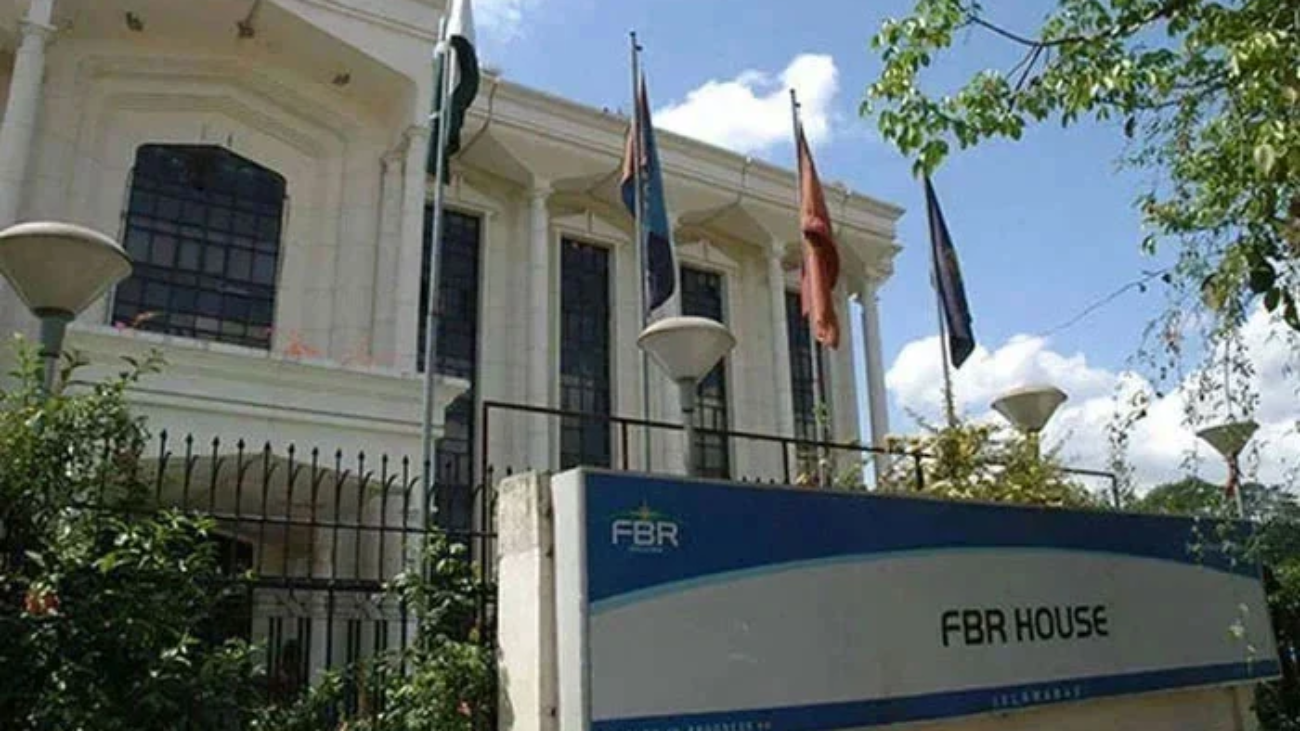
ISLAMABAD – The Federal Board of Revenue (FBR) on Wednesday briefed top business leaders on a wide-ranging transformation plan designed to boost Pakistan’s tax-to-GDP ratio from the current 10.24 percent to 18 percent over the medium term.
According to the roadmap, FBR’s direct share is projected to rise to 14 percent, with provincial revenues contributing an additional three percent and the petroleum levy one percent, bringing the total to the government’s 18 percent target.
Officials acknowledged that Pakistan faces a significant shortfall in major tax areas. The FBR intends to address this gap by rolling out digital systems, modern audit practices and streamlined processes.
The high-level session was chaired by FBR Chairman Rashid Mahmood and attended by representatives from the Overseas Investors Chamber of Commerce and Industry (OICCI), the Pakistan Business Council (PBC) and other major business groups.
Member Inland Revenue Operations Dr Hamid Ateeq Sarwar delivered a detailed presentation on how the transformation plan—approved by the prime minister in October 2024—is being implemented. The reforms focus on three pillars: people, technology and processes.
The FBR is significantly enhancing its institutional capacity by hiring around 1,600 auditors to strengthen audit coverage and compliance. These new recruits will be trained at leading universities to bring skills and standards closer to those of large corporate organisations. Recruitment is being done on merit, with integrity checks built in, while a new reward-and-rating system will offer performance-based incentives to officers.
Participants were also given live demonstrations of technology-driven initiatives across various sectors. Officials said these reforms have already helped lift the FBR’s tax-to-GDP ratio from 8.8 percent in FY2023–24 to 10.24 percent in FY2024–25.
New measures such as Faceless Customs Appraisement, though still in its early stages, have increased revenue per GD by 17.3 percent and improved customs efficiency at ports by cutting dwell time and demurrage costs. In addition, stepped-up enforcement actions have produced eight times more revenue in FY2024–25 compared to the previous year.
Chairman Mahmood emphasised that taxpayer facilitation remains a core priority. A dedicated facilitation division has been established at the Karachi Large Taxpayers Office, where senior officers will personally handle taxpayers’ issues. He also proposed the creation of a joint committee of the PBC, OICCI and FBR to resolve valuation rulings and other policy matters in a collaborative way.
The meeting ended with both the FBR and business representatives expressing confidence that sustained reforms and stakeholder engagement will help achieve the government’s ambitious revenue targets.